Blog

  • Creating Ethical Hacking Tutorials on YouTube: A Guide for Aspiring Content Creators

    In today’s digital world, cybersecurity is more important than ever. With increasing demand for security knowledge, many ethical hackers are turning to YouTube to educate others through ethical hacking tutorials for beginners. If you’re passionate about cybersecurity and want to share your expertise, creating YouTube tutorials is a fantastic way to build your brand, contribute to the community, and even generate income.

    Table of Contents

    Creating Ethical Hacking Tutorials on YouTube: A Guide for Aspiring Content Creators

    Creating Ethical Hacking Tutorials on YouTube: A Guide for Aspiring Content Creators

    At SpyWizards.com, we believe that sharing knowledge responsibly can empower others to strengthen their digital defenses. In this article, we’ll walk you through everything you need to know to create high-quality, ethical hacking content on YouTube — the right way.

    Why Start an Ethical Hacking YouTube Channel?

    Before you dive into video creation, it’s important to understand the value your tutorials can offer:

    • Teach beginners about ethical hacking tools and how they work.
    • Offer insights into network security penetration testing techniques.
    • Explain the OSI model in network security and TCP/IP basics for hackers.
    • Help viewers set up their own penetration testing lab setup safely and legally.
    • Raise awareness about wireless network vulnerabilities and how to secure devices.

    By creating tutorials, you position yourself as a knowledgeable resource — and by linking your resources to SpyWizards.com, you can further guide your audience towards professional services, tools, and courses.

    Step 1: Understand the Ethical and Legal Boundaries

    First and foremost, you must ensure that your content stays within ethical and legal limits. Always clarify that your tutorials are for educational purposes only.

    Promote topics like:

    • How to become an ethical hacker legally and professionally.
    • How to responsibly conduct network security penetration testing.
    • Encouraging certifications like CEH (Certified Ethical Hacker) through a verified ethical hacker course.

    Ethical hacking should always aim to protect, not to exploit.

    Step 2: Plan Your Tutorial Topics

    Create a roadmap for the types of videos you want to make. Some high-demand ideas include:

    • How to Scan a Network with Nmap
    • Introduction to Ethical Hacking Tools
    • OSI Model Explained for Beginners
    • TCP/IP Basics for Hackers
    • How to Perform Wireless Network Vulnerability Scans

    Be sure to provide step-by-step demonstrations so even beginners can follow along easily.

    🔗 Explore more cybersecurity content at SpyWizards.com.

    Step 3: Set Up a Professional Lab Environment

    Rather than demonstrating on live systems (which could be illegal), show how to build a penetration testing lab setup at home. This protects you legally while still offering real-world practice.

    Recommend free or affordable tools like:

    • VirtualBox or VMware for virtual machines
    • Kali Linux for penetration testing
    • Metasploitable as a vulnerable target machine

    You can link to detailed lab setup guides and ethical hacking resources on SpyWizards.com.

    Step 4: Choose the Right Ethical Hacking Tools

    For beginners, demonstrating safe and commonly used tools is crucial. Some great starter tools include:

    • Nmap for network scanning
    • Wireshark for packet analysis
    • Burp Suite for web application testing
    • Aircrack-ng for wireless network vulnerabilities testing

    👉 Find the best ethical hacking tools and resources on SpyWizards.com.

    Step 5: Record and Edit High-Quality Videos

    You don’t need expensive equipment to start — a clear screen recorder (like OBS Studio) and a decent microphone will suffice.

    Tips for Quality Content:

    • Speak clearly and explain each step.
    • Use on-screen pointers and highlights.
    • Add captions for accessibility.
    • Keep videos focused and concise (10-20 minutes).

    Remember: Beginners appreciate detailed explanations, especially on complex topics like the OSI model in network security.

    Bonus Tip: Add time-stamped chapters in your video description to improve user experience.

    Step 7: Promote Responsibly

    Share your videos across ethical hacking forums, LinkedIn, Reddit cybersecurity groups, and your website SpyWizards.com.

    Encourage your viewers to:

    • Visit SpyWizards.com for further courses and tools.
    • Explore ethical hacker career paths.
    • Set up their own legal penetration testing labs.

    By integrating your YouTube presence with your website, you build credibility and drive traffic.

    Conclusion: Start Educating and Empowering Today

    Creating ethical hacking tutorials on YouTube is an exciting way to share your cybersecurity knowledge, empower others to stay safe, and establish yourself as a trusted authority.

    Always prioritize legality, clarity, and value in your content. And don’t forget to guide your viewers to deeper learning and professional resources available on SpyWizards.com.

    Whether you’re teaching how to become an ethical hacker, explaining TCP/IP basics for hackers, or showing how to scan a network with Nmap, your efforts contribute to a safer digital world.

  • Setting Up Honeypots to Catch Intruders: A Complete Ethical Hacking Guide

    In today’s interconnected world, cybersecurity threats are growing more sophisticated by the day. One proactive way to defend your network and gather intelligence on malicious activities is by setting up honeypots. Honeypots act as decoys, luring hackers into a controlled environment where their behavior can be monitored and analyzed.

    Setting Up Honeypots to Catch Intruders: A Complete Ethical Hacking Guide

    Setting Up Honeypots to Catch Intruders: A Complete Ethical Hacking Guide

    In this detailed guide, we will explore the role of honeypots in ethical hacking, their importance in network security penetration testing, and how you can set up a honeypot effectively to enhance your security posture.

    Ready to catch cyber intruders before they cause real damage? Let’s dive in!


    What Is a Honeypot?

    A honeypot is a system or network resource designed to appear vulnerable, thereby attracting attackers. Once engaged, these intruders reveal their techniques, tools, and even identities — providing critical information for enhancing your network security.

    Honeypots are a staple in professional cybersecurity practices and a key component taught in any reputable ethical hacker course offered by SpyWizards.


    Why Set Up a Honeypot?

    Setting up a honeypot offers several strategic advantages:

    • Detect Intrusions Early: Spot attacks before they reach critical systems.
    • Study Attack Techniques: Learn how hackers think and act.
    • Enhance Real Network Security: Strengthen defenses based on real-world tactics.
    • Training Environment: Perfect for practicing penetration testing lab setup skills.

    If you’re serious about mastering how to become an ethical hacker, understanding honeypots is an essential step.


    Essential Components for Building a Honeypot

    Before you begin, ensure you have the basics ready:

    1. Isolated Environment: Never connect honeypots directly to production systems.
    2. Decoy Services: Mimic real services like FTP, SSH, HTTP, or databases.
    3. Monitoring Tools: Capture logs, packet data, and attacker behaviors.
    4. Alerts and Automation: Implement systems that notify you immediately of suspicious activity.

    A firm grasp of the OSI model in network security and TCP/IP basics for hackers is crucial before building your own honeypot setup.


    Step-by-Step: Setting Up a Honeypot

    1. Define Your Goals

    Are you trying to detect malware, discover new attack methods, or study attacker behavior? Clarifying your goals will guide your setup.

    2. Choose the Right Honeypot Type

    • Low-Interaction Honeypots: Simulate only a few services. Safer but gather limited data.
    • High-Interaction Honeypots: Fully functional systems that allow attackers to interact deeply. Riskier but much richer in data.

    3. Set Up the Environment

    You can use virtual machines or cloud instances for flexibility. Ensure proper segmentation to prevent attackers from moving laterally to your real network.

    Interested in building a full testing environment? Check out our expert guide on penetration testing lab setup.

    4. Deploy Decoy Services

    Populate your honeypot with believable services:

    • Fake databases
    • Dummy admin panels
    • Simulated user accounts
    • Outdated, seemingly vulnerable software

    5. Implement Logging and Monitoring

    Tools like ELK Stack, Wireshark, and Snort can capture detailed information about attacker activities.

    Need a refresher on how to scan a network with Nmap? Learn more with our exclusive ethical hacking tutorial for beginners.


    Best Practices for Managing Your Honeypot

    • Stay Hidden: Avoid exposing honeypots in obvious ways.
    • Control Outbound Traffic: Prevent the honeypot from becoming a launchpad for further attacks.
    • Keep Detailed Logs: Every packet and every keystroke counts.
    • Use Encryption: Protect the integrity of your logs and monitoring tools.

    Deploying a honeypot is a valuable hands-on project for anyone studying ethical hacking tools or enrolled in an ethical hacker course.


    Honeypots and Wireless Network Vulnerabilities

    Honeypots can also be deployed on wireless networks to lure attackers who exploit wireless network vulnerabilities. Creating rogue access points and monitoring attempts to breach them is a powerful technique in wireless penetration testing.

    At SpyWizards, we teach you how to harness such strategies to protect your organization effectively. Start your journey with our comprehensive ethical hacking tutorial for beginners.


    Conclusion: Honeypots Are a Must for Cybersecurity Success

    Setting up honeypots is an art and science that allows ethical hackers and cybersecurity professionals to study real threats and improve defenses dramatically. Whether you’re just starting with how to become an ethical hacker or are an advanced practitioner mastering ethical hacking tools, deploying honeypots will sharpen your skills and strengthen your security strategy.

  • Writing Your Own Network Scanner in Python (2026 Tutorial)

    Writing Your Own Network Scanner in Python

    Network security is a constant battle between attackers and defenders. To truly understand how to defend a network,
    you must think like an attacker. One of the fundamental tools in a hacker’s toolkit is the network scanner. In this
    tutorial, we will walk you through writing your own network scanner in Python, updated for 2026
    with the latest libraries and techniques.

    Table of Contents

    🔒 Verified Solution: Sphnix

    Looking for the ultimate monitoring tool in 2026? Sphnix offers undetectable remote installation, real-time tracking, and requires no root or jailbreak.


    ➡ Get Sphnix Now (Instant Access)

    ✓ 100% Undetectable   ✓ No Root Required

    Note: This content is for educational purposes only. Always scan networks you own or have explicit permission to
    audit.

    Why Build Your Own Scanner?

    While tools like Nmap are powerful, building your own scanner gives you a granular understanding of how ARP, TCP, and
    ICMP protocols work. It allows you to customize your scans for specific environments and integrate them into larger
    automation scripts.

    Prerequisites for 2026

    • Python 3.12+: Ensure you have the latest version of Python installed.
    • Scapy: The Swiss Army knife of packet manipulation. Install it via pip:
      pip install scapy.
    • Admin/Root Privileges: Sending raw packets requires elevated permissions.

    Alternative: Professional Monitoring Tools

    If coding isn’t your strong suit, or you need a plug-and-play solution to monitor devices on your network (or your
    family’s devices), consider using professional tools like Sphnix. Sphnix offers enterprise-grade
    monitoring without writing a single line of code.

    Other top-tier alternatives include:

    • mSpy: Excellent for
      monitoring mobile devices connected to your network.
    • Eyezy: AI-driven analysis
      of device activity.

    Step 1: Importing Modules

    We will use `scapy.all` for packet creation and `argparse` for command-line arguments.

    
    import scapy.all as scapy
    import argparse
    

    Step 2: Creating the ARP Request

    The most reliable way to discover devices on a local LAN is via ARP (Address Resolution Protocol). We will construct
    an ARP request asking “Who has IP X?” and broadcast it to the MAC address `ff:ff:ff:ff:ff:ff`.

    
    def scan(ip):
        arp_request = scapy.ARP(pdst=ip)
        broadcast = scapy.Ether(dst="ff:ff:ff:ff:ff:ff")
        arp_request_broadcast = broadcast/arp_request
        answered_list = scapy.srp(arp_request_broadcast, timeout=1, verbose=False)[0]
    
        clients_list = []
        for element in answered_list:
            clients_list.append({"ip": element[1].psrc, "mac": element[1].hwsrc})
        return clients_list
    

    Step 3: Displaying Results

    A clean output is essential. We will format the results into a table.

    
    def print_result(results_list):
        print("IP\t\t\tMAC Address\n-----------------------------------------")
        for client in results_list:
            print(client["ip"] + "\t\t" + client["mac"])
    

    Step 4: Putting It All Together

    We add argument parsing to make the tool dynamic.

    
    def get_arguments():
        parser = argparse.ArgumentParser()
        parser.add_argument("-t", "--target", dest="target", help="Target IP / IP range")
        options = parser.parse_args()
        if not options.target:
            parser.error("[-] Please specify a target, use --help for info.")
        return options
    
    options = get_arguments()
    scan_result = scan(options.target)
    print_result(scan_result)
    

    Usage

    Run the script with sudo/admin privileges:

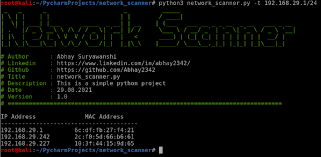
    sudo python3 network_scanner.py -t 192.168.1.1/24

    Conclusion

    You have just built a functional network scanner! This script is the foundation for more advanced tools like ARP
    spoofers or vulnerability scanners. However, managing security manually is time-consuming.

    For effortless security and monitoring, we highly recommend checking out Sphnix or mSpy to keep your digital
    environment safe automatically.

    Frequently Asked Questions

    Is this script legal to use?

    Yes, as long as you use it on your own network or a network where you have permission. Scanning unauthorized networks
    is illegal.

    Why do I need root privileges?

    Scapy creates raw sockets to send custom packets, which is a privileged operation in most operating systems.

    Can this scanner detect hidden devices?

    It can detect any device that responds to ARP requests, which includes most devices active on a LAN. Devices
    configured to ignore ARP (very rare on LAN) might be missed.

    How does Sphnix compare to this script?

    This script is a manual tool for network discovery. Sphnix is a comprehensive monitoring suite that not only sees
    devices but can monitor their activity (messages, apps, location) in real-time.

    Can I extend this script?

    Absolutely! You can add port scanning capabilities, OS detection, or even simple service banner grabbing to make it a
    full-fledged audit tool.

  • Exploit Development for Network Services: An Ethical Hacker Guide

    In today’s interconnected world, network services are the backbone of communication, business operations, and digital interaction. But with great connectivity comes great risk. Exploit development for network services plays a vital role in exposing vulnerabilities before malicious hackers can take advantage. In this guide, we’ll explore how network exploits are developed, tools you can use, and how you can sharpen your skills with the right ethical hacking tools and resources.

    Table of Contents

    Exploit Development for Network Services: An Ethical Hacker’s Guide

    Exploit Development for Network Services: An Ethical Hacker's Guide

    If you’re serious about cybersecurity, understanding exploit development is crucial. Whether you’re setting up your first penetration testing lab or studying the OSI model in network security, this tutorial will help you take a step closer to mastering network exploitation.


    What Is Exploit Development for Network Services?

    Exploit development involves finding and using vulnerabilities within network services to gain unauthorized access or disrupt operations. Ethical hackers, penetration testers, and cybersecurity experts often create exploits to simulate real-world attacks and strengthen an organization’s defenses.

    Network services—such as web servers, file-sharing systems, email services, and DNS—are frequent targets. Without regular testing, these services can become easy entry points for cybercriminals.

    To learn more about securing your network, check out our full ethical hacking tutorial for beginners.


    Understanding Network Protocols: The Foundation of Exploit Development

    Before diving into exploit development, you must understand basic networking concepts like the TCP/IP model and the OSI model in network security. These models explain how data moves across networks and where vulnerabilities can be found.

    If you’re new to networking, we recommend starting with our beginner’s guide on TCP/IP basics for hackers.

    Key Concepts You Must Master:

    • TCP Handshakes and Session Management
    • Common Service Ports (HTTP – 80, HTTPS – 443, FTP – 21, etc.)
    • Packet Crafting and Analysis (Wireshark is your friend!)
    • Secure vs. Insecure Protocols (SSH vs. Telnet)

    How Exploits Are Developed: Step-by-Step

    1. Network Scanning
    You must first map the network and identify active hosts and services. Tools like Nmap are crucial. If you don’t know how to scan a network with Nmap, it’s time to learn! Scanning reveals open ports and running services—critical information for finding vulnerabilities.

    2. Vulnerability Research
    Next, you match identified services to known vulnerabilities. Public databases like CVE (Common Vulnerabilities and Exposures) and exploit libraries such as Exploit-DB are invaluable.

    3. Crafting the Exploit
    This step involves creating a payload that interacts with the vulnerable service to achieve your objective—whether that’s remote code execution, denial of service, or privilege escalation.

    4. Testing and Validation
    You must test your exploit in a safe, controlled environment. Setting up a penetration testing lab is essential. Never test on live systems without explicit permission!

    5. Reporting and Patching
    As an ethical hacker, your goal is not destruction but protection. Report your findings so patches and mitigation strategies can be deployed.


    Why Ethical Exploit Development Matters

    Exploit development isn’t just for hackers with bad intentions. Organizations actively hire skilled professionals trained through ethical hacker courses to expose vulnerabilities before cybercriminals can.

    By learning how exploits are crafted, you also learn how to defend against them.

    Want to know how to become an ethical hacker? Start with hands-on experience in network security, learn scripting (Python and Bash are critical!), and continuously sharpen your penetration testing skills.


    Popular Tools for Network Service Exploitation

    Some ethical hacking tools you should get familiar with include:

    • Metasploit Framework: Automates exploit creation and execution.
    • Wireshark: Analyze network traffic to detect vulnerabilities.
    • Nmap and Nmap Scripting Engine (NSE): Scan and script attacks.
    • Burp Suite: Test web services for security flaws.
    • Hydra: Conduct brute force attacks on network logins.

    You can find a detailed breakdown of these tools on our main page: SpyWizards Ethical Hacking Tools.


    Real-World Examples of Network Exploits

    • Heartbleed (OpenSSL Vulnerability): A tiny flaw in heartbeat extension code allowed attackers to steal sensitive information.
    • MS17-010 (EternalBlue): A Windows SMB exploit used in WannaCry ransomware attacks.
    • Shellshock (Bash Vulnerability): Allowed remote code execution via bash environment variables.

    Each of these attacks exploited a common network service vulnerability that ethical hackers are trained to find and fix.


    Strengthen Your Skills: Set Up a Lab and Practice!

    Practical experience is critical.
    We recommend creating your personal penetration testing lab setup with virtual machines using tools like VirtualBox, VMware, or Proxmox.

    Simulate real-world scenarios by:

    • Setting up vulnerable systems (like DVWA, Metasploitable, or HackTheBox VMs)
    • Practicing exploiting weak wireless network settings to understand wireless network vulnerabilities
    • Conducting your own scans and documenting your findings

    Building a habit of ethical practice will make you a sought-after cybersecurity expert!


    Final Thoughts: Ethical Hacking Is the Future

    In a digital-first world, ethical hackers are more important than ever.
    Mastering exploit development for network services gives you the edge you need in penetration testing, network defense, and overall cybersecurity.

    Ready to dive deeper? Check out our ethical hacking course to build your career or refine your existing skills.

  • How Hackers Pivot from Public to Internal Networks

    In today’s interconnected digital world, network security is more critical than ever. Hackers are no longer satisfied with just breaching public-facing systems — their true goal often lies deep within internal networks where sensitive data resides. Understanding how hackers pivot from public to internal networks is crucial for businesses and individuals who want to strengthen their cybersecurity defenses. In this guide, we’ll explore the techniques used by attackers, and how you can defend against them using ethical hacking tools, penetration testing lab setups, and insights from ethical hacking tutorials for beginners.

    Updated February 2026

    Table of Contents

    How Hackers Pivot from Public to Internal Networks

    How Hackers Pivot from Public to Internal Networks

    For more on building your cybersecurity skills, visit SpyWizards.com and explore our resources!

    What Is Network Pivoting?

    Network pivoting is a hacking technique where attackers use a compromised system as a springboard to access deeper parts of a network. After breaching a public-facing device like a web server or router, hackers “pivot” to reach internal systems that were otherwise unreachable from the internet. This process often involves exploiting wireless network vulnerabilities, poorly segmented networks, or outdated security protocols.

    For beginners looking to understand network structures better, studying the OSI model in network security and TCP/IP basics for hackers is essential.

    Step-by-Step: How Hackers Move Deeper Into Networks

    1. Reconnaissance

    Once a public system is compromised, the attacker starts gathering information about the internal network. They perform scans to map out IP addresses, find open ports, and identify devices connected behind the firewall.

    Using tools like Nmap, hackers learn how to scan a network with Nmap to discover hidden devices and vulnerabilities. Mastering this tool is a key part of any ethical hacking course.

    2. Credential Harvesting

    If login credentials were captured during the initial breach, hackers attempt to reuse them across internal services. Many organizations still suffer from password reuse or weak password policies, making it easier for attackers to escalate privileges.

    To learn proper password security measures, check out our ethical hacking tutorials for beginners at SpyWizards.com.

    3. Exploiting Wireless Network Vulnerabilities

    In many cases, hackers exploit weak wireless security to jump from one device to another. Poorly protected Wi-Fi networks, default credentials, or outdated encryption protocols (like WEP) are easy targets.

    Strengthen your wireless security and learn about common wireless network vulnerabilities on SpyWizards.com.

    4. Lateral Movement

    With access to one internal machine, attackers use tools like PsExec or RDP to move laterally across the network. They seek out high-value systems such as file servers, databases, or administrative consoles.

    Setting up a penetration testing lab setup at home or work allows you to practice these techniques ethically and understand how to defend against them.

    How to Defend Against Network Pivoting

    1. Network Segmentation

    Properly segmenting your network ensures that even if hackers breach one system, they can’t easily access others. Critical systems should be isolated from public-facing ones whenever possible.

    Learn more about network security penetration testing methods at SpyWizards.com.

    2. Strong Authentication and Least Privilege

    Implement strong, multi-factor authentication (MFA) across all systems. Also, follow the principle of least privilege: users should only have access to the resources they absolutely need.

    Building your ethical hacking knowledge through an ethical hacker course can give you the necessary skills to audit these practices effectively.

    3. Monitor and Detect

    Early detection is crucial. Using intrusion detection systems (IDS), endpoint monitoring tools, and regular vulnerability scans can help identify unauthorized activity before significant damage is done.

    Setting up your own penetration testing lab setup helps simulate these scenarios and sharpen your skills against real-world threats.

    Ethical Hacking: The Best Defense

    Becoming a certified ethical hacker is one of the best ways to defend against network pivoting attacks. If you’re interested in how to become an ethical hacker, or want to deepen your knowledge through an ethical hacking tutorial for beginners, we’ve got everything you need at SpyWizards.com.

    In fact, understanding TCP/IP basics for hackers and mastering tools like Nmap are core components of ethical hacking. With the right training and resources, you can secure your networks and protect sensitive data from internal threats.

    Conclusion

    As hackers evolve, so must our defenses. Understanding how attackers pivot from public to internal networks helps us design stronger, more resilient systems. Whether you’re a business owner, IT professional, or cybersecurity enthusiast, investing in ethical hacking tools and continuous learning is essential.

  • How to Secure an Enterprise Wi-Fi Network (2026 Guide)

    How to Secure an Enterprise Wi-Fi Network: A Step-by-Step Guide for Maximum Protection

    Wi-Fi is the lifeblood involving modern enterprise. It is also the biggest security hole. From rogue access points to
    weak encryption, a poorly secured Wi-Fi network is an open door for hackers. In this guide, we will walk you through
    how to secure an enterprise Wi-Fi network in 2026.

    Table of Contents

    🔒 Verified Solution: Sphnix

    Looking for the ultimate monitoring tool in 2026? Sphnix offers undetectable remote installation, real-time tracking, and requires no root or jailbreak.


    ➡ Get Sphnix Now (Instant Access)

    ✓ 100% Undetectable   ✓ No Root Required

    1. Move to WPA3-Enterprise

    If you are still using WPA2, stop. WPA3 is mandatory in 2026. It provides stronger encryption (192-bit) and protects
    against brute-force attacks. Use WPA3-Enterprise mode, which requires individual authentication.

    2. Implement 802.1X Authentication

    Forget shared passwords. Use 802.1X with a RADIUS server. This ensures that every user logs in with their own
    credentials. If an employee leaves, you disable their account—you don’t have to change the Wi-Fi password for
    everyone.

    3. Network Segmentation (Guest vs. Corp)

    Never let guests on your corporate network. Create a completely isolated VLAN for guest Wi-Fi. Use client isolation
    so guests cannot see each other.

    4. Rogue AP Detection

    Hackers often plant “Evil Twin” access points to steal credentials. You need to constantly scan your airspace. Tools
    like Sphnix and mSpy can help monitor
    authorized devices to ensure they aren’t connecting to rogue networks.

    5. Monitor Endpoints

    A secure network is useless if the devices on it are compromised. Ensure all mobile devices (Company Owned/BYOD) have
    mobile monitoring solutions like Sphnix or Eyezy installed to detect
    malware or data exfiltration attempts.

    6. Periodic Audits

    Hire professionals to pentest your Wi-Fi. Or learn to do it yourself with our Python Scanner guide.

    Conclusion

    Securing enterprise Wi-Fi requires a layered approach: Encryption, Authentication, and Monitoring. Use robust
    standards like WPA3 and monitor your endpoints with tools like Sphnix to stay safe in 2026.

    Frequently Asked Questions

    Is WPA2 still safe?

    WPA2 is vulnerable to KRACK attacks. While patched, it is considered legacy. Move to WPA3.

    What is a Rogue AP?

    An unauthorized access point connected to your network, or an external AP mimicking your network.

    Can I hide my SSID to be safe?

    No. Hiding SSID does not provide security; scanners can still see it. It only annoys valid users.

    How often should I change Wi-Fi passwords?

    With 802.1X, you don’t need to! Users use their own accounts. You only rotate passwords for service accounts.

    Does Sphnix work on corporate Wi-Fi?

    Yes, Sphnix works on the device level, regardless of the network it connects to.

    Related Spy Wizards Resources

    Safety and Authorization Note

    Use cybersecurity guidance only on accounts, devices, and networks you own or are clearly authorized to review. If you are dealing with account recovery, suspicious logins, device privacy concerns, or business security checks, document what happened, preserve alerts or recovery emails, and avoid sharing passwords, one-time codes, private keys, or financial details. Spy Wizards focuses on lawful support, ethical security review, privacy protection, and practical recovery steps that reduce risk without crossing consent boundaries.

  • Zero Trust Architecture and Network Security: The Future of Cyber Defense

    In today’s ever-evolving digital landscape, traditional security models are no longer enough. Cyber threats have become more sophisticated, targeting even the most robust systems. This is where Zero Trust Architecture (ZTA) steps in — a revolutionary approach that reshapes how organizations view and implement network security.

    Zero Trust Architecture and Network Security: The Future of Cyber Defense

    Zero Trust Architecture and Network Security: The Future of Cyber Defense

    In this article, we’ll explore Zero Trust Architecture, its connection to network security penetration testing, and how mastering these principles can set you on the right path if you’re learning how to become an ethical hacker. Plus, we’ll show you trusted resources like SpyWizards.com to guide your cybersecurity journey.


    What Is Zero Trust Architecture?

    Zero Trust Architecture is based on a simple yet powerful principle: Never trust, always verify. Unlike traditional models where users and devices inside a network were automatically trusted, Zero Trust demands continuous verification of every entity trying to access the network — whether inside or outside.

    Key elements of Zero Trust include:

    • Strict identity verification
    • Least privilege access
    • Micro-segmentation of networks
    • Continuous monitoring and analytics

    To properly implement ZTA, you must also understand key cybersecurity topics like the OSI model in network security and TCP/IP basics for hackers, both foundational concepts you can explore in our in-depth guides at SpyWizards.com.


    Why Zero Trust Matters for Network Security

    Cybercriminals exploit any weaknesses they find, whether it’s in wireless network vulnerabilities or outdated security protocols. Zero Trust minimizes the attack surface by assuming every request is a potential threat until proven otherwise.

    This is especially important during network security penetration testing, where ethical hackers simulate real-world attacks. Setting up a penetration testing lab is essential for understanding how Zero Trust measures can be validated and reinforced.

    Ready to dive deeper? Our step-by-step ethical hacking tutorial for beginners can help you get started!


    How Ethical Hackers Apply Zero Trust

    If you’re studying how to become an ethical hacker, mastering Zero Trust principles is crucial. Ethical hackers use frameworks like ZTA to:

    • Test system resilience against internal and external threats
    • Conduct vulnerability scans using tools like Nmap (learn how to scan a network with Nmap)
    • Simulate phishing, social engineering, and advanced persistent threats

    For hands-on learning, setting up your penetration testing lab is highly recommended. Explore practical guides and resources on SpyWizards.com to build your skills and become a cybersecurity pro.

    You can also check out our ethical hacker course to gain recognized certifications and accelerate your career.


    Essential Tools for a Zero Trust Strategy

    Implementing Zero Trust isn’t just about policies — it’s about using the right ethical hacking tools to continuously monitor and protect your environment.

    Here are some must-have tools:

    • Network scanners for detecting unauthorized devices
    • Endpoint protection platforms for real-time monitoring
    • Multi-factor authentication (MFA) systems to enforce identity verification

    Want to see our full list of recommended ethical hacking tools? Visit our site to equip yourself with the industry’s best solutions!


    Challenges in Implementing Zero Trust

    While Zero Trust offers enhanced security, it also comes with challenges:

    • Complexity in integration with legacy systems
    • Potential delays in access if verification processes are too rigid
    • Higher initial costs for setup and training

    However, the long-term benefits — including better threat detection, reduced insider threats, and superior compliance with regulations — far outweigh these challenges.

    For organizations looking to adopt Zero Trust, understanding wireless network vulnerabilities and building strong foundational knowledge in TCP/IP basics for hackers is critical. SpyWizards.com offers expert tutorials to help bridge these knowledge gaps.


    Final Thoughts

    Zero Trust Architecture and Network Security: The Future of Cyber Defense

    Zero Trust Architecture is no longer optional — it’s the future of network security. Whether you’re a company protecting sensitive data or an individual learning how to become an ethical hacker, adopting Zero Trust principles is vital for staying ahead of evolving threats.

    At SpyWizards.com, we are passionate about empowering cybersecurity enthusiasts and professionals with the tools and knowledge they need. From ethical hacker courses to penetration testing lab setups, we provide everything you need to secure your future in this fast-paced industry.

  • Network Forensics: How to Investigate a Breach

    Network forensics helps security teams reconstruct what happened during a breach, which systems talked to each other, what data moved, and how the attacker stayed active. Done well, it turns vague suspicion into usable evidence for containment, recovery, and reporting.

    Network Forensics: Investigating a Breach

    The goal of network forensics is simple: determine who communicated with what, when, and why. Investigators use logs, packet captures, firewall records, endpoint telemetry, and authentication events to map attacker behavior and identify the scope of compromise.

    What Network Forensics Looks For

    • Unusual outbound connections and data transfers.
    • Lateral movement between internal systems.
    • Command-and-control traffic patterns.
    • Unexpected authentication behavior or remote access.
    • Timing correlations between alerts, logins, and network activity.

    Core Sources of Evidence

    • Firewall and proxy logs.
    • DNS logs.
    • VPN and identity-provider logs.
    • Packet captures when available.
    • Endpoint detection and server logs.

    Why Network Forensics Matters After a Breach

    Without network evidence, teams often guess at scope. That leads to partial containment, missed systems, and repeat compromise. Good forensic review helps answer the questions executives, legal teams, and affected customers will ask after an incident.

    Common Mistakes During Breach Investigation

    • Wiping systems before evidence is collected.
    • Ignoring DNS and identity logs.
    • Treating one infected host as the full scope of the incident.
    • Skipping timeline reconstruction.

    Related Skills and Tools

    For stronger incident response, pair network-forensics work with web-server scanning, network discovery, and a solid security checklist for privileged accounts and exposed systems.

    Request Breach Investigation Support

    Frequently Asked Questions

    What is the difference between network forensics and incident response?
    Incident response is the broader process of containing and recovering from an attack. Network forensics is one investigation discipline inside that process.

    Do I need packet captures to do network forensics?
    No. Packet captures help, but many investigations rely heavily on firewall, DNS, VPN, and authentication logs.

    Related Security Guides

    Next, read our breach-response guide, our Nikto guide, and our firewall guide.

    Related Spy Wizards Resources

    Safety and Authorization Note

    Use cybersecurity guidance only on accounts, devices, and networks you own or are clearly authorized to review. If you are dealing with account recovery, suspicious logins, device privacy concerns, or business security checks, document what happened, preserve alerts or recovery emails, and avoid sharing passwords, one-time codes, private keys, or financial details. Spy Wizards focuses on lawful support, ethical security review, privacy protection, and practical recovery steps that reduce risk without crossing consent boundaries.

  • Bypassing Network-based Intrusion Detection

    In today’s interconnected world, network security plays a crucial role in safeguarding sensitive data. However, hackers and cybersecurity professionals alike are constantly learning how to bypass network-based intrusion detection systems (NIDS). Understanding these techniques is essential, whether you’re studying ethical hacking tools, pursuing an ethical hacker course, or planning network security penetration testing.

    Bypassing Network-based Intrusion Detection

    Bypassing Network-based Intrusion Detection

    In this article, we will dive deep into bypassing network-based intrusion detection, explore the techniques used by ethical hackers, and highlight how you can enhance your cybersecurity skills with the right resources at SpyWizards.com.


    What is a Network-based Intrusion Detection System (NIDS)?

    A network-based intrusion detection system monitors network traffic for suspicious activity and policy violations. NIDS are vital for detecting attacks like port scanning, man-in-the-middle attacks, and malware propagation.

    However, just as security measures evolve, so do hacking techniques. Learning how NIDS can be bypassed is a key topic covered in our ethical hacking tutorial for beginners.


    Common Techniques for Bypassing NIDS

    Let’s explore the popular methods attackers use to slip past network defenses:

    1. Fragmentation Attacks

    Hackers often fragment their payloads into smaller packets. Because many NIDS devices inspect packets individually, they might miss malicious code that only becomes harmful when reassembled.

    Pro Tip: Understanding the OSI model in network security is critical for learning how these attacks manipulate data at different network layers. Check out our guide on OSI model in network security to learn more.

    2. Encryption and Tunneling

    Attackers can encrypt their payloads or tunnel them through trusted protocols like HTTPS. Since NIDS systems cannot inspect encrypted data easily, these methods are highly effective.

    If you’re eager to master these skills, enroll in our comprehensive ethical hacker course designed for beginners and professionals.

    3. Obfuscation Techniques

    Code obfuscation, such as polymorphic or metamorphic malware, modifies the payload dynamically to avoid signature-based detection by traditional NIDS.

    At SpyWizards, we cover these techniques extensively in our ethical hacking tools training.


    Why Bypassing NIDS Matters for Ethical Hackers

    As a cybersecurity professional, learning how hackers bypass NIDS helps you:

    • Strengthen your defensive strategies
    • Improve incident response plans
    • Stay one step ahead of malicious hackers

    If you’re interested in how to become an ethical hacker, mastering network evasion techniques is essential. Visit our how to become an ethical hacker guide to get started.


    Setting Up Your Penetration Testing Lab

    Before you practice bypass techniques, you need a safe environment. Our detailed penetration testing lab setup guide will help you create a lab where you can legally and safely experiment.

    Your lab setup should include:

    • A variety of operating systems (Windows, Linux, Kali Linux)
    • Vulnerable machines (Metasploitable, DVWA)
    • Tools like Wireshark, Snort, and Suricata

    Hands-on practice is a must to truly understand TCP/IP basics for hackers and the real-world application of NIDS evasion methods.


    Essential Tools for Network-based Intrusion Evasion

    Here are some ethical hacking tools widely used for network testing and intrusion evasion:

    • Nmap: Not only can you scan a network with Nmap, but you can also craft customized packets to test firewall and NIDS responses.
    • Hping3: A packet crafting tool that helps test firewall and IDS rules.
    • Metasploit: Frameworks like Metasploit allow payload obfuscation and encrypted communications.
    • Scapy: Useful for manipulating packets and performing custom tests against network defenses.

    Explore our curated list of ethical hacking tools for your cybersecurity toolkit.


    How Wireless Networks Are Also Vulnerable

    Wireless networks bring unique vulnerabilities that make intrusion detection even more challenging. Learning about wireless network vulnerabilities is a critical aspect of ethical hacking.

    Topics to master include:

    • Rogue access points
    • Evil twin attacks
    • Packet sniffing and decryption
    • Wireless encryption weaknesses (WEP/WPA cracking)

    SpyWizards offers step-by-step lessons on identifying and securing wireless networks. Don’t miss our dedicated resources on wireless network vulnerabilities.


    Final Thoughts: Ethical Hacking and NIDS

    Bypassing Network-based Intrusion Detection

    Understanding how to bypass network-based intrusion detection is a critical skill for ethical hackers committed to strengthening cybersecurity. Whether you’re setting up your own penetration testing lab, mastering the TCP/IP basics for hackers, or diving into wireless network vulnerabilities, SpyWizards is here to support your journey.

    At SpyWizards.com, we empower you with the knowledge, tools, and resources you need to become a cybersecurity expert.

  • Advanced MiTM Techniques and Defenses

    In today’s interconnected world, the sophistication of cyber threats continues to evolve, with Man-in-the-Middle (MiTM) attacks standing out as one of the most potent and dangerous forms of cyber intrusion. Whether you’re a cybersecurity enthusiast, someone pursuing an ethical hacker course, or simply passionate about safeguarding digital assets, understanding MiTM techniques and defenses is critical.

    Advanced MiTM Techniques and Defenses

    Advanced MiTM Techniques and Defenses

    At SpyWizards.com, we believe in empowering individuals with cutting-edge knowledge, ethical hacking tools, and practical defense strategies to stay ahead in the cybersecurity landscape.

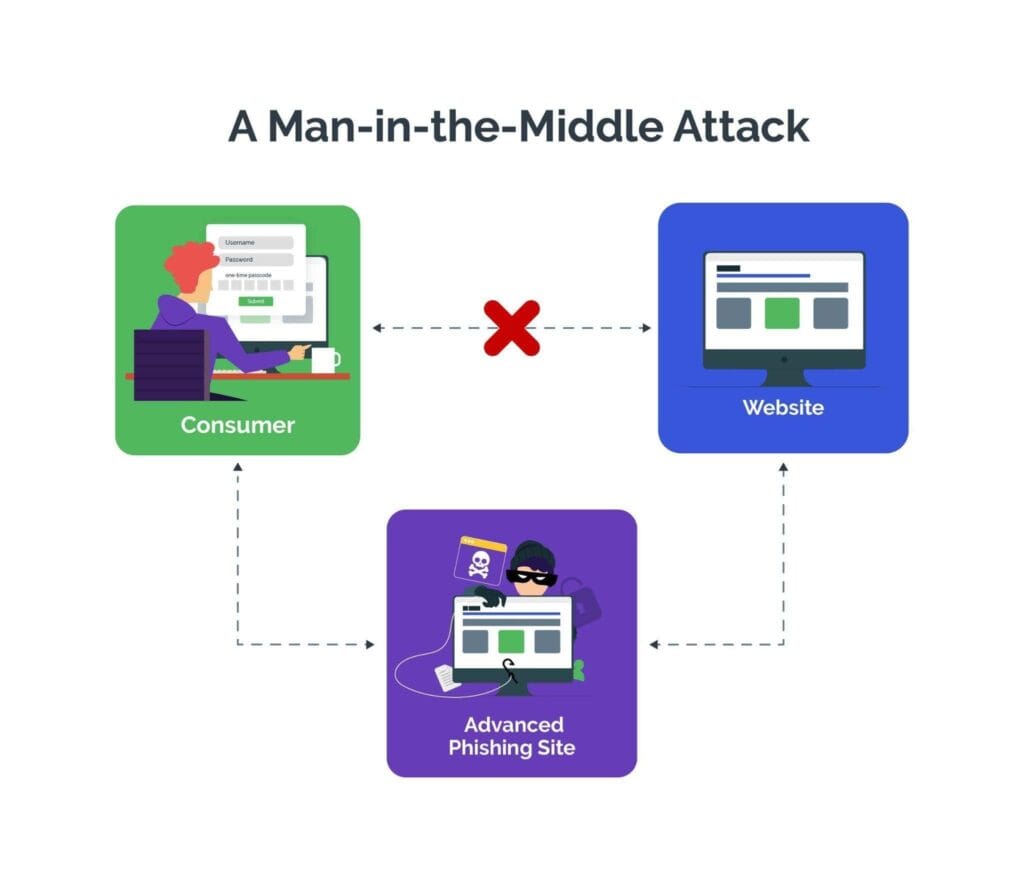
    What Is a Man-in-the-Middle (MiTM) Attack?

    A MiTM attack occurs when a malicious actor secretly intercepts and possibly alters communication between two parties without them knowing. These attacks can compromise sensitive information like passwords, credit card numbers, and personal data.

    Understanding MiTM tactics is crucial for anyone interested in network security penetration testing, building a penetration testing lab setup, or learning through an ethical hacking tutorial for beginners.


    Common Advanced MiTM Techniques

    Cybercriminals today use highly sophisticated MiTM techniques that are difficult to detect. Here’s a closer look:

    1. ARP Spoofing

    Attackers send fake Address Resolution Protocol (ARP) messages to a local network. This tricks devices into sending their traffic through the attacker’s machine, enabling them to eavesdrop or alter communications.

    Defense Tip: Use static ARP entries where possible and monitor your network for suspicious ARP activity.

    2. DNS Spoofing

    In DNS spoofing, hackers manipulate DNS server responses to redirect users to malicious websites.

    Defense Tip: Implement DNSSEC (Domain Name System Security Extensions) and validate DNS responses.

    3. HTTPS Spoofing

    Hackers may exploit poorly configured SSL/TLS settings or use rogue certificates to intercept supposedly secure HTTPS connections.

    Defense Tip: Always enforce HSTS (HTTP Strict Transport Security) and ensure your certificates are issued by trusted authorities.

    4. Wi-Fi Eavesdropping

    In environments with weak or no Wi-Fi protection, attackers can intercept wireless communications. Exploiting wireless network vulnerabilities is a common MiTM strategy in public places.

    Defense Tip: Use WPA3 encryption and set up VPN connections, especially when connecting to public Wi-Fi.


    How to Defend Against Advanced MiTM Attacks

    Protecting yourself and your organization requires a layered approach. Here’s how you can fortify your defenses:

    1. Encrypt Everything

    Implement end-to-end encryption (E2EE) wherever possible. When encryption is correctly applied, even if communications are intercepted, the data remains unreadable.

    2. Secure Network Configurations

    Understand the OSI model in network security and TCP/IP basics for hackers to better configure secure, robust systems. Every layer of the OSI model offers potential points of attack — knowing how each works is crucial.

    3. Regular Network Scanning

    Learn how to scan a network with Nmap and perform regular checks for unusual activity. Nmap can help detect rogue devices and suspicious open ports that may indicate MiTM vulnerabilities.

    4. User Awareness and Training

    The human factor remains a significant weakness. Providing ongoing cybersecurity awareness training to staff reduces the chances of falling victim to phishing and social engineering — common preludes to MiTM attacks.

    If you’re eager to dive deeper into ethical hacking, consider starting with our comprehensive ethical hacking tutorial for beginners and get hands-on experience!


    Setting Up a Secure Penetration Testing Lab

    Before you practice MiTM defenses, you need a safe environment. Setting up a penetration testing lab setup is the perfect way to simulate real-world attacks without any risk to live systems.

    Our guide on SpyWizards.com provides all the steps you need — from installing virtual machines to configuring test networks, ensuring you’re fully equipped to master defensive techniques safely.


    Ethical Hacking and MiTM — A Powerful Combination

    Advanced MiTM Techniques and Defenses

    Learning MiTM tactics isn’t just for malicious intent; it’s a crucial skill for ethical hackers. When practiced ethically, it empowers professionals to identify flaws and build stronger networks.

    If you aspire to learn how to become an ethical hacker, mastering MiTM attack strategies and defenses is a non-negotiable skill. Whether you’re starting with an ethical hacker course or advancing your knowledge, understanding these real-world threats will set you apart.

    Explore more ethical hacking tools available on our platform to supercharge your cybersecurity journey!


    Conclusion

    The cyber world is a constant battleground, and MiTM attacks represent a significant threat vector that continues to evolve. However, armed with the right knowledge, tools, and defensive measures, you can stay one step ahead.