Category: Uncategorized

  • How Long Does It Take to Learn Cyber Security? Realistic Timeline (2026)

    If you are searching how long does it take to learn cyber security, you are asking one of the most important career questions in cyber security.

    People often get conflicting advice online. One source says only degrees matter. Another says certifications are enough. The reality is more practical. This guide gives a direct answer to how long does it take to learn cyber security and then shows how to build a realistic plan that leads to interviews, skill growth, and long-term career options.

    1. how long does it take to learn cyber security

    Short answer: Most people need 6 to 24 months to become cyber security job-ready, depending on prior IT knowledge, study hours, and project repetition.

    Hiring managers usually prioritize practical evidence. They want candidates who can explain risk, execute tasks consistently, and communicate clearly under pressure.

    2. What employers look for first

    • Strong networking and operating system fundamentals
    • Ability to investigate alerts and document findings clearly
    • Hands-on project evidence, not just certificate lists
    • Communication quality during incidents and escalations
    • Reliability, learning discipline, and professional judgment

    A degree can help with screening, but evidence of real execution often decides hiring outcomes.

    3. Which degree paths map to which roles

    Computer science can support engineering-heavy roles. Information technology can support operations and infrastructure roles. Dedicated cybersecurity programs can provide focused exposure to governance, incident response, and risk management. None of these paths guarantee a job by themselves, but each can be valuable if paired with practical projects.

    Candidates should choose education based on target role, budget, and timeline, not prestige alone.

    4. Alternatives when a degree is not the best option

    Some professionals move from help desk, system administration, or network support into security roles by building focused project portfolios. Others use certifications plus labs to prove practical readiness. Apprenticeships, internships, and contract roles can also accelerate entry when candidates show strong fundamentals and communication.

    The strongest approach is often hybrid: foundational learning plus repeatable project output.

    5. Cost, ROI, and opportunity tradeoffs

    Before choosing a degree, calculate total cost, expected timeline, and opportunity cost. A four-year program can be powerful for long-term flexibility, but it can also delay income. Shorter pathways can get you into the workforce faster, but may require more self-direction and continued learning after placement.

    Your best option depends on your current experience, financial constraints, and career goals.

    6. Realistic timeline to become job ready

    • Months 0-3: core fundamentals, terminology, and lab setup
    • Months 3-6: practical exercises, simple investigations, documentation practice
    • Months 6-12: portfolio projects, interview readiness, focused applications
    • Months 12-24: specialization and larger-scope responsibilities

    Consistency is the differentiator. Ten focused hours each week over time beats short bursts of intense study.

    7. 90-day action plan you can start now

    Days 1-30

    • Pick one target role and define required skills
    • Build a weekly study schedule you can sustain
    • Start a project log with screenshots and clear notes

    Days 31-60

    • Complete hands-on labs and publish project artifacts
    • Practice explaining technical findings in plain language
    • Build role-specific resume bullets tied to outcomes

    Days 61-90

    • Run mock interviews and improve weak areas
    • Apply to targeted openings with customized evidence
    • Continue adding projects to show momentum

    8. Trusted references for career planning

    FAQs

    Can I get hired without a degree?

    Yes. Many candidates are hired through practical projects, strong fundamentals, and clear communication.

    Do certifications matter in hiring?

    They help prove baseline knowledge, but practical skill and execution quality matter more in interviews.

    How many hours should I study each week?

    Most successful transitions are built on 8 to 12 consistent hours per week.

    Is coding required for entry roles?

    Basic scripting helps, but many roles also prioritize investigation quality and communication.

    When should I start applying?

    Apply once you can explain core concepts clearly and show repeatable project evidence.

    Conclusion

    The best path for how long does it take to learn cyber security is the one you can execute consistently with clear milestones and practical output. Build a portfolio, strengthen communication, and keep learning in public.

    Need help mapping your fastest path? Contact Cyberlord for a role-specific roadmap.

    Practical Reinforcement

    Consistent execution, clear ownership, and measurable outcomes are the habits that create long-term security success. Keep your weekly cadence, review metrics monthly, and close high-risk gaps with deadlines.

    Practical Reinforcement

    Consistent execution, clear ownership, and measurable outcomes are the habits that create long-term security success. Keep your weekly cadence, review metrics monthly, and close high-risk gaps with deadlines.
    Practical Reinforcement

    Consistent execution, clear ownership, and measurable outcomes are the habits that create long-term security success. Keep your weekly cadence, review metrics monthly, and close high-risk gaps with deadlines.
    Practical Reinforcement

    Consistent execution, clear ownership, and measurable outcomes are the habits that create long-term security success. Keep your weekly cadence, review metrics monthly, and close high-risk gaps with deadlines.

    Practical Reinforcement

    Consistent execution, clear ownership, and measurable outcomes are the habits that create long-term security success. Keep your weekly cadence, review metrics monthly, and close high-risk gaps with deadlines.

    Practical Reinforcement

    Consistent execution, clear ownership, and measurable outcomes are the habits that create long-term security success. Keep your weekly cadence, review metrics monthly, and close high-risk gaps with deadlines.

    Practical Reinforcement

    Consistent execution, clear ownership, and measurable outcomes are the habits that create long-term security success. Keep your weekly cadence, review metrics monthly, and close high-risk gaps with deadlines.
    Practical Reinforcement

    Consistent execution, clear ownership, and measurable outcomes are the habits that create long-term security success. Keep your weekly cadence, review metrics monthly, and close high-risk gaps with deadlines.

    Practical Reinforcement

    Consistent execution, clear ownership, and measurable outcomes are the habits that create long-term security success. Keep your weekly cadence, review metrics monthly, and close high-risk gaps with deadlines.

    Practical Reinforcement

    Consistent execution, clear ownership, and measurable outcomes are the habits that create long-term security success. Keep your weekly cadence, review metrics monthly, and close high-risk gaps with deadlines.

    Practical Reinforcement

    Consistent execution, clear ownership, and measurable outcomes are the habits that create long-term security success. Keep your weekly cadence, review metrics monthly, and close high-risk gaps with deadlines.
  • Phone Tracker by Number Without Them Knowing: What Works

    Quick answer: a phone number alone does not reveal a private, live GPS feed. A legitimate number-based locator sends a request link that the phone owner must open and approve. Continuous family monitoring requires an app, account access, or a location-sharing feature configured on a device you own or manage.

    This distinction matters before you pay. Some products are one-time location-request services; others are parental-control platforms with location history, alerts, screen-time tools, and activity reports. The right choice depends on whether you need a single consented check-in or ongoing oversight of a childโ€™s authorized device.

    Phone tracker options compared

    OptionWhat it can doWhat is requiredBest fit
    Number-based requestSends a location-sharing link by SMSThe recipient opens and approves itOne-time check-in
    Apple Find My or Google toolsShows an owned or shared deviceAccount ownership or prior sharingLost phones and family sharing
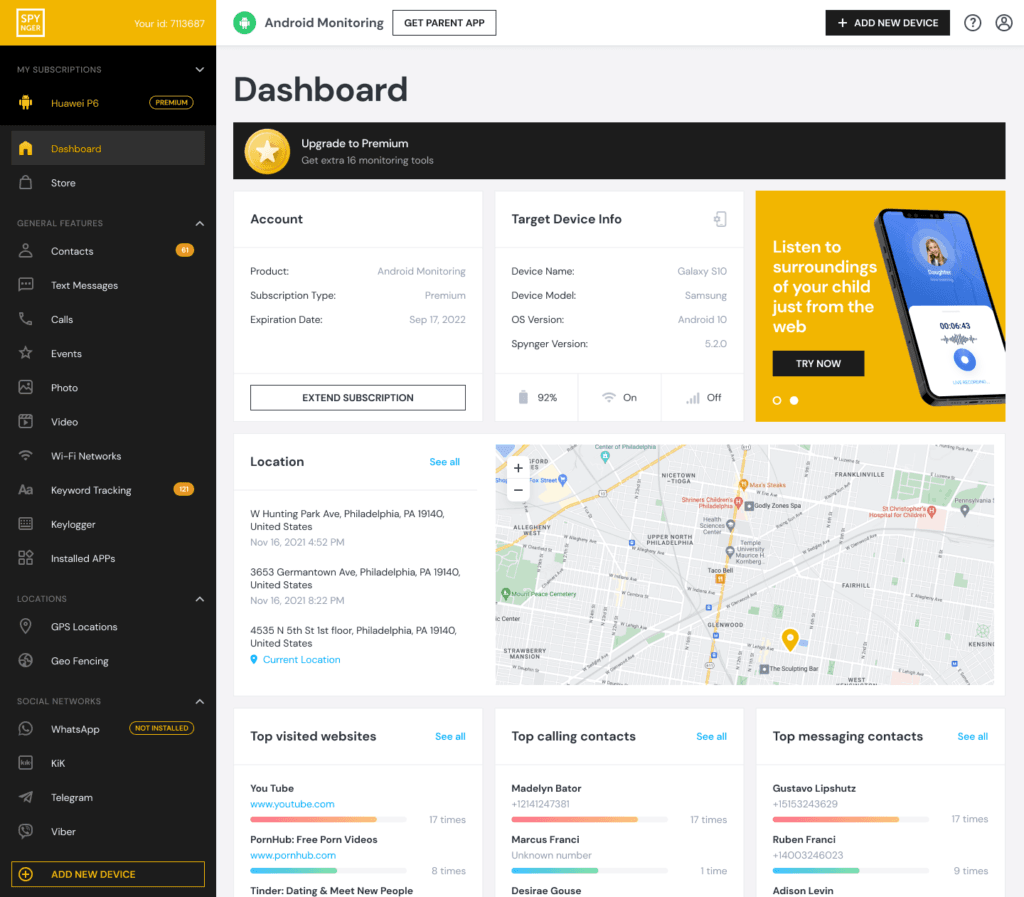
    Parental monitoring appMay provide location history and safety alertsInstallation, permissions, and authorizationOngoing child-device supervision

    If youโ€™re searching for a phone tracker by number without them knowing, youโ€™ve likely encountered a maze of bold promises and shady websites. reliable phone tracking methods With a decade of experience in digital security and ethics, Iโ€™m here to provide clarity. The core truth is this: truly tracking a modern smartphone in real-time using only a phone number is a technical myth, and attempting to do so secretly is often illegal. However, powerful monitoring software does exist, designed for specific, lawful purposes. 

    Updated February 2026

    A professional Gmail security and monitoring application interface, showing expert insights into ethical account access and protection features.

    This guide will demystify the technology, separate marketing hype from reality, and provide a clear-eyed reliable phone tracking methods review of the tools available, all while emphasizing the critical legal and ethical lines you must not cross.

    Table of Contents reliable phone tracking methods

    The Technical Reality: Why โ€œBy Number Onlyโ€ is a Myth

    The idea of entering a phone number into a website to get a live location feed is compelling but fundamentally flawed. A mobile number is an identifier for a SIM card on a cellular network. While carriers can approximate a general area through cell tower triangulation, this data is private and not accessible to the public or commercial apps.

    Real-time, precise location tracking relies on the deviceโ€™s GPS, Wi-Fi, and data connections. Accessing this data stream requires either:

    1. Explicit Consent:ย Using built-in features like Appleโ€™s Find My or Google Location Sharing.
    2. Software Installed on the Device:ย This is how professional monitoring applications work.

    Therefore, the phrase โ€œphone tracker by number without them knowingโ€ is misleading. Effective monitoring requires a connection to the device itself, not just its number. Any service claiming otherwise is likely a scam designed to steal your money or personal information.

    The Legal and Ethical Imperative: A Non-Negotiable First Step

    Before considering any tool, understanding the legal landscape is crucial. In most jurisdictions, installing tracking software on a device you do not own or without the explicit consent of the owner is illegal. It can violate:

    • Computer Fraud and Abuse Acts:ย For unauthorized access to a device.
    • Stalking and Harassment Laws:ย For persistent, unwanted surveillance.
    • Electronic Communications Privacy Acts:ย Which prohibit intercepting communications.

    The legitimate use cases for the technology we will discuss are narrow and specific: parental control of minor children or managing company-owned devices with explicit employee consent and policy . Using these tools to secretly monitor a partner, friend, or employee without their knowledge is not only a profound breach of trust but can result in severe criminal and civil penalties. Ethical practice in technology demands transparency, respect for autonomy, and a clear consideration of the human impact .

    How Professional Monitoring Apps Actually Work

    Legitimate monitoring requires a connection to the target device, established by installing a specialized application. These apps run discreetly in the background, collecting data (location, messages, app usage) and sending it to a secure, private online dashboard for the installer to view.

    Itโ€™s vital to understand that leading apps in this space are explicitly designed and marketed as parental control solutions. Their stated purpose is to help parents safeguard their childrenโ€™s digital and physical safety . This intended use is the critical context for evaluating their features.

    In-Depth Tool Analysis: mSpy, Parentaler, and Sphnix

    1. mSpy: The Comprehensive Monitoring Powerhouse

    mSpy is one of the most established names in parental control software, known for its extensive and powerful feature set that provides deep visibility into a deviceโ€™s activity.

    A professional Gmail security and monitoring application interface, showing expert insights into ethical account access and protection features.

    Key Features:

    • GPS Location Tracking & Geofencing:ย View real-time location, historical routes, and set up virtual boundaries (geofences) for automatic arrival/departure alerts.
    • Extensive Social Media & Call Monitoring:ย Tracks chats, images, and calls across a vast array of platforms including WhatsApp, Snapchat, Facebook Messenger, Instagram, and SMS.
    • Advanced Surveillance Tools:ย Includes a keylogger to capture keystrokes, a screen recorder, ambient recording, and remote camera access.
    • Stealth Operation:ย The app is designed to run invisibly on the target device.
      Important Context:ย Independent reports and data breaches have revealed that mSpyโ€™s software is frequently misused for domestic surveillance, leading media outlets to characterize it as โ€œstalkerwareโ€ when used illicitly. It has also been the victim of significant security breaches that exposed customer data.

    For comprehensive parental monitoring, explore mSpyโ€™s features.

    TRY NOW

    2. Parentaler: The Family Safety and Control App

    Parentaler is presented as a user-friendly parental control app focused on child safety, location sharing, and digital well-being management.

    A professional Gmail security and monitoring application interface, showing expert insights into ethical account access and protection features.

    Key Features:

    • Family Locator & GPS Tracking:ย Designed for consensual location sharing within a family on a private map.
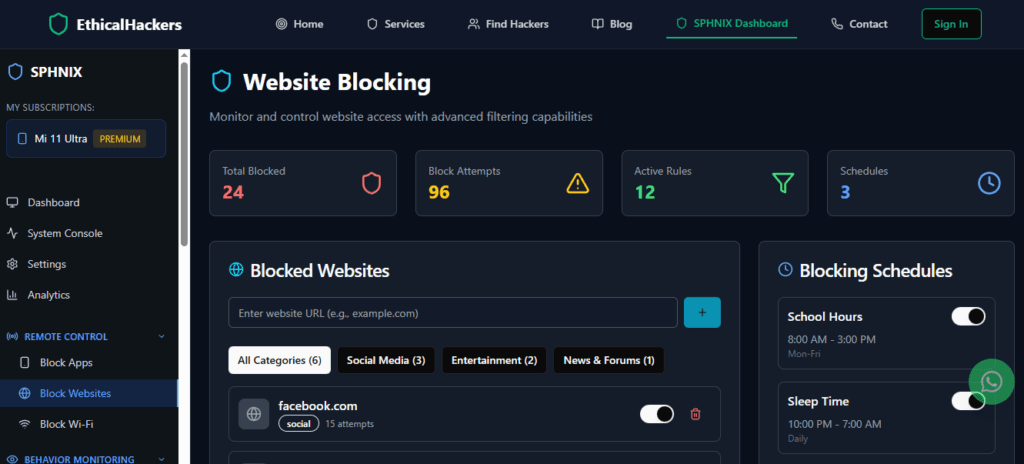
    • Content and Screen Time Management:ย Includes tools to filter inappropriate websites, block apps, and set healthy screen time limits.
    • Communication Monitoring:ย Allows parents to review SMS text messages and call logs.
    • Quiet Monitoring:ย Operates in a background โ€œstealth modeโ€ intended to give parents oversight without constant negotiation.
      Best For:ย Parents seeking a straightforward tool for location sharing, content filtering, and managing their childโ€™s screen time, with less emphasis on deep social media surveillance.

    For family location sharing and parental controls, investigate Parentaler.

    BUY NOW

    3. Sphnix & โ€œHire-a-Hackerโ€ Services: The Professional Marketplace

    Platforms like โ€œHire-a-Hacker Serviceโ€ represent the world of professional, enterprise cybersecurity. They connect businesses with vetted ethical hackers for security testing, penetration testing, and digital forensics on the companyโ€™s own systems.
    Critical Clarification: Reputable ethical hacking firms do not accept private contracts to infiltrate personal phones. They work under strict legal contracts to test security defenses with full authorization. Any service offering to โ€œhackโ€ a personal phone for you is almost certainly a scam and engaging with them poses serious risks of fraud or legal entanglement.

    A professional Gmail security and monitoring application interface, showing expert insights into ethical account access and protection features.

    For professional, legal cybersecurity services for a business, consult the marketplace.

    TRY NOW

    Feature Comparison: mSpy vs. Parentaler

    FeaturemSpyParentaler
    Primary Design PurposeComprehensive parental monitoring & surveillanceFamily safety, location sharing & digital well-being
    GPS & Location TrackingReal-time GPS, detailed history, geofencingReal-time location sharing, geofencing
    Social Media MonitoringExtensive (WhatsApp, Snapchat, Instagram, etc.)More limited focus
    Key Additional FeaturesKeylogger, screen recorder, ambient recordingApp/website blocker, screen time scheduler
    Stealth OperationYes (full stealth mode)Yes (quiet background mode)
    Reported Misuse RiskHigh (frequently classified as stalkerware)Moderate (requires installation)
    Ideal Legal Use CaseIn-depth monitoring of a childโ€™s device with parental responsibility.Managing a childโ€™s screen time and location with parental responsibility.

    The Right Path: Choosing Transparency Over Secrecy

    The desire for certainty is human, but secret surveillance is a destructive and illegal way to address relationship doubts. If you feel compelled to track someone without their knowledge, it signals a deeper issue that technology cannot fix.

    1. Choose Open Communication:ย Address concerns directly and honestly.
    2. Use Consensual Tools:ย For mutual safety or convenience, use transparent features likeย Apple Find Myย orย Google Location Sharing, which require active consent from all parties.
    3. Seek Professional Help:ย If trust is broken, couples counseling is a far healthier and more constructive path than spyware.

    Conclusion: Abandon the Myth, Embrace Responsibility

    The quest for a magic phone tracker by number without them knowing leads to dead ends: scams, legal trouble, and shattered trust. The powerful software that does existโ€”like mSpy and Parentalerโ€”has a specific, lawful purpose: protecting children under parental supervision. Misusing this technology to spy on another adult is unethical, harmful, and illegal.

    Prioritize ethical choices and human connection. Use technology to protect and connect with consent, not to deceive and control.
    For professional, legal cybersecurity services pertaining to business assets, you can explore enterprise solutions.
    hire a hacker


    Frequently Asked Questions (FAQs)

    1. Are there any free apps that can track a phone by number secretly?
    No. Any website or app claiming to offer free, secret tracking using just a phone number is a scam. These sites are designed to steal your payment information, infect your device with malware, or collect your personal data for fraud. Accurate tracking requires device installation.

    2. Can the person find out I installed tracking software on their phone?
    High-quality apps are designed to be stealthy, but they are not undetectable. A tech-savvy user might notice unusual battery drain, increased data usage, or the device running warmer. On Android devices, the app may sometimes be found in the deviceโ€™s application manager. No stealth is perfect.

    3. What should I do if I suspect someone is secretly tracking my phone?
    Look for signs like fast battery drain, high data usage, or unfamiliar apps in your settings. Perform a factory reset (backing up important data first), which will remove most tracking software. On iOS, check for unfamiliar profiles in Settings > General > VPN & Device Management. Consider using reputable anti-malware tools and, if you fear for your safety, contact local authorities.

  • Do I Need a Degree for Cyber Security? Real Hiring Guide (2026)


    If you are searching do i need a degree for cyber security, you are asking one of the most important career questions in cyber security.

    People often get conflicting advice online. One source says only degrees matter. Another says certifications are enough. The reality is more practical. This guide gives a direct answer to do i need a degree for cyber security and then shows how to build a realistic plan that leads to interviews, skill growth, and long-term career options.

    1. do i need a degree for cyber security

    Short answer: You do not always need a degree for cyber security, but you do need practical skills, proof of work, and consistent learning discipline.

    Hiring managers usually prioritize practical evidence. They want candidates who can explain risk, execute tasks consistently, and communicate clearly under pressure.

    2. What employers look for first

    • Strong networking and operating system fundamentals
    • Ability to investigate alerts and document findings clearly
    • Hands-on project evidence, not just certificate lists
    • Communication quality during incidents and escalations
    • Reliability, learning discipline, and professional judgment

    A degree can help with screening, but evidence of real execution often decides hiring outcomes.

    3. Which degree paths map to which roles

    Computer science can support engineering-heavy roles. Information technology can support operations and infrastructure roles. Dedicated cybersecurity programs can provide focused exposure to governance, incident response, and risk management. None of these paths guarantee a job by themselves, but each can be valuable if paired with practical projects.

    Candidates should choose education based on target role, budget, and timeline, not prestige alone.

    4. Alternatives when a degree is not the best option

    Some professionals move from help desk, system administration, or network support into security roles by building focused project portfolios. Others use certifications plus labs to prove practical readiness. Apprenticeships, internships, and contract roles can also accelerate entry when candidates show strong fundamentals and communication.

    The strongest approach is often hybrid: foundational learning plus repeatable project output.

    5. Cost, ROI, and opportunity tradeoffs

    Before choosing a degree, calculate total cost, expected timeline, and opportunity cost. A four-year program can be powerful for long-term flexibility, but it can also delay income. Shorter pathways can get you into the workforce faster, but may require more self-direction and continued learning after placement.

    Your best option depends on your current experience, financial constraints, and career goals.

    6. Realistic timeline to become job ready

    • Months 0-3: core fundamentals, terminology, and lab setup
    • Months 3-6: practical exercises, simple investigations, documentation practice
    • Months 6-12: portfolio projects, interview readiness, focused applications
    • Months 12-24: specialization and larger-scope responsibilities

    Consistency is the differentiator. Ten focused hours each week over time beats short bursts of intense study.

    7. 90-day action plan you can start now

    Days 1-30

    • Pick one target role and define required skills
    • Build a weekly study schedule you can sustain
    • Start a project log with screenshots and clear notes

    Days 31-60

    • Complete hands-on labs and publish project artifacts
    • Practice explaining technical findings in plain language
    • Build role-specific resume bullets tied to outcomes

    Days 61-90

    • Run mock interviews and improve weak areas
    • Apply to targeted openings with customized evidence
    • Continue adding projects to show momentum

    8. Trusted references for career planning

    FAQs

    Can I get hired without a degree?

    Yes. Many candidates are hired through practical projects, strong fundamentals, and clear communication.

    Do certifications matter in hiring?

    They help prove baseline knowledge, but practical skill and execution quality matter more in interviews.

    How many hours should I study each week?

    Most successful transitions are built on 8 to 12 consistent hours per week.

    Is coding required for entry roles?

    Basic scripting helps, but many roles also prioritize investigation quality and communication.

    When should I start applying?

    Apply once you can explain core concepts clearly and show repeatable project evidence.

    Conclusion

    The best path for do i need a degree for cyber security is the one you can execute consistently with clear milestones and practical output. Build a portfolio, strengthen communication, and keep learning in public.

    Need help mapping your fastest path? Contact Cyberlord for a role-specific roadmap.

    Practical Reinforcement

    Consistent execution, clear ownership, and measurable outcomes are the habits that create long-term security success. Keep your weekly cadence, review metrics monthly, and close high-risk gaps with deadlines.

    Practical Reinforcement

    Consistent execution, clear ownership, and measurable outcomes are the habits that create long-term security success. Keep your weekly cadence, review metrics monthly, and close high-risk gaps with deadlines.
    Practical Reinforcement

    Consistent execution, clear ownership, and measurable outcomes are the habits that create long-term security success. Keep your weekly cadence, review metrics monthly, and close high-risk gaps with deadlines.

    Practical Reinforcement

    Consistent execution, clear ownership, and measurable outcomes are the habits that create long-term security success. Keep your weekly cadence, review metrics monthly, and close high-risk gaps with deadlines.
    Practical Reinforcement

    Consistent execution, clear ownership, and measurable outcomes are the habits that create long-term security success. Keep your weekly cadence, review metrics monthly, and close high-risk gaps with deadlines.
    Practical Reinforcement

    Consistent execution, clear ownership, and measurable outcomes are the habits that create long-term security success. Keep your weekly cadence, review metrics monthly, and close high-risk gaps with deadlines.

    Practical Reinforcement

    Consistent execution, clear ownership, and measurable outcomes are the habits that create long-term security success. Keep your weekly cadence, review metrics monthly, and close high-risk gaps with deadlines.
    Practical Reinforcement

    Consistent execution, clear ownership, and measurable outcomes are the habits that create long-term security success. Keep your weekly cadence, review metrics monthly, and close high-risk gaps with deadlines.
    Practical Reinforcement

    Consistent execution, clear ownership, and measurable outcomes are the habits that create long-term security success. Keep your weekly cadence, review metrics monthly, and close high-risk gaps with deadlines.

    Practical Reinforcement

    Consistent execution, clear ownership, and measurable outcomes are the habits that create long-term security success. Keep your weekly cadence, review metrics monthly, and close high-risk gaps with deadlines.

    Practical Reinforcement

    Consistent execution, clear ownership, and measurable outcomes are the habits that create long-term security success. Keep your weekly cadence, review metrics monthly, and close high-risk gaps with deadlines.
  • How Can I Track a Phone Number Without Them Knowing?

    The practical answer: you cannot legitimately obtain a private live location from a phone number while hiding the request from its owner. A number can be used to send a location-request link, but the recipient must open it and agree to share. For a phone you own, use the device makerโ€™s recovery tool. For family safety, configure sharing or monitoring openly before an emergency.

    That may sound less magical than the advertisements, but it helps you avoid subscription traps. If a site claims the map is already โ€œcalculatingโ€ before the phone owner has approved anything, it may be showing a generic animation rather than a verified location.

    Four legitimate routes to a phoneโ€™s location

    1. Your missing iPhone:ย sign in to Apple Find My with the ownerโ€™s account.
    2. Your missing Android:ย use Googleโ€™s device-finding service with the ownerโ€™s account.
    3. A family member:ย ask them to share through Find My, Google Maps, or a family account.
    4. An authorized child device:configure a parental-control product with the necessary permissions and explain the safety rules.

    If youโ€™re searching for a way to track a phone number without the user finding out, youโ€™ve likely hit a wall of confusing ads and tech How to Install anical jargon. The internet is flooded with services promising invisible surveillance using just a digit string, but as a professional with over ten years in digital security, I must clarify a harsh truth: how can i track a phone number without them knowing tracking a modern smartphone with only its phone number is a technical impossibility for private citizens. Real-time, precise location data doesnโ€™t come from the number; it comes from the deviceโ€™s GPS and internet connection. However, powerful monitoring tools do exist for specific, lawful purposes. 

    Updated February 2026

    A professional Gmail security and monitoring application interface, showing expert insights into ethical account access and protection features.

    This guide will demystify the technology, explain the significant legal boundaries you cannot ignore, and provide a clear analysis of the applications that facilitate digital oversight when used correctly.

    A Professional Guide to-directionโ€>

    Table of Contents

    The Technical Reality: A Phone Number is Not a Tracker

    The central myth we must dispel is the โ€œmagic number lookup.โ€ Your targetโ€™s phone number is simply an identifier for a SIM card on a cellular network. While carriers can approximate a general location through cell tower triangulation for 911 services, this data is legally protected and inaccessible to the public or commercial apps. Accurate tracking requires accessing the deviceโ€™s GPS, Wi-Fi, and data signals. Consequently, any service claiming to provide real-time location using only a number is a scam. These sites exist to steal your money, harvest your personal data, or infect your device with malware. Effective monitoring always requires a deeper connection to the device itself, moving beyond the number to the software on the phone.

    The Legal Landscape: A Non-Neg How Can You Trackotiable Priority

    Before exploring any tool, understanding the law is critical. In virtually every jurisdiction, including all U.S. states, installing tracking software on a device you do not own or without the ownerโ€™s explicit consent is a serious crime. It typically violates:

    • Computer Fraud and Abuse Act:ย For unauthorized access to a computer system (which includes smartphย How to Read WhatsAppones).
    • Stalking and Harassment Laws:ย For persistent, unwanted surveillance.
    • State Electronic Surveillance Acts:ย Which criminalize the interception of communications.

    The only universally accepted legal defenses involve being an โ€œauthorized user.โ€ This applies strictly to:

    • Parents monitoring their minor children.
    • Businesses monitoring company-owned devicesย with a clear, consented employee policy.

    Using these tools to secretly monitor a partner, spouse, or any other adult is illegal and can result in criminal prosecution, restraining orders, and severe civil penalties. This guide discusses technology within its legal, intended framework.

    How Real Monitoring Software Actually Functions

    Since a number alone is ineffective, legitimate monitoring requires a connection to the target device. This is established by installing a specialized application. These apps, often categorized under โ€œparental control,โ€ run discreetly in the background. They collect dataโ€”including live GPS coordinates, app usage, and communicationsโ€”and transmit it to a secure, private online dashboard. This process necessitates one-time physical access to the target phone or, for some iOS features, the appropriate iCloud credentials. The promise of โ€œtrack without installationโ€ is the hallmark of fraud; real tools require this initial access step.

    In-Depth Tool Analysis: Scannero, Moniterro, and Sphnix

    Letโ€™s examine the specific tools mentioned. It is imperative to base your choice on the intended, lawful use case: parental protection.

    Scannero: The Digital Investigator

    Scannero positions itself as a versatile tool that blends phone number intelligence with device monitoring capabilities. Itโ€™s designed for users who want to start with a basic lookup and potentially scale into more comprehensive oversight.

    A professional Gmail security and monitoring application interface, showing expert insights into ethical account access and protection features.

    Key Features and Analysis:

    • Initial Number Scanning:ย The service promotes the ability to gather preliminary information linked to a phone number, offering a starting point for investigation.
    • GPS Location Tracking:ย Once configured on a target device, it provides real-time location data and movement history on a detailed map.
    • Social Media and Call Monitoring:ย Offers access to communication data from popular platforms and call logs.
    • Web-Based Dashboard:ย Delivers all information through a centralized, browser-accessible control panel for remote monitoring.

    Best For: Individuals seeking a tool that begins with a investigative lookup function and transitions into full device monitoring for parental safety purposes.

    TRY NOW

    Moniterro: The Guardian and Guide

    Moniterro is structured as a straightforward parental control application. Its focus is on providing parents with clear, actionable insights into their childโ€™s device activity and whereabouts, emphasizing safety and responsible usage.

    EN Access Phone Remotely 728x90 1 5 1

    Key Features and Analysis:

    • Focused Location Tracking:ย Delivers reliable, real-time GPS location and a clean history log, prioritizing clarity and accuracy of whereabouts.
    • Communication Oversight:ย Allows parents to monitor SMS text messages and call histories to understand who their child is communicating with.
    • App and Web Activity Monitoring:ย Provides visibility into which applications are being used and tracks general web browsing history.
    • User-Centric Design:ย Aims for an intuitive interface that makes vital information easy for parents to find and understand quickly.

    Best For: Parents who need a reliable, no-frills tool for core location tracking and basic activity monitoring to ensure their childโ€™s digital and physical safety.

    Need a straightforward solution for parental oversight? See what Moniterro offers.

    BUY NOW

    Sphnix & Professional Cybersecurity Services

    The โ€œHire-a-Hacker Serviceโ€ platform represents the professional sphere of enterprise cybersecurity. It is a marketplace connecting businesses with vetted ethical hackers for security testing on the companyโ€™s own systems.

    A professional Gmail security and monitoring application interface, showing expert insights into ethical account access and protection features.

    Critical Clarification:

    • Legitimate Purpose:ย These experts perform legal penetration testing, vulnerability assessments, and security audits under strict contractual authorization.
    • Not for Personal Surveillance:ย Reputable firms have stringent ethical codes andย will notย accept contracts to hack personal phones, emails, or social media accounts. Any service offering this to individuals is a scam.

    For professional, legal cybersecurity services for a business, consult the experts.

    TRY NOW

    Choosing the Right Path: A Comparison

    AspectScannero (Digital Investigator)Moniterro (Parental Guardian)Professional Services (Sphnix)
    Primary DesignInvestigative tool + device monitoringFocused parental control & safetyEnterprise cybersecurity testing
    Key StrengthInitial data gathering & comprehensive trackingReliable location & clear activity oversightLegal security audits for businesses
    Ideal Legal UseParental monitoring where initial investigation is neededDay-to-day parental oversight of a childโ€™s deviceCompanies testing their own network security
    User ExperienceGeared towards gathering broad dataGeared towards clear, safety-focused insightsProfessional, contract-based engagements

    The Ethical Imperative: Why Transparency Wins

    The desire for certainty is human, but secret surveillance is a destructive and illegal way to address personal doubts. If you feel compelled to track another adult without their knowledge, it signals a relationship issue that technology cannot and should not fix.

    1. Choose Honest Communication:ย Address concerns directly. Secrets destroy trust, while honesty can build it.
    2. Use Consensual Sharing:ย For mutual safety, use transparent features likeย Apple Find Myย orย Google Location Sharing, which require active consent.
    3. Seek Professional Guidance:ย A relationship counselor can help address underlying trust issues in a healthy, constructive manner.

    Conclusion: Prioritize Legality and Ethics

    The search for a method to track a phone number without them knowing leads to a dead end of scams and legal peril. The legitimate tools that existโ€”like Scannero and Moniterroโ€”are designed for the legal, responsible purpose of parental control. Misusing them for secret surveillance is unethical, harmful, and a serious crime.

    Invest in trust and open communication, not in tools that will ultimately create far greater problems than they solve. Make choices that respect privacy and uphold the law.

    For professional, legal cybersecurity services pertaining to business assets, connect with certified experts.
    hire a hacker


    Frequently Asked Questions (FAQs)

    1. Is it true that some apps can track a phone just by the number, no installation needed?
    No, this is false. This claim is the most common indicator of a scam. Accurate, real-time GPS tracking requires software to be installed on the target device to access its location services. Any service stating otherwise is fraudulent.

    2. What are the real-world consequences if Iโ€™m caught using tracking software illegally?
    Consequences are severe and can include: criminal charges (stalking, computer fraud), a permanent criminal record, substantial fines, a restraining order, and a civil lawsuit for invasion of privacy and emotional distress. The personal relationship will almost certainly be destroyed.

    3. As a parent, how do I balance monitoring with my teenโ€™s privacy?
    Open communication is key. Discuss why you feel monitoring is necessary for their safety. For older teens, consider scaling back surveillance as they demonstrate responsibility, focusing on agreements about appropriate use rather than secret tracking. Transparency builds trust, even in a parent-child relationship.

  • Can You Track Someone by Their Phone Number on iPhone?

    Quick answer: Can you track someone by their phone number on iPhone? Not silently from the number alone. A phone number can deliver a location-sharing request, but the recipient must participate. Reliable iPhone location comes from Find My, Family Sharing, carrier emergency processes, or an authorized app configured on the device.

    A phone number identifies where calls and messages should be routed. It does not act as a GPS password. Websites that show a fake scanning screen after you enter a number are usually selling a lookup, sending a consent link, or leading visitors toward a payment screen without explaining what the service can actually access.

    The useful question is not whether the number itself reveals a live pin. It is which location-sharing method fits your situation: finding your own missing iPhone, coordinating with family, supervising a childโ€™s device, or asking someone to share a location voluntarily.

    Table of Contents

    What Each iPhone Tracking Method Can Do

    MethodWhat it showsWhat it requires
    Apple Find MyCurrent or last available location of your devices and approved shared locations.Find My enabled, account access, or prior location sharing.
    Family SharingLocations shared by participating family members and family devices.Family setup and location sharing.
    Location request by textA location after the recipient opens the request and agrees.A reachable number, internet access, and recipient consent.
    Reverse phone lookupPossible name, carrier, region, or public-record details.A legitimate lookup source; it does not provide live GPS.
    Parental or managed-device appOnly the location data supported by the product and granted permissions.Ownership or authorization, compatibility, and completed setup.

    Use Find My for an iPhone You Own

    Find My is the first choice for a missing personal device. Sign in through another trusted Apple device or use Find Devices on iCloud.com. Depending on the configuration, you may see the current location, a last known location, or no location when the phone is offline and the Find My network cannot report it.

    If you believe the phone was stolen, avoid confronting anyone at a map pin. Mark it as lost, protect the associated accounts, contact the carrier, and give location evidence to local authorities where appropriate.

    Share Location With Family Members

    Apple Family Sharing lets members choose whether to share their locations. The organizer can configure family settings, but family members still receive information about sharing. Apple explains that shared family locations appear in Find My and can help locate missing family devices. Review the current process in Appleโ€™s Family Sharing location guide.

    Parent and teenager openly configuring iPhone family location sharing
    Reliable family location sharing starts with an account or device setup, not with entering a phone number into a website.

    Send a Location Request by Phone Number

    A location-request service can use a phone number to send a text containing a sharing link. The number is the delivery address, not the tracking mechanism. The recipient must open the link and allow location access. Results also depend on GPS, browser permissions, network connectivity, and whether the recipient chooses an approximate or precise location.

    This is useful when meeting someone, confirming a safe arrival, or helping a relative who knows they are sharing. It should never be advertised as invisible phone-number tracking.

    Can a Carrier Track an iPhone?

    Mobile networks generate technical location information while providing service, but consumer support agents do not normally hand a caller another subscriberโ€™s live location. Emergency disclosure and lawful requests follow carrier procedures and applicable law. For an immediate danger or missing-person emergency, contact local emergency services and the carrier rather than purchasing an online tracker.

    Why an iPhone Location May Be Missing or Delayed

    Even a correctly configured location service is not a perfect live feed. The iPhone may be powered off, have no network connection, be inside a building with weak GPS reception, or be using a location permission that allows only approximate results. Low Power Mode and background restrictions can also affect how frequently some third-party apps update.

    Check the timestamp before acting on any pin. A location from twenty minutes ago describes where the device was, not necessarily where it is now. Compare the map with battery status, connection state, and the last successful check-in. When safety is involved, call the person and use established emergency channels rather than relying on one delayed map result.

    Set Up Family Location Sharing Properly

    1. Confirm that every family member uses the intended Apple Account and device.
    2. Turn on Location Services and review whether precise location is appropriate.
    3. Enable sharing for the selected family members instead of assuming it is automatic.
    4. Test the setup while both phones are present and connected.
    5. Explain what notifications and location history the family will use.

    Repeat the test after replacing a phone, changing an Apple Account, or restoring from a backup. These transitions are common reasons a previously working family location stops appearing.

    How to Spot a Fake Phone-Number Tracker

    • It promises messages, photos, and precise GPS from only a phone number.
    • It displays a progress animation before checking device ownership or consent.
    • It hides setup requirements until after payment.
    • It asks for an Apple Account password or verification code through chat.
    • It guarantees tracking even when the phone is off.

    Reality check: a legitimate service should explain the permission, account, app, or sharing request that makes location data available.

    Using Sphnix for an Authorized Device

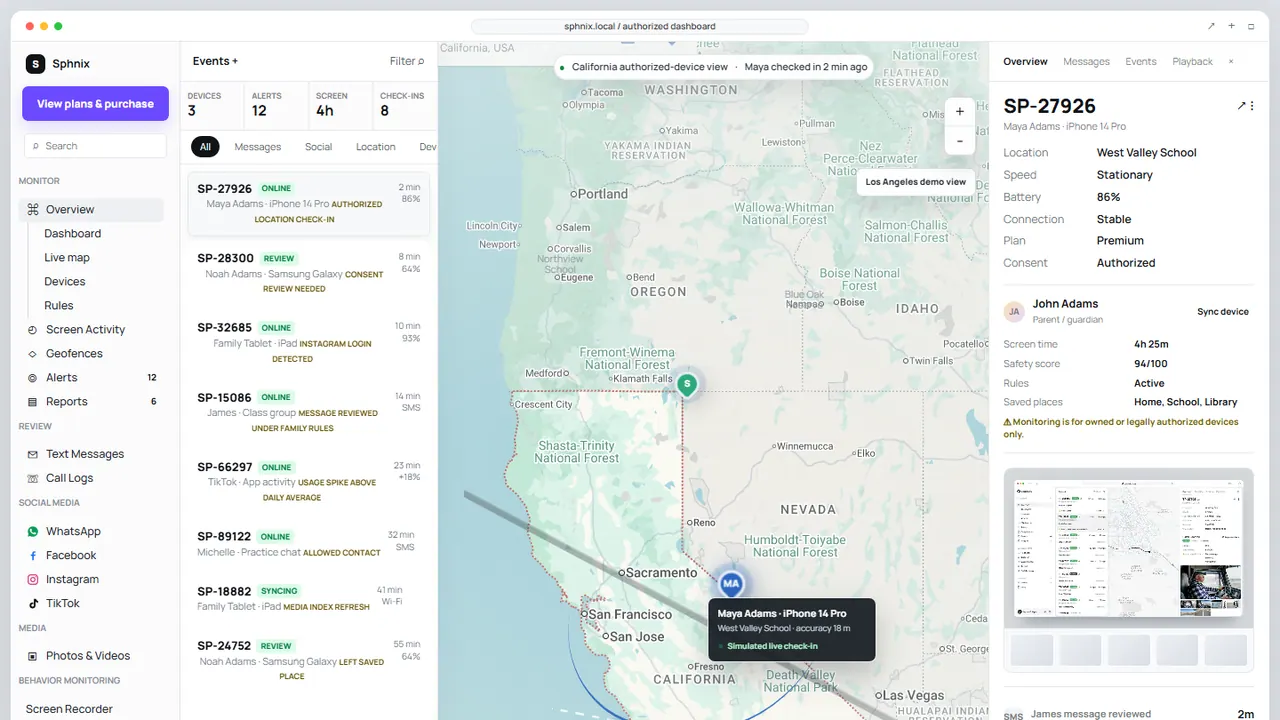
    Sphnix provides a dashboard for devices you own or are authorized to manage. Its location view can organize device check-ins, a map pin, accuracy, battery status, route context, and reports after the required setup is complete. The phone number may help identify a device during onboarding, but it does not unlock or silently locate an iPhone.

    Compare that workflow with our broader guide to tracking someone by phone number and our explanation of what iPhone monitoring actually requires.

    Sphnix authorized iPhone location dashboard with device check-ins and map pin
    The Sphnix demo shows the location-review workflow available after authorized setup.

    See the Location Dashboard Before Buying

    Open the live demo to inspect the map, check-in history, device details, and report workflow. Confirm iPhone compatibility and setup requirements before choosing a plan.

    Open the Sphnix DemoSee Sphnix Plans

    Frequently Asked Questions

    Can you track someone by their phone number on iPhone for free?

    A number alone does not reveal live GPS. Apple Find My and voluntary location sharing can be free, but they require ownership, account access, or participation.

    Can someone track my iPhone if location services are off?

    Available location becomes more limited. Some Apple network and last-location features depend on prior configuration, device state, and account access.

    Does a reverse phone lookup show live location?

    No. It may show public identity, carrier, or broad registration information, but not a live GPS pin.

    Does Sphnix track an iPhone from only its number?

    No. Sphnix requires a compatible, authorized setup. The number does not unlock the device or grant location permission.

  • Reverse SEO: The Complete Reputation Recovery Strategy (2026

    Reverse SEO is one of the most misunderstood concepts in digital marketing. The name sounds counterintuitive โ€” why would you use SEO to suppress something? โ€” but the mechanics are straightforward once you understand how Google ranks content.

    This guide explains reverse SEO from first principles: what it is, how it works, the exact methodology professionals use, what it costs, and when it’s the right tool for your situation.


    What Is Reverse SEO?

    Standard SEO is the practice of optimizing content to rank higher in search results. Reverse SEO is the practice of creating and optimizing new content to rank above harmful existing content โ€” effectively “reversing” the damage by surrounding it with positive material.

    The term “reverse” refers to the goal: instead of ranking your own content higher for business reasons, you’re ranking new content higher to displace content you don’t control.

    What reverse SEO is:

    • A search result suppression technique
    • A content-creation and link-building strategy
    • A tool for pushing harmful content from page one to page two (and beyond)
    • A legal, white-hat practice

    What reverse SEO is not:

    • A way to delete content from the internet
    • A negative SEO attack on the target page (that’s illegal and counterproductive)
    • An overnight fix
    • A guarantee of permanent removal

    How Google Determines What Ranks

    To understand why reverse SEO works, you need to understand what Google actually evaluates when deciding which pages appear on page one for any given search query.

    Google’s ranking algorithm considers hundreds of signals, but the key factors for name-based or brand-based queries are:

    1. Topical relevance: Does the page’s content match the search query (your name/brand)?
    2. Domain authority: How trustworthy and authoritative is the website hosting the content?
    3. Page authority: How many and what quality of links point to this specific page?
    4. Freshness: How recently was this content published or updated?
    5. Engagement signals: Do users click on this result? Do they immediately bounce?
    6. Entity association: Does Google’s Knowledge Graph associate this URL with you?

    Negative content often ranks because it has a combination of topical relevance + domain authority. A news article ranks because major news sites have extremely high domain authority โ€” even for relatively thin content about you.

    Reverse SEO works by introducing multiple new pages that collectively provide enough topical relevance and authority to collectively outrank the single negative page.


    The Reverse SEO Methodology: Step by Step

    Phase 1: SERP Mapping (Week 1)

    Before creating a single piece of content, you need a complete map of the current search landscape for your name or brand.

    Identify:

    • All pages currently ranking in positions 1โ€“20 for your name
    • The domain authority of each ranking page
    • The number of backlinks pointing to each negative result
    • The approximate keyword difficulty of displacing each page
    • Which positions are “winnable” with realistic effort

    This SERP map becomes your targeting document. You’re not trying to suppress everything equally โ€” you’re prioritizing the pages that appear highest and will cause the most damage left unaddressed.

    Phase 2: Asset Inventory (Week 1โ€“2)

    Map all existing positive online assets:

    • Your own website and its current rankings
    • Social media profiles and their current search visibility
    • Published articles, interviews, or mentions in positive contexts
    • Review profiles and star ratings
    • Any professional profiles (LinkedIn, Crunchbase, etc.)

    These existing assets are the foundation. Before creating new content, maximize what you already have โ€” often, fully optimizing an existing LinkedIn profile or author page can move it from position 15 to position 3 without creating anything new.

    Phase 3: Content Production Plan (Week 2โ€“3)

    Based on the SERP map, design a content production plan targeting each open position. The goal is to occupy as many of the top 10 positions as possible with content you control or influence.

    Content types ranked by suppression effectiveness:

    Content TypeSuppression PowerTime to Rank
    LinkedIn personal profileโ˜…โ˜…โ˜…โ˜…โ˜…2โ€“4 weeks
    YouTube channel / videosโ˜…โ˜…โ˜…โ˜…โ˜…4โ€“8 weeks
    Wikipedia / Wikidataโ˜…โ˜…โ˜…โ˜…โ˜…4โ€“12 weeks
    Guest posts on DA 70+ sitesโ˜…โ˜…โ˜…โ˜…โ˜†6โ€“12 weeks
    Press release distributionโ˜…โ˜…โ˜…โ˜†โ˜†4โ€“8 weeks
    Medium articlesโ˜…โ˜…โ˜…โ˜†โ˜†4โ€“8 weeks
    Podcast appearancesโ˜…โ˜…โ˜…โ˜†โ˜†8โ€“16 weeks
    Personal/brand website contentโ˜…โ˜…โ˜…โ˜…โ˜†8โ€“16 weeks
    Industry directory listingsโ˜…โ˜…โ˜†โ˜†โ˜†4โ€“8 weeks

    Phase 4: Publishing and Optimization (Weeks 3โ€“12)

    Execute the content plan systematically. Each piece of content must be:

    On-page optimized:

    • Title/headline includes your exact name or brand name
    • First paragraph uses the name/brand naturally in context
    • Meta description written to maximize CTR (higher CTR signals relevance to Google)
    • Images have alt text referencing your name
    • Page uses appropriate schema markup (Person schema for individual pages)

    Off-page amplified:

    • Shared across your social media profiles (creates engagement signals)
    • Linked to from your primary website (passes link equity)
    • Submitted to relevant aggregators or directories
    • Where possible, earn even one or two external backlinks (dramatically accelerates ranking)

    Phase 5: Link Building for Suppression (Weeks 4โ€“20)

    This is the highest-leverage activity in reverse SEO and the one most agencies underinvest in. A well-optimized page with zero external links will almost never outrank a poorly-optimized page on a high-authority domain with hundreds of links.

    Link acquisition tactics for suppression:

    • HARO (Help a Reporter Out) responses โ€” get quoted in articles that link back to your profile/site
    • Podcast guest appearances โ€” every episode page creates a linked mention
    • Speaking at conferences โ€” event pages link to speakers
    • Publishing original research or data โ€” naturally earns links from citing sites
    • Strategic partnerships โ€” cross-linking with complementary businesses

    Even 3โ€“5 high-quality links from DA 60+ domains can accelerate a suppression page from position 15 to position 4โ€“6.

    Phase 6: Monitoring and Iteration (Ongoing)

    Set up weekly ranking checks for all target queries. As new content starts ranking:

    • Strengthen the highest-ranking assets with additional links
    • Refresh older content with updated information (signals freshness to Google)
    • Add new content to fill any positions that aren’t yet occupied by positive material

    Reverse SEO vs. Legal Removal: Which Do You Need?

    Many reputation cases benefit from both approaches running in parallel. Here’s how to decide:

    SituationBest Approach
    Content violates platform policiesLegal removal first, reverse SEO as backup
    GDPR subject, EU-based contentRight-to-erasure filing first
    Defamatory content with documentable falsehoodsLegal action + reverse SEO
    Factually accurate negative contentReverse SEO (removal unlikely)
    Old content on low-authority sitesReverse SEO (easier to outrank than remove)
    Viral content on major publicationsReverse SEO (legal removal unlikely to succeed)

    For most cases where the content is factually accurate (or unfalsifiable), reverse SEO is the primary tool. For content that is provably false, legally actionable, or policy-violating, legal removal attempts should run alongside the reverse SEO campaign. Learn more about how to remove negative news articles from Google in cases where removal may be possible.


    Reverse SEO Costs

    Professional reverse SEO is not cheap โ€” but the economics make sense when you compare it to the cost of the ongoing reputation damage.

    Service LevelMonthly CostBest For
    DIY (tools + time only)$50โ€“$200/moLow-authority content, high personal time availability
    Entry-level ORM agency$500โ€“$1,500/moPersonal reputation, simple cases
    Mid-tier professional$1,500โ€“$5,000/moBusiness reputation, moderate-authority content
    Enterprise / high-profile$5,000โ€“$15,000+/moExecutives, major news coverage, complex cases

    Cyberlord’s reputation management serviceprovides a free initial SERP audit so you understand exactly what you’re dealing with before committing to any engagement.


    Case Example: Suppressing a News Article in 120 Days

    A technology executive came to Cyberlord after a 3-year-old article about a regulatory dispute in a regional business publication appeared in position 2 for their name. The article was factually accurate, so removal was not viable.

    The suppression strategy:

    1. Fully optimized their LinkedIn profile (moved to position 1 within 3 weeks)
    2. Published a personal site with Person schema (reached position 4 by week 8)
    3. Guest articles on two DA 75+ industry publications (weeks 6โ€“10)
    4. HARO responses earned mentions in two TechCrunch articles (weeks 10โ€“14)
    5. Podcast appearances creating 3 new indexed pages (weeks 8โ€“16)

    Result: The negative article moved from position 2 to position 8 by day 120 โ€” effectively off the first page for most search users who don’t scroll past position 7.


    Common Reverse SEO Mistakes

    Publishing thin content: A 200-word profile page won’t outrank a 2,000-word news article. Every suppression asset needs to be substantive, well-optimized, and genuinely useful.

    Ignoring link building: Content without links rarely reaches the top positions. Even one strong editorial link transforms a suppression asset.

    Expecting uniform timelines: Different content types rank at different speeds. Don’t declare the strategy a failure because a guest post hasn’t moved in 4 weeks.

    Stopping too early: Reverse SEO requires sustained effort. The moment you stop adding content and links, the negative content may begin recovering positions.

    Not monitoring for new threats: While suppressing existing damage, new negative content can emerge. Active monitoring is essential to catch new threats early.


    Get Professional Help

    Reverse SEO works โ€” but it requires sustained, expert execution. If you’re dealing with significant reputation damage, the fastest path to resolution is professional engagement.

    Contact Cyberlord for a free confidential reputation audit โ€” we’ll map your SERP landscape, identify what can be removed legally, and design a suppression strategy with realistic timelines.


    Related Resources

    Free Download: Cybersecurity Audit Checklist

    Get the practical checklist we use before client assessments.

  • How to Track Someone Location With Phone Number Safely

    Use a permission-based setup.The most reliable way to track someone location with phone number is to send a location-sharing request or configure family sharing together. The number identifies where to send the request; GPS data still comes from the phone after its user approves sharing.

    This page focuses on setup rather than product rankings. First decide whether you are finding your own missing phone, requesting a temporary check-in, or managing a childโ€™s device. Then use the matching steps below.

    Step-by-step location setup

    1. Confirm authority:ย use your own phone, a dependent childโ€™s device, or obtain the adult ownerโ€™s permission.
    2. Select the route:ย Find My for an Apple device, Google tools for Android, a location link for a one-time request, or an authorized family app for ongoing reports.
    3. Complete setup on the phone:ย enable location, grant the required permission, and confirm the correct family or product account.
    4. Test the result:ย move the phone a short distance and check the timestamp and accuracy.
    5. Set expectations:ย explain alerts, retention, battery effects, and how sharing can be paused.

    The desire to know someoneโ€™s whereabouts is a common concern, whether youโ€™re a worried parent, a partner seeking reassurance, or trying to locate a lost device. reliable phone tracking methods A simple online search for how to track someone location with phone number do this will flood you with ads promising the impossible: real-time GPS tracking using nothing but a phone number. As someone with over a decade of experience in digital security and monitoring technologies, Iโ€™m here to separate persistent myths from practical reality. This guide will explain why a phone number alone is not a tracking beacon, 

    Updated February 2026

    A professional Gmail security and monitoring application interface, showing expert insights into ethical account access and protection features.

    reveal the methods that actually work, and provide a professional analysis of reliable phone tracking methods the tools available, all while emphasizing the critical importance of legality and consent.

    Table of Contents reliable phone tracking methods

    The Hard Truth About Phone Numbers and Location Tracking

    Letโ€™s address the most significant misconception first: You cannot obtain real-time GPS location coordinates using only a targetโ€™s phone number. A mobile number is an identifier for a SIM card on a cellular network, not a GPS transmitter. While network providers can approximate a general area through cell tower triangulation for emergency services, this data is private, protected by strict laws, and inaccessible to the public or commercial apps.

    True, precise location data comes from the smartphone itselfโ€”its GPS chip, Wi-Fi connections, and mobile data. Therefore, the practical question shifts from โ€œhow to use a phone numberโ€ to โ€œhow to legitimately access location data from a device.โ€ This is a crucial distinction. Effective methods always require either the explicit consent of the device user or lawful access to a device you own and manage, such as one used by your minor child.

    Legitimate Methods for Location Tracking

    Given the phone number limitation, what actually works? There are two primary pathways, both requiring some form of initial setup or access.

    1. Built-in, Consent-Based Sharing:ย For transparent tracking among family and friends, built-in tools are the best option.
      • Apple Find My:ย This is the most robust system for Apple devices. You can share your location directly with contacts or use Family Sharing to see the location of family membersโ€™ devices. It requires knowing the personโ€™s Apple ID or being in their Family Sharing group and works through an encrypted, anonymous network.
      • Google Maps Location Sharing:ย For cross-platform tracking (Android to iPhone or vice versa), Google Maps allows users to share their real-time location for a set period with anyone they choose.
    2. Parental Control and Monitoring Software:ย For parents who need to oversee their childrenโ€™s safety, dedicated apps provide comprehensive monitoring. These tools require installation and configuration on the target device but offer features far beyond simple location tracking.

    A Look at Monitoring Solutions: Eyezy, Spynger, and Sphnix

    The following table compares the core attributes of the three applications specified. Itโ€™s imperative to remember that these are designed for parental control and using them to monitor adults without consent is illegal in most jurisdictions.

    Feature / AppEyezySpyngerSphnix / Professional Service
    Primary PurposeParental monitoring with a focus on social media & digital activity.Phone monitoring and tracking.Professional cybersecurity marketplace.
    Key Location FeaturesGPS location tracking.Real-time GPS tracking.Varies by professional; not a standard consumer app.
    Stealth OperationOperates in stealth mode after setup.Markets โ€œdiscreet stealth modeโ€.Not applicable (professional service).
    Key Additional Featuresโ€œSocial Spotlightโ€ for messages, keyword alerts, keylogger.Call/SMS monitoring, social media tracking.Penetration testing, security audits for businesses.
    Best ForParents concerned about their teenโ€™s social media interactions and needing comprehensive digital oversight.Users seeking a dedicated phone monitoring tool with core tracking features.Businesses needing legal security assessments, not personal surveillance.

    Eyezy: The Digital Activity Monitor

    Eyezy is built for parents who need deep insight into their childโ€™s digital life, with a strong emphasis on social media and communication monitoring.

    A professional Gmail security and monitoring application interface, showing expert insights into ethical account access and protection features.

    Standout Features:

    • Social Spotlight:ย This feature aggregates data from popular social platforms and messaging apps like Instagram, WhatsApp, and Facebook, giving you a centralized view of interactions.
    • Keyword Alerts:ย You can set alerts for specific words or phrases, prompting immediate notifications if they appear in messages or searches, which is crucial for catching signs of bullying or harmful behavior.
    • GPS Location & Geofencing:ย Provides real-time location tracking and allows you to set safe or restricted zones (geofences), receiving alerts when the device enters or leaves them.
      Considerations:ย To unlock its full potential on iOS, some advanced features may require jailbreaking the target iPhone, which compromises device security and voids warranties.

    BUY NOW

    Spynger: The Focused Phone Tracker

    Spynger presents itself as a tool for comprehensive phone monitoring, focusing on core tracking functions.

    EN Dashboard Spynger 6

    Reported Features:

    • Real-Time GPS Tracking:ย The app promises live location tracking on a map.
    • Call and SMS Monitoring:ย Allows review of call logs and text message history.
    • Social Media Activity Tracking:ย Monitors activity on various social platforms.
      Important User Feedback:ย Independent research is essential. User reviews for apps in this category often highlight that performance can vary, and some โ€œtrack by numberโ€ claims are misleading. Always verify recent, unbiased reviews before committing.

    TRY NOW

    The Reality of โ€œSphnixโ€ and Hire-a-Hacker Services

    The link labeled โ€œSphnixโ€ directs to a professional cybersecurity marketplace. This is a critical distinction:

    A professional Gmail security and monitoring application interface, showing expert insights into ethical account access and protection features.
    • These are not consumer spy apps.ย Legitimate platforms like these connect businesses with vettedย ethical hackersย for services like penetration testingโ€”essentially, hiring experts to lawfully hackย the companyโ€™s own systemsย to find security weaknesses.
    • A Major Warning:ย Any individual or service that advertises the ability to hack personal phones or email accounts for private clients is almost certainly a scam. Engaging with them risks financial fraud, blackmail, or legal repercussions. Professional ethical hackers operate under strict legal contracts and do not accept illegal surveillance jobs.

    BUY NOW

    Choosing the Right Tool for Your Needs

    Your choice depends entirely on your lawful purpose:

    • Forย consensual, transparent location sharingย with family, useย Apple Find Myย orย Google Maps.
    • Forย comprehensive parental controlย with a need to monitor social media and set digital boundaries,ย Eyezyย offers a powerful suite of tools.
    • Forย basic phone monitoring and location trackingย of a device you legally manage,ย Spyngerย may fit the core requirements.

    Legal and Ethical Considerations: The Non-Negotiable Foundation

    This cannot be overstated: Installing monitoring software on a device you do not own or without the explicit consent of the owner is illegal in most places. It can violate computer fraud, stalking, and electronic communications privacy laws.
    The legitimate use cases are narrow:

    1. Parents monitoring their minor children.
    2. Employers monitoring company-owned devicesย with a clear, consented policy.
      Before proceeding with any tool, ensure you are on solid legal ground. The consequences of illegal surveillance include criminal charges, civil lawsuits, and irreparable damage to relationships.

    Conclusion: Empower Yourself with Knowledge and Ethics

    The idea of a magic solution to track someone location with phone number is a technical fantasy. True empowerment comes from understanding whatโ€™s possible within ethical and legal boundaries. Whether you choose the transparency of built-in sharing apps or the detailed oversight of a parental control tool like Eyezy, the foundation must always be lawful authority and respect for privacy.
    Prioritize open communication, especially within families. Technology should be a tool for safety and connection, not for secret control.

    For professional, legal cybersecurity services for business assets, explore enterprise solutions.
    hire a hacker


    Frequently Asked Questions (FAQs)

    1. Can I track a phone if I only have the number and itโ€™s turned off?
    No, you cannot. Live tracking requires the device to be on and connected to the internet. Some services, like Appleโ€™s Find My network, can show the last known location before the device was turned off or use Bluetooth to detect offline devices nearby, but this still requires prior setup and does not work with just a phone number.

    2. Will the person know if I use a monitoring app on their phone?
    Reputable monitoring apps like Eyezy and Spynger are designed to run in stealth mode, meaning they hide their icon and operate invisibly in the background. However, no stealth is perfect. A tech-savvy user might notice unusual battery drain, data usage, or find the app in the deviceโ€™s application manager.

    3. Whatโ€™s the most reliable free method to share location?
    For iPhone users, Apple Find My is the most reliable and fully-featured free option, offering real-time location, history (via Significant Locations), and safety features like marking a device as lost. For cross-platform sharing between iPhone and Android, Google Maps Location Sharing is the best free alternative. Both require the active consent and participation of the person being located.

    Related Spy Wizards Guides

    Set up ongoing monitoring on an authorized phone

    Sphnix is the full-dashboard option for buyers who want more than a one-time location request. Check device compatibility and required setup before paying.

    Buy SphnixTour the live dashboard

    Partner links may earn Spy Wizards a commission at no added cost to you.

    Frequently asked questions

    Does the phone number itself contain GPS data?

    No. The location comes from the device, network, or a sharing service, not from the digits alone.

    Which method works during an emergency?

    Use the ownerโ€™s Find My service first, then contact the carrier and emergency services when safety is at risk.

    Why is the map location delayed?

    A weak signal, disabled location service, low battery, or an offline phone can leave only a last-known position.

  • How to Remove Negative News Articles from Google (2026)

    A news article about you โ€” whether it’s from 2018 or last week โ€” can follow you for the rest of your professional life if it ranks on page one of Google for your name. Job interviewers find it. Potential clients find it. Partners find it. And unlike a social media post, a news article carries the authority of an established publication โ€” making it extremely difficult to displace.

    This guide explains exactly what can be removed, what cannot, and what to do in each case. We’ll cover the legal frameworks that enable removal, the tools Google provides, and when professional suppression becomes the only viable path.


    First: Understand What Google Controls vs. What It Doesn’t

    This is where most people start with a fundamental misconception.

    Google does not host news articles. It indexes them. When you see a news article in Google’s search results, the content lives on the publication’s website โ€” Google is merely pointing to it. Asking Google to remove the article doesn’t make it disappear from the web; it only removes it from Google’s index.

    Two separate actions may be needed:

    1. Requesting removal from Google’s index (so it doesn’t appear in search results)
    2. Requesting removal from the original publication’s website (so the article doesn’t exist anywhere)

    Getting both is ideal. Getting just the Google removal is a good outcome. In many cases, neither is achievable โ€” and suppression becomes the strategy.


    When Google Can Remove a News Article from Its Index

    Google maintains specific categories of content it will delist โ€” remove from search results โ€” upon request. As of 2026:

    1. Outdated Content (404 Pages)

    If the original article has been deleted from the publication’s website (returning a 404 error), Google may still cache and index it for months. You can request removal of this outdated cached content via Google’s Search Console URL Removal Tool.

    This is the easiest removal โ€” it doesn’t require legal justification, just evidence that the page no longer exists.

    2. Personal Information (Doxxing Protection)

    Google’s policies explicitly allow removal of content that contains:

    • Your home address, phone number, or email without your consent
    • Login credentials or financial account information
    • Medical records
    • Sexually explicit images without consent
    • Content designed to facilitate identity theft or harassment

    If a news article or blog post contains this type of personal information, file a removal request through Google’s personal information removal tool. Approval isn’t guaranteed, but doxxing-type content is generally acted upon quickly.

    3. GDPR Right to Erasure (EU Residents)

    The EU’s General Data Protection Regulation grants EU residents the right to request that Google delist certain personal information from search results. This is specifically for European Google search results (google.de, google.fr, google.co.uk, etc.) but can be highly effective for:

    • Information that is outdated and no longer relevant
    • Information that was processed without consent
    • Information relating to criminal matters where the individual has served their sentence

    File your request at Google’s EU privacy removal page. Google evaluates each request individually, balancing your privacy rights against the public interest in the information.

    4. Defamatory Content (With Legal Support)

    Google will delist content in response to a valid court order declaring content defamatory or illegal. This requires:

    • Engaging a defamation attorney
    • Filing a lawsuit in the appropriate jurisdiction
    • Obtaining a court judgment declaring the content unlawful
    • Submitting the court order to Google’s legal removal team

    This path is expensive (legal costs typically $5,000โ€“$50,000+ depending on complexity) and slow (6โ€“24 months). It’s only justified when:

    • The content is provably false AND
    • The content is causing significant quantifiable harm AND
    • The publication refuses to remove or correct it voluntarily

    5. Copyright Violations (DMCA)

    If a news article reproduces substantial content you own the copyright to without permission, you can file a DMCA takedown notice. This is more commonly applicable to blog content than original journalism, but some publishers scrape content without permission.


    When Removal from the Publication Itself Is Possible

    Getting the original article taken down or modified requires working with the publication directly. Your options:

    Request a Correction

    If the article contains factual errors, most publications have a corrections policy. Document the specific inaccuracies with evidence and submit a formal correction request to the editorial team (not a general contact form โ€” find the specific editor or corrections department).

    Some publications will add a correction notice. A small number will update the article body. Very few will retract entirely for factual errors alone.

    Request Removal for Policy Violations

    Some articles violate the publication’s own editorial standards โ€” e.g., publishing information that was improperly obtained, misidentifying a person, or republishing private information. Review the publication’s editorial policies and file a formal complaint if a specific policy was violated.

    Negotiate for De-indexing

    Some smaller publications will add noindex meta tags to specific articles (preventing Google from indexing them) without removing the article itself. This is sometimes achievable through direct negotiation, particularly for older articles where the publication has little commercial interest in maintaining the search traffic.

    Legal Pressure (Defamation, Libel)

    If the content is provably defamatory โ€” false statements of fact that damage your reputation โ€” a formal legal demand letter from an attorney to the publication can sometimes prompt voluntary removal without litigation. Publications are risk-averse and will often remove content that carries genuine legal exposure.


    When Removal Isn’t Possible: The Suppression Strategy

    For most negative news articles โ€” especially those from established publications covering factually accurate events โ€” complete removal is not achievable. This includes:

    • Factually accurate reporting on legal proceedings, business failures, or controversies
    • Opinion pieces that don’t meet the legal standard for defamation
    • Historical reporting that remains in the public interest
    • Articles on high-authority sites that ignore removal requests

    In these cases, search result suppression โ€” specifically reverse SEO โ€” is the correct tool.

    The goal shifts from “eliminate this article” to “make this article invisible to most searchers by ensuring it doesn’t appear on page one.” Since 91% of Google users never click past page one, pushing an article from position 2 to position 11 achieves the same practical result as deletion for most real-world interactions.


    The Realistic Outcome Map

    Content TypeRemoval from GoogleRemoval from SiteSuppression
    Article on 404 pageโœ… Easy (URL removal tool)N/A (already gone)N/A
    Doxxing / personal infoโœ… PossibleContact site directlyBackup
    EU resident, outdated infoโœ… GDPRrequestNot requiredBackup
    Defamatory contentโœ… With court orderโœ… With court orderParallel strategy
    Accurate factual reportingโŒ UnlikelyโŒ Unlikelyโœ… Primary strategy
    Opinion pieceโŒ UnlikelyโŒ Unlikelyโœ… Primary strategy
    Wikipedia articleโŒ Very unlikelyEdit via Wiki policiesโœ… Primary strategy

    How Long Does Removal Take?

    MethodTypical Timeline
    Outdated content (404 URL removal)1โ€“7 days
    Google personal information removal7โ€“30 days
    GDPR right-to-erasure30โ€“90 days
    Voluntary correction from publication7โ€“60 days
    Legal demand letter to publication30โ€“90 days
    Court order for defamation6โ€“24+ months
    Search suppression (reverse SEO)60โ€“300+ days

    DIY vs. Professional Approach

    For straightforward removal requests โ€” 404 removal, personal information removal, or GDPR filings โ€” a motivated individual can often handle the process themselves using Google’s public tools.

    For complex cases โ€” defamation litigation, coordinated attacks, high-authority news coverage, or situations requiring parallel legal + suppression strategies โ€” professional engagement dramatically improves outcomes and shortens timelines.

    Cyberlord’s reputation management service covers the full spectrum: we assess what can be legally removed, file the appropriate requests, and run a parallel suppression campaign for content that cannot be removed. Free confidential audit โ€” no obligation.


    Common Mistakes to Avoid

    Contacting journalists directly to demand removal: This often backfires, causing them to write a follow-up story about the pressure campaign. Any outreach to journalists should go through proper legal channels.

    Filing frivolous DMCA claims: Claiming copyright on factual reporting you’re simply unhappy with is a misuse of the DMCA, potentially exposing you to counter-claims.

    Using reputation attack services against the publication: Hiring someone to DDoS or “hack” a publication to force takedown is a serious federal crime.

    Waiting and hoping: Negative articles don’t naturally fade in search rankings. Without active suppression, they often grow stronger as other sites reference them over time. See our guide on how to suppress negative search results for the proactive approach.


    Related Resources

  • The Reality of iPhone Cloning: Whatโ€™s Possible, Whatโ€™s Not, and Whatโ€™s Legal

    The idea of creating a perfect, undetectable copy of someoneโ€™s iPhoneโ€”with all their messages, photos, and dataโ€”sounds like something from a How to Track an spy movie. If youโ€™re searching for information on how to clone a phone iPhone, youโ€™ve likely encountered a minefield of technical jargon, shady software promises, and outright scams. With over a decade of experience in digital forensics and mobile security, I can tell you this: True, real-time iPhone cloning as depicted in fiction does not exist for the average consumer. However, powerful monitoring and data transfer tools do exist for specific, lawful purposes. 

    Updated February 2026

    A professional Gmail security and monitoring application interface, showing expert insights into ethical account access and protection features.

    This guide will demystify the technology, separate dangerous myths from practical reality, and explain the legitimate ways to mirror or back up an iPhoneโ€™s data while emphasizing the severe legal and ethical boundaries you must respect.

    The Truth About Remote-directionโ€>

    Table of Contents

    What โ€œiPhone Cloningโ€ Really Means (And Why Itโ€™s Nearly Impossible)

    First, we must define terms. In a consumer context, โ€œcloningโ€ can mean two very different things:

    1. Illegal SIM Card Cloning:ย This is a criminal act that involves copying the identity of a SIM card to a duplicate. It is used for fraud and intercepting calls/texts. Modern cellular networks have robust protections against this, making it extremely difficult and highly illegal.
    2. Complete Device Duplication (The Myth):ย This is the Hollywood versionโ€”creating a perfect, live replica of a target iPhone that receives all data in real-time.ย This is technically impossible without having unrestricted physical access, the device passcode, and highly specialized, likely state-level tools.ย Appleโ€™s security architecture, including its Secure Enclave and end-to-end encryption for iCloud and services like iMessage, is designed specifically to prevent this.

    For most people, the practical goal behind โ€œcloningโ€ is monitoring activity or transferring data from one device to another. Itโ€™s critical to understand this distinction to avoid scams and legal trouble.

    The Le How to Monitor angal Minefield: Why โ€œCloningโ€ is a Dangerous Term

    Attempting to clone or secretly monitor an iPhone you do not own is a serious crime. In the United States, it violates multiple federal and state laws, including:

    • The Computer Fraud and Abuse Act (CFAA):ย This law prohibits unauthorized access to โ€œprotected computers,โ€ which includes smartphones.
    • The Electronic Communications Privacy Act (ECPA):ย Often called the โ€œWiretap Act,โ€ it makes it illegal to intercept electronic communications without consent.
    • Various State-Specific Cyberstalking and Computer Intrusion Laws:ย Penalties can include heavy fines and imprisonment.

    The only universally accepted legal defenses involve being an โ€œauthorized user.โ€ This applies solely to:

    • Parents monitoring their minor childrenโ€™s devices.
    • Business owners monitoring company-owned assetsย with a clear, written policy consented to by the employee.

    Using any tool to secretly duplicate or monitor the data of another adultโ€™s personal iPhone is illegal. This article discusses technology within these strict legal frameworks.

    Legitimate Alternatives: Data Transfer vs. Activity Monitoring

    Since true cloning is a myth, letโ€™s focus on whatโ€™s legally and technically achievable.

    1. Legitimate Data Transfer (For Your Own Devices):
    This is the closest to โ€œcloningโ€ that Apple supports and is intended for when you get a new iPhone.

    • iCloud Backup & Restore:ย This creates a compressed backup of your deviceโ€™s data and settings. When you restore to a new iPhone, it downloads apps and data from Appleโ€™s servers, creating a near-identical setup.
    • Quick Start:ย Using device-to-device migration, this transfers all your data wirelessly or via a cable from your old iPhone to your new one.

    2. Parental Monitoring & Supervision:
    For parents, Apple provides built-in tools and third-party apps offer more detail. These do not โ€œcloneโ€ the device but provide remote oversight.

    • Appleโ€™s Screen Time & Family Sharing:ย Allows parents to approve app downloads, set content restrictions, view app usage reports, and even see a childโ€™s location with their consent.
    • Third-Party Parental Control Apps:ย These are applications installed on a childโ€™s device that report activity to a parentโ€™s dashboard.

    Analysis of Monitoring Tools: mSpy, Parentaler, and Professional Services

    The apps and services often associated with โ€œcloningโ€ requests are actually monitoring tools. Their lawful purpose is strictly parental control.

    mSpy: Comprehensive Monitoring Suite

    mSpy is a powerful monitoring application designed to give parents detailed insight into a deviceโ€™s activity. It is not a cloning tool.

    A professional Gmail security and monitoring application interface, showing expert insights into ethical account access and protection features.

    Key Features for Parental Oversight:

    • Social Media & Message Monitoring:ย Tracks chats on WhatsApp, Instagram, Snapchat, Facebook Messenger, and SMS.
    • Location Tracking & Geofencing:ย Provides real-time GPS location and allows setting safe/restricted zones with alerts.
    • Keylogger & App Activity:ย Records keystrokes and monitors which apps are used and for how long.
    • Important iPhone Limitations:ย Due to Appleโ€™s strict iOS security, mSpy cannot monitor certain data (like iMessages) withoutย jailbreakingย the target iPhone. Jailbreaking removes Appleโ€™s security protections, voids the warranty, and is not recommended. Setup typically requires the target iCloud credentials.

    For comprehensive parental monitoring, explore mSpyโ€™s features.

    TRY NOW

    Parentaler: Family Safety and Location Focus

    Parentaler is positioned more as a family safety and parental control app than a deep surveillance tool.

    A professional Gmail security and monitoring application interface, showing expert insights into ethical account access and protection features.

    Key Features for Families:

    • Real-Time Location Sharing:ย Focuses on knowing where family members are via GPS.
    • Geofencing Alerts:ย Get notifications when a child arrives at or leaves set locations like home or school.
    • App & Web Content Filtering:ย Block inappropriate apps and websites.
    • Call & SMS Monitoring:ย Review call logs and text messages (more robust on Android).

    For family location sharing and parental controls, investigate Parentaler.

    BUY NOW

    Sphnix & Professional Services: A Critical Clarification

    The โ€œHire-a-Hacker Serviceโ€ link leads to a professional cybersecurity marketplace. This is not a consumer cloning app.

    A professional Gmail security and monitoring application interface, showing expert insights into ethical account access and protection features.
    • Legitimate Purpose:ย These platforms connect businesses with vettedย ethical hackersย who perform authorized security testing (penetration testing) onย the companyโ€™s own systemsย to find vulnerabilities.
    • A Vital Warning:ย Any individual or service that advertises hacking or cloning personal iPhones for private clients is operating a scam. Engaging with them risks financial fraud, blackmail, or legal liability.

    For professional, legal cybersecurity services, consult the marketplace.

    TRY NOW

    Feature Comparison: Monitoring vs. Native Tools

    FeaturemSpy (Parental Monitoring)Parentaler (Family Safety)Apple Native Tools (Screen Time)
    Primary PurposeDetailed digital activity monitoring.Location sharing & content filtering.Device usage limits & parental controls.
    Social Media MonitoringExtensive (WhatsApp, Instagram, Snapchat, etc.).Limited.No content access, only usage time.
    Location TrackingReal-time GPS & geofencing.Real-time GPS & geofencing.Location sharing via Find My (with consent).
    Key DifferentiatorDepth of data (messages, keystrokes).Ease of use for family location.Built-in, private, requires no third-party app.
    Best ForParents needing detailed oversight of a teenโ€™s digital interactions.Families wanting to share locations and block inappropriate content.Parents managing screen time and app access for younger children.

    The Ethical Imperative: Choosing Transparency

    If you are considering cloning or secretly monitoring another adultโ€™s iPhone, it signals a fundamental breach of trust that technology will not repair. Secret surveillance is illegal and destroys relationships.

    1. Choose Honest Conversation:ย Address concerns directly.
    2. Use Consensual Tools:ย For mutual trust, use transparent location sharing with Find My.
    3. Seek Professional Help:ย A relationship counselor can address underlying issues healthily.

    Conclusion: Abandon the Clone, Embrace Ethical Solutions

    The search for a method to clone a phone iPhone leads to technical dead ends and legal peril. True cloning is a myth. The legitimate tools available, like mSpy and Parentaler, are designed solely for the lawful protection of children, not for spying on adults. Appleโ€™s own robust security makes unauthorized duplication practically impossible without the userโ€™s passcode and explicit cooperation.

    Prioritize ethical behavior and legal compliance. Use technology to protect and connect with consent, not to deceive and control. Investing in trust is always more powerful and sustainable than any secret monitoring.

    For professional, legal cybersecurity services for business assets, explore enterprise solutions.
    hire a hacker


    Frequently Asked Questions (FAQs)

    1. Can I use an iCloud backup to clone someoneโ€™s iPhone if I have their password?
    Technically, you could restore their backup to a different device, but this is a serious legal and ethical violation. Accessing someone elseโ€™s iCloud account without permission is a violation of Appleโ€™s Terms of Service and likely violates computer fraud laws. The restored device would also be tied to their Apple ID, triggering security alerts on their other devices.

    2. What is jailbreaking, and is it required for monitoring apps?
    Jailbreaking is the process of removing software restrictions imposed by iOS. Some monitoring app features (like tracking iMessages) may require it. However, jailbreaking voids the device warranty, exposes the phone to security risks and malware, and is easily detectable. It is not recommended.

    3. Whatโ€™s the difference between a backup and a clone?
    A backup (like iCloud or iTunes) is a compressed archive of your data used for restoration. A clone implies a perfect, bit-for-bit copy that can run independently. You can back up your own iPhone legally; you cannot clone someone elseโ€™s.

    Legal next step: If cloning claims led you here because your own phone or account may be at risk, compare professional hacker services for legal phone security, recovery support, and scam checks before paying anyone.

  • How to Share or Monitor an iPhone Legally Instead of Trying to Clone It

    Searches about accessing another personโ€™s iPhone without them knowing create impressions, but readers rarely click because the results look risky, vague, and scam-heavy. A stronger page starts with the legal boundary and then gives the lawful alternatives people can actually use.

    Updated March 2026

    Table of Contents

    Why These Pages Underperform

    Most results lean on covert surveillance language. That hurts trust, hurts click-through rate, and attracts the wrong traffic. Readers respond better when the page explains what is lawful, what is a scam signal, and what real family-safety tools are for.

    What Not to Do

    • Do not install hidden apps or keyloggers on another adultโ€™s phone.
    • Do not use guessed passwords, cloud backups, or bypass tricks without permission.
    • Do not pay for โ€œno access neededโ€ dashboards or hacker-for-hire claims.

    What You Can Do Instead

    Use Find My, Family Sharing, Screen Time, and Apple recovery tools in transparent, authorized setups. Secret cloning claims are a bad fit for users and for search.

    Legal Monitoring Apps to Compare

    If the real use case is child safety or lawful device-owner oversight, compare transparent family-monitoring apps instead of covert-surveillance tools.

    ToolBest ForWhy Compare It
    QustodioFamily safety and screen timeBetter for transparent family rules, web filtering, and routine digital wellbeing.
    mSpyDetailed parental monitoringUseful when a parent or device owner needs broader visibility and the setup is lawful.
    EyezyFeature-rich family oversightUseful for comparing alerts, activity views, and location features in one dashboard.

    Read Qustodio Review

    Compare mSpy

    Check Eyezy

    Use these only for a childโ€™s device, your own device, or another lawful use case with notice or consent where required.

    Related Security Guides

    Next, read our guide to parental control apps for iPhone, our Qustodio review, and how to remove a spy app on your phone.

    Frequently Asked Questions

    Is secret phone monitoring a clean solution?
    No. It creates legal risk, weak evidence, and low trust with both users and search engines.

    What is the better path?
    Use consent, shared access, official recovery tools, or parent-focused software only where that use case genuinely applies.

    Related Spy Wizards Resources

    Safety and Authorization Note

    Use cybersecurity guidance only on accounts, devices, and networks you own or are clearly authorized to review. If you are dealing with account recovery, suspicious logins, device privacy concerns, or business security checks, document what happened, preserve alerts or recovery emails, and avoid sharing passwords, one-time codes, private keys, or financial details. Spy Wizards focuses on lawful support, ethical security review, privacy protection, and practical recovery steps that reduce risk without crossing consent boundaries.

    For help choosing the safest next step, review our security FAQs or contact Spy Wizards with a short summary of the issue.