If you searched “can you find someone’s Instagram with their Snapchat,” you probably want a clear answer without the fake lookup tools, survey traps, and risky apps that fill search results. The honest answer is simple: sometimes you can connect the dots from public information, but there is no legitimate database that reveals a private Instagram profile from a Snapchat username.
This guide explains what works, what does not, and how to stay inside the law. It is written for normal safety use cases: checking whether a public creator is authentic, reconnecting with someone who has made their handles visible, helping a minor child with transparent parental oversight, or responding to impersonation. It is not a guide for stalking, harassment, doxxing, hacking, or bypassing privacy settings.
The Short Answer
No trustworthy tool can automatically identify a hidden Instagram account from a Snapchat username alone. Snapchat and Instagram are separate platforms. They do not publish a shared private account map, and third-party sites cannot legally pull private profile links, messages, phone numbers, or email addresses from either service.
The only reliable matches come from information the person has chosen to make public. That may be an Instagram handle in a Snapchat public profile, the same username on both platforms, a link in a story, a bio mention, a business page, or a profile photo used publicly in more than one place. If those signals are absent, the respectful answer is that the connection may not be available.
That distinction matters because many searchers are emotionally urgent. They may be worried about a scammer, a fake profile, a child, a dating risk, or a seller who looks suspicious. The safe route is to verify public evidence and document it. The unsafe route is entering passwords into “lookup” sites, buying private reports, or trying to force access to accounts that have not been shared.
Public Methods That Can Work
Start with the Snapchat public profile. Some people list Instagram directly in their display name, bio, Spotlight profile, story captions, or link stickers. If the person is a creator, seller, musician, model, or local business, they may reuse the same handle because it helps followers find them across apps.
Next, check the username itself. A public search such as “username” plus site:instagram.com can reveal a public Instagram profile when the same handle is indexed. Try obvious variants: underscores, periods, numbers at the end, initials, and shortened display names. Keep notes on what you searched and why a result looks connected, especially if the matter involves impersonation or fraud.
You can also search by display name, brand name, profile image, or public bio phrase. Reverse image search is useful when the same public profile photo appears on multiple accounts. Do not scrape private data, harass contacts, or create fake accounts to trick someone. If the person has not made the connection public, asking directly is usually the cleanest and most reliable option.
Why Lookup Sites Are Usually Scams
Most “find Instagram from Snapchat” pages rely on a familiar trick. They ask for a Snapchat username, show a fake progress bar, and then demand a survey, app install, payment, phone number, or login. The result is rarely a real result. The site earns money from your action or steals credentials.
Any tool that asks you to log in with Snapchat, Instagram, Google, or Apple outside the official app should be treated as phishing. Any service promising to reveal private messages, private followers, hidden accounts, two-factor codes, deleted chats, or a user’s location is making a claim that legitimate providers cannot make. Paying for that kind of report can expose your own identity, card details, and accounts.
The FTC reported that people lost $2.1 billion to scams that started on social media in 2025. That number is a useful reminder: social platforms are full of convincing pages that imitate security services, recovery agents, and lookup tools. A safe investigation protects your account first.
Legal And Consent Boundaries
There are acceptable reasons to compare public accounts: brand protection, creator verification, child safety with proper parental authority, fraud documentation, or confirming whether someone is impersonating you. There are also harmful reasons: stalking, intimidation, doxxing, jealous monitoring, or trying to expose a private person who has not chosen to connect accounts.
Use only information that is public, voluntarily shared, or available to you through a lawful relationship. Do not access another person’s account, guess passwords, request password reset codes, trick contacts, buy leaked databases, or install monitoring software on a device you do not own or administer legally. In the United States, the Stored Communications Act and computer-fraud laws can apply when electronic communications or account data are accessed without authorization.
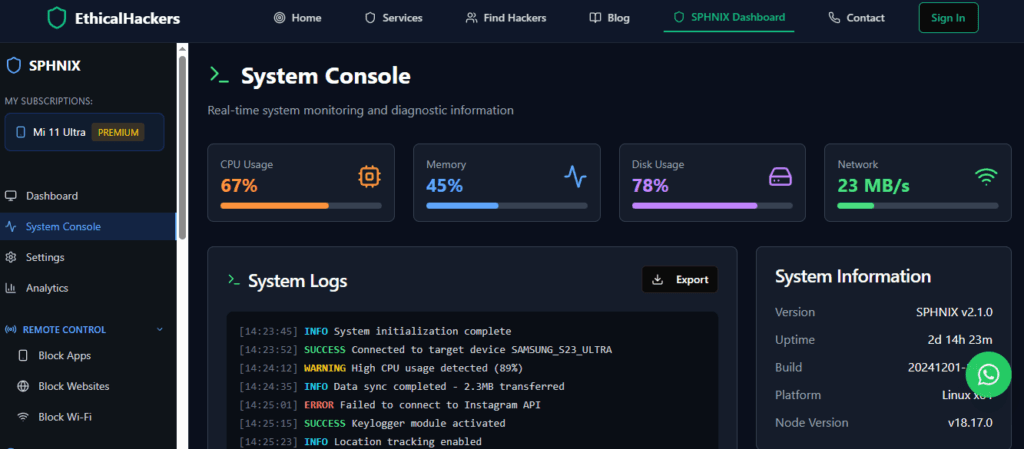
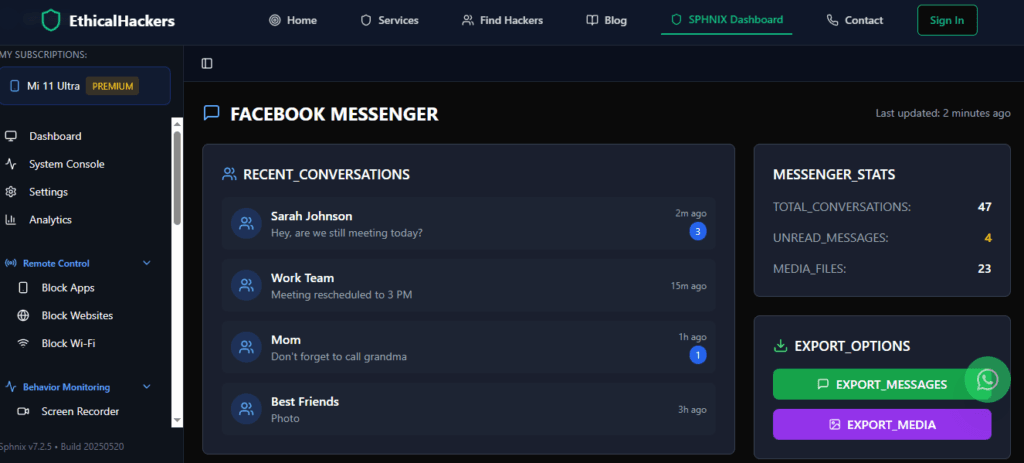
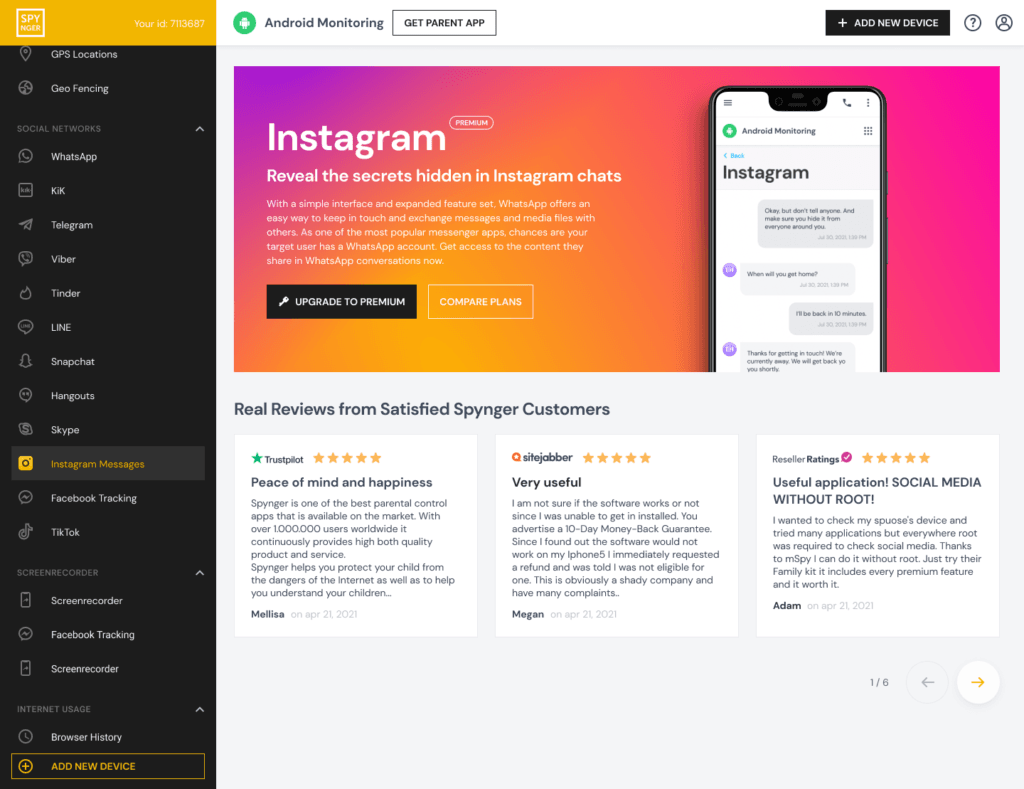
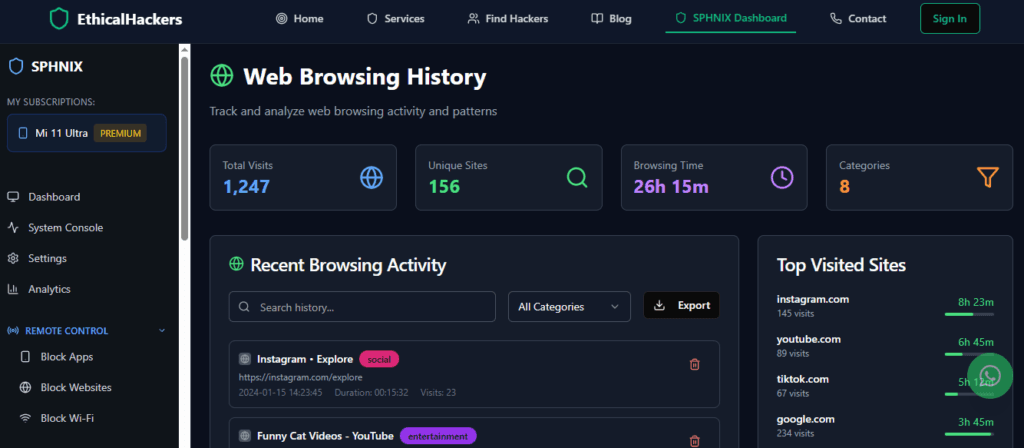
For family safety, the safer path is transparency. If you are responsible for a minor child’s device, use platform privacy settings, family controls, and written household rules first. Paid tools such as mSpy, Eyezy, or Sphnix should only be considered for a device you own, a minor child where local law allows it, or a device with documented consent. They are not tools for finding a stranger’s Instagram from Snapchat.
Authorized-use disclosure:Cyberlord may earn a commission from some links. Use monitoring products only when you have a lawful right to manage the device.
If someone is using your name, photos, brand, or child identity on Snapchat or Instagram, document everything before reporting. Capture the profile URL or username, screenshots, follower count, bio, posts, story previews, messages, dates, and any fraud attempt. Do not threaten the account owner or warn them before you preserve evidence; they may delete the trail.
Report the account through each official platform. Instagram provides impersonation reporting in the Help Center and inside the app. Snapchat Support explains how to report an account from search, chat, or the profile menu. If the fake account is connected to threats, financial fraud, blackmail, or child safety, preserve evidence and contact local law enforcement or a qualified cyber investigation team.
Cyberlord can help with lawful OSINT, account takeover response, impersonation evidence packs, and reputation cleanup. That is different from a magic lookup. A proper investigation explains the evidence, shows confidence levels, and avoids methods that would make the case unusable later.
Buyer Checklist Before You Pay Anyone
Before hiring a service or buying software, check five things. First, does the provider explain the legal basis and limits? Second, do they refuse to reveal private accounts or messages without authorization? Third, are pricing, refund terms, and support channels visible? Fourth, does the tool match your device and use case? Fifth, can you get a written scope before payment?
Avoid anyone who guarantees a hidden Instagram result from a Snapchat username. Avoid Telegram-only sellers, fake recovery agents, “ethical hacker” pages that ask for passwords, and dashboards that show private data before payment. Real help is usually slower, more careful, and more documented.
If your concern is a public scammer, gather evidence and contact Cyberlord. If your concern is a child’s safety on a device you manage, compare legal parental-control options in our parental control app guide. If the issue is Instagram account security, read our Instagram safety guide.
Conclusion
So, can you find someones instagram with their snapchat? Sometimes, but only through public clues, reused usernames, profile links, direct consent, or a legitimate investigation of public evidence. No real service can bypass Snapchat or Instagram privacy and reveal hidden accounts safely.
Treat this as a verification problem, not a spying problem. Use public information, keep records, avoid lookup scams, and get professional help when impersonation, fraud, blackmail, or child safety is involved.
Frequently Asked Questions
Can Snapchat show someone’s Instagram account automatically? No. Snapchat does not provide a public tool that maps a username to a private Instagram account. Matches only work when the person has made the connection public.
Are Snapchat-to-Instagram lookup tools real?Most are scams, survey lockers, phishing pages, or thin public-data aggregators. Do not enter account passwords or pay for private-account promises.
What should I do if someone is impersonating me on both apps? Document the accounts, report them through Instagram and Snapchat, warn trusted contacts, and contact law enforcement if there is fraud, threats, or blackmail.
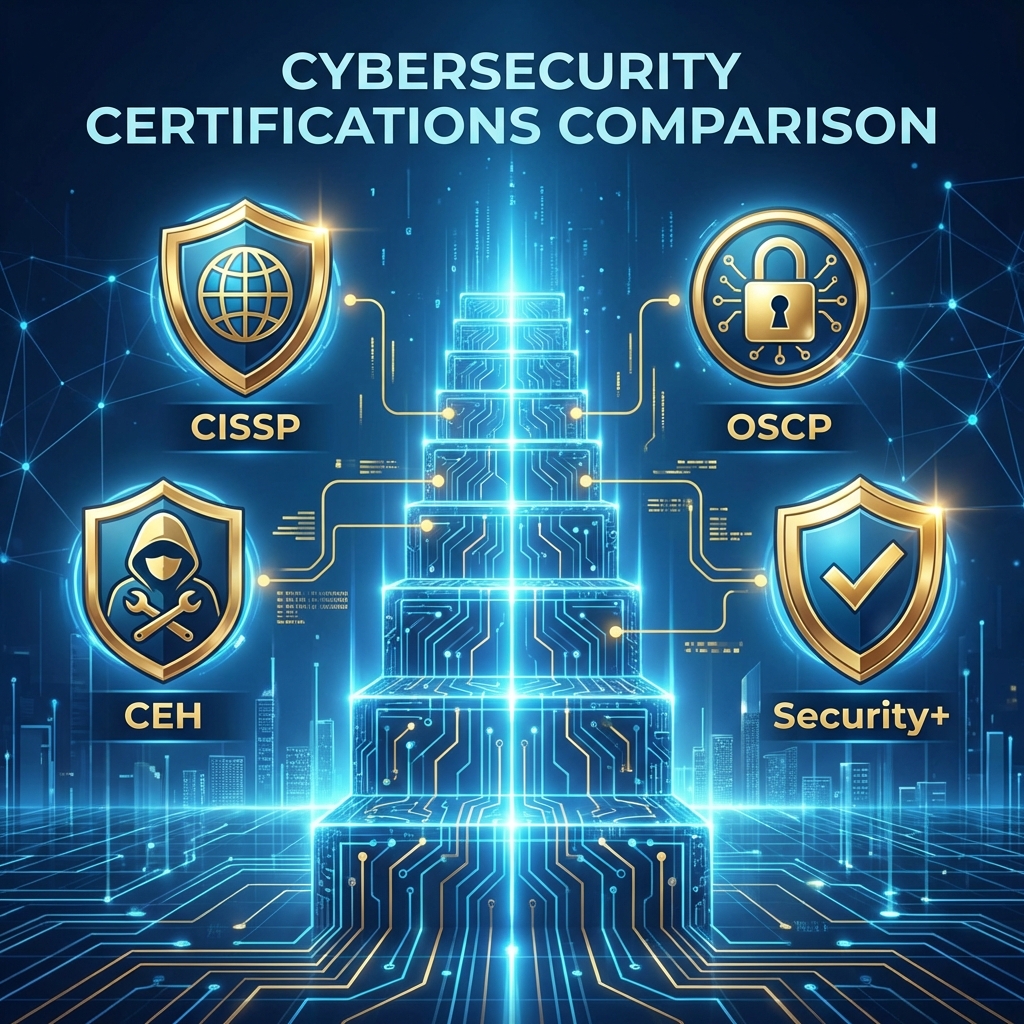
Last week, a frustrated IT professional asked me a question I hear almost daily: “I’ve been researching cybersecurity certifications for three months. CISSP, CEH, OSCP, Security+—which one should I actually get?”
His confusion isn’t unique. This single question is costing people thousands of dollars and years of career progression.
I recently met someone who spent $5,000 on a certification that looked impressive on paper. Six months later, he discovered it didn’t align with his career goals at all. He was trying to become a penetration tester, but he’d invested in a management-focused certification that employers in offensive security barely recognized.
The truth that nobody tells you upfront is this: there is no universal “best” cybersecurity certification. What matters is finding the right one for your specific career stage, your professional goals, and the specialization you’re pursuing.
It’s like asking which tool is best in a toolbox—the answer depends entirely on what you’re trying to build.
Yes, you absolutely need certifications if you want to get past the initial HR screening process. Right now, there are over 70,000 job openings that specifically require CISSP certification alone.
These aren’t suggestions or preferences—they’re hard requirements programmed into applicant tracking systems. Without the right certification, your resume might never reach a human being, no matter how talented you are.
Certifications also translate directly into higher salaries. The data consistently shows that certified professionals earn fifteen to thirty percent more than their uncertified counterparts doing similar work.
That’s not a small difference. Over a career, we’re talking about hundreds of thousands of dollars in additional earnings.
For certain sectors, particularly government and defense contractors, specific certifications aren’t just helpful—they’re legally mandated. The DoD 8570 and 8140 directives require specific certifications for specific roles.
If you want to work in these sectors, there’s no way around it.
Perhaps most importantly, certifications serve as proof of expertise when you’re trying to break into the field or transition to a new specialization. When you don’t have years of experience to point to, a respected certification tells employers that you’ve at least mastered the foundational knowledge required for the role.
The Reality Check
But here’s the part that certification vendors don’t want you to hear: certifications alone are never enough.
I’ve interviewed candidates with walls full of certifications who couldn’t explain basic security concepts when pressed. I’ve also hired people with a single well-chosen certification and a GitHub full of security projects who ran circles around those credential collectors.
What you really need is a combination of the right certification, hands-on practical experience, and a portfolio that demonstrates your actual skills. Think of certifications as the key that opens the door—but you still need to prove you can do the job once you’re inside.
The Growing Opportunity
The cybersecurity field is experiencing unprecedented growth. The Bureau of Labor Statistics projects that demand for information security analysts will grow thirty-three percent between 2023 and 2033.
That’s nearly ten times faster than the average for all occupations. This explosive growth creates massive opportunities for people with the right certifications, but it also means the competition is getting fiercer every year.
Understanding the Certification Landscape
When you first start researching cybersecurity certifications, the sheer number of options can feel overwhelming. There are dozens of certifications out there, each claiming to be essential for your career.
Let me help you make sense of this landscape.
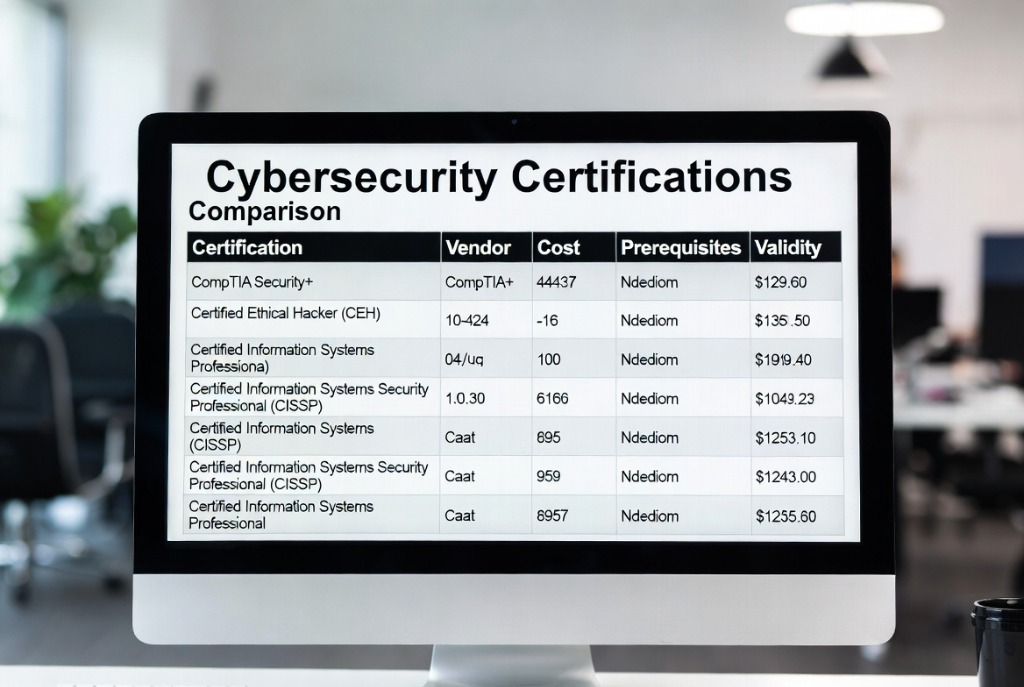
I’ve created a comprehensive comparison of the twelve most valuable certifications in the current market. This table gives you the essential information at a glance, but we’ll dive deep into each one throughout this guide.
Certification
Level
Cost
Pass Rate
Avg Salary
Best For
CompTIA Security+
Entry
$392
80%
$80k-$100k
Beginners, DoD
(ISC)² CC
Entry
Free
85%
$70k-$85k
Career starters
CEH
Intermediate
$1,199
60-70%
$86k-$110k
Ethical hacking
OSCP
Advanced
$1,749
30-40%
$120k-$160k
Pen testing
CISSP
Advanced
$749
70%
$130k-$175k
Management
CISM
Advanced
$575
50%
$135k-$180k
Security managers
CISA
Advanced
$575
50%
$125k-$165k
IT auditors
CCSP
Advanced
$599
65%
$140k-$190k
Cloud security
CompTIA CySA+
Intermediate
$392
75%
$100k-$125k
SOC analysts
CompTIA PenTest+
Intermediate
$392
70%
$110k-$130k
Pen testers
GIAC GSEC
Intermediate
$2,499
70%
$95k-$120k
Security practitioners
CompTIA CASP+
Advanced
$494
60%
$120k-$150k
Enterprise security
Looking at this table, you might notice something interesting: the most expensive certification isn’t necessarily the one that leads to the highest salary, and the hardest exam doesn’t always provide the best return on investment.
These nuances matter when you’re planning your certification journey.
Entry-Level Certifications: Where Most People Should Start
CompTIA Security+: The Foundation Everyone Recommends
If I had to recommend a single starting point for someone entering cybersecurity, it would be CompTIA Security+ nine times out of ten. This isn’t just my opinion—it’s backed by market data and hiring trends that have remained consistent for years.
Security+ covers the fundamental concepts that every cybersecurity professional needs to understand, regardless of their eventual specialization. You’ll learn about network security and infrastructure protection, threat analysis and vulnerability management, identity and access management principles, cryptography and public key infrastructure, and risk management with incident response procedures.
These aren’t abstract academic concepts—they’re the building blocks of every security program I’ve ever built or evaluated.
Why Security+ Stands Out
What makes Security+ particularly valuable is that it has no formal prerequisites. CompTIA recommends that you have Network+ certification and about two years of IT experience, but these are suggestions, not requirements.
I’ve seen motivated individuals with no IT background pass Security+ after three months of dedicated study.
The exam itself consists of ninety questions that you’ll need to answer in ninety minutes. At $392, the exam fee is reasonable compared to many other certifications, though you’ll want to budget another fifty to one hundred dollars for study materials.
The certification is valid for three years, after which you’ll need to earn thirty-six continuing education units to renew it.
The Market Value
Here’s why Security+ matters so much in the current job market: it meets the DoD 8570 and 8140 requirements that are mandatory for government and defense contractor positions.
Right now, there are over 63,000 job openings that specifically list Security+ as a requirement. The certification is also vendor-neutral, meaning it’s not tied to any specific product or platform, which gives it broad applicability across different organizations and technologies.
The salary impact is substantial for an entry-level certification. Professionals with Security+ typically earn between $80,000 and $100,000 annually, which represents a significant jump from general IT support roles that might pay $50,000 to $65,000.
Who Should Get Security+?
If you’re changing careers and entering cybersecurity from another field, this is your starting point. If you’re an IT professional looking to expand into security, Security+ provides the foundation you need.
Anyone targeting government or defense contractor roles will find this certification essential. Even students building their foundational knowledge will benefit from the structured curriculum Security+ provides.
I give Security+ a five out of five rating as the best starting point for most people entering the field. It’s affordable, accessible, widely recognized, and provides genuine value.
(ISC)² Certified in Cybersecurity: The Free Alternative
The (ISC)² Certified in Cybersecurity, or CC, represents something relatively new in the certification world: a completely free, vendor-backed credential designed specifically to address the cybersecurity skills gap.
The CC covers security principles, business continuity and disaster recovery, access controls, network security fundamentals, and security operations basics. While the content isn’t as comprehensive as Security+, it provides a solid introduction to the field.
The Free Advantage
What makes the CC unique is its cost structure—or rather, the lack of one. The exam is completely free, and (ISC)² even provides free self-paced online training to help you prepare.
There are no prerequisites, and the exam consists of one hundred questions that you’ll have two hours to complete. The pass rate hovers around eighty-five percent, making it one of the more accessible certifications available.
The certification does require annual renewal, for which you’ll need to earn fifteen continuing professional education credits. This is actually beneficial because it keeps you engaged with the field and ensures your knowledge stays current.
Career Impact
The salary impact for CC holders typically ranges from $70,000 to $85,000 annually. While this is lower than Security+, it’s still a significant improvement over non-certified entry-level positions.
The real strategic value of the CC is that it serves as a pathway to CISSP, which we’ll discuss later. (ISC)² designed the CC specifically to help people enter the field with the eventual goal of pursuing their more advanced certifications.
The brand recognition of (ISC)² also carries weight—employers familiar with CISSP will recognize and respect the CC credential.
Who Should Get CC?
If you’re a complete beginner with absolutely no budget for certifications, this is your entry point. Students exploring whether cybersecurity is right for them can test the waters without financial risk.
Career changers who want to validate their interest before investing money will find the CC valuable. Anyone planning to eventually pursue CISSP should seriously consider starting with the CC to familiarize themselves with (ISC)²’s approach and terminology.
I give the CC a four out of five rating. It’s excellent value for being free, but Security+ still has stronger market recognition and broader acceptance, particularly in government and defense sectors.
Intermediate Certifications: Building Specialized Skills
Certified Ethical Hacker: The Controversial Credential
The Certified Ethical Hacker, or CEH, from EC-Council is one of the most recognized cybersecurity certifications for ethical hacking, but it’s also one of the most debated in the professional community. Let me explain why.
CEH covers an impressive breadth of topics across twenty security domains. You’ll learn about scanning and enumeration techniques, system hacking and exploitation methods, malware analysis, social engineering tactics, web application vulnerabilities, and cryptography fundamentals.
The curriculum is comprehensive, and the exam is genuinely challenging.
The Requirements and Costs
The certification requires either two years of security experience or attendance at official EC-Council training. The exam itself consists of 125 multiple-choice questions that you’ll need to complete in four hours.
The exam fee is $1,199, but if you’re required to take the official training, you’re looking at a total investment of $3,000 to $4,000.
The Controversy
Here’s where CEH gets controversial: it’s heavily theory-based. Passing the exam proves that you understand hacking concepts and can recognize attack techniques, but it doesn’t prove that you can actually exploit systems in a real-world scenario.
I’ve interviewed many CEH holders who could explain SQL injection in detail but had never actually performed one against a live application.
That said, CEH has significant value in specific contexts. It’s recognized globally and meets DoD 8570/8140 requirements, making it valuable for government and compliance roles. The salary impact is real, with CEH holders typically earning between $86,000 and $110,000 annually.
Who Should Get CEH?
The limitation I want you to understand is this: if you’re pursuing a technical penetration testing role, OSCP (which we’ll discuss shortly) is far more valuable because it requires hands-on exploitation skills.
CEH is better suited for SOC analysts who need to understand attack techniques, government and defense contractor applicants who need to meet compliance requirements, security professionals who need credentials for their resume, and those transitioning from IT to security who want a structured introduction to offensive security concepts.
I give CEH a 3.5 out of 5 rating. It’s good for compliance and government work, but if you’re serious about penetration testing, save your money for OSCP instead.
CompTIA CySA+, which stands for Cybersecurity Analyst, fills an important gap in the certification landscape. It bridges the space between entry-level Security+ and advanced certifications like CISSP, focusing specifically on the skills that security operations center analysts need every day.
The certification covers threat and vulnerability management, software and systems security, security operations and monitoring, incident response procedures, and compliance and assessment frameworks.
These aren’t theoretical concepts—they’re the actual tasks you’ll perform as a SOC analyst.
The Exam Details
CompTIA recommends that you have Security+ or equivalent knowledge plus about four years of hands-on experience before attempting CySA+. The exam consists of eighty-five questions that you’ll need to complete in 165 minutes, and it includes performance-based questions that test your ability to actually perform tasks, not just recognize correct answers.
At $392, it’s reasonably priced, and like other CompTIA certifications, it requires renewal every three years with fifty continuing education units.
The salary impact is substantial. CySA+ holders typically earn between $100,000 and $125,000 annually, representing a significant jump from entry-level Security+ positions.
Who Should Get CySA+?
If you’re working as a SOC analyst or threat hunter, this certification validates the skills you use daily. Security operations professionals who want to demonstrate their expertise will find CySA+ valuable.
Anyone who’s outgrown Security+ but isn’t ready for CISSP will find CySA+ to be the perfect intermediate step.
I give CySA+ a four out of five rating. It’s excellent for SOC career paths and provides genuine value for the price.
CompTIA PenTest+: The Affordable Pen Testing Option
CompTIA PenTest+ represents CompTIA’s entry into the penetration testing certification market, and it’s positioned as a more affordable and accessible alternative to OSCP.
The certification covers planning and scoping penetration testing engagements, information gathering and vulnerability scanning, attacks and exploits, reporting and communication with clients, and tools and code analysis.
Importantly, the exam includes performance-based questions where you’ll need to demonstrate actual technical skills, not just theoretical knowledge.
The Practical Assessment
CompTIA recommends that you have Network+ and Security+ plus three to four years of hands-on experience before attempting PenTest+. The exam consists of eighty-five questions over 165 minutes, costs $392, and requires renewal every three years with fifty CEUs.
The salary impact for PenTest+ holders ranges from $110,000 to $130,000 annually, which is competitive for intermediate-level certifications.
The Honest Comparison
Here’s my honest assessment: PenTest+ is a solid certification that validates real penetration testing knowledge. However, in the penetration testing community, OSCP is still considered the gold standard.
If you can afford the time and money for OSCP, that’s the better investment. PenTest+ makes sense if you’re building toward OSCP and want an intermediate credential, if budget is a significant constraint, or if you want to test whether penetration testing is really the right path for you before committing to OSCP’s intensive requirements.
I give PenTest+ a four out of five rating. It’s a good stepping stone to OSCP, but OSCP remains the credential that will truly set you apart in the penetration testing field.
Advanced Certifications: The Career Accelerators
OSCP: The Hands-On Hacking Gold Standard
The Offensive Security Certified Professional, or OSCP, is unlike any other certification in the cybersecurity field. It’s not just respected—it’s revered by penetration testers and security professionals who understand what it takes to earn it.
OSCP covers penetration testing methodologies, information gathering techniques, buffer overflow exploitation, web application attacks, privilege escalation, and client-side attacks.
But here’s what makes it fundamentally different: you don’t just study these topics—you actually perform them in a live lab environment.
The Brutal Exam
There are no formal prerequisites for OSCP, though you’ll struggle significantly without strong Linux skills, solid networking knowledge, and basic programming ability.
The exam is where OSCP truly distinguishes itself: you get twenty-four hours to compromise multiple machines in a lab environment, followed by another twenty-four hours to write a professional penetration testing report documenting your findings.
Let me be clear about what this means. There are no multiple-choice questions. There’s no partial credit for knowing the theory. You either successfully exploit the systems and document your work professionally, or you fail.
The pass rate hovers around thirty to forty percent, and many talented security professionals fail their first attempt.
The Investment
The cost is $1,749, which includes the course materials, lab access, and your first exam attempt. If you fail, you’ll need to pay for another attempt.
Unlike most certifications, OSCP never expires—once you earn it, it’s yours for life.
The salary impact is substantial. OSCP holders typically earn between $120,000 and $160,000 annually, and many penetration testing positions specifically require or strongly prefer OSCP certification.
Why OSCP Matters
What makes OSCP so valuable is that it proves you can actually do the work. When I see OSCP on a resume, I know that person has spent hours in a lab, struggled through difficult challenges, and successfully exploited real vulnerabilities.
They’ve written professional reports and demonstrated the persistence and problem-solving skills that penetration testing requires.
Who Should Get OSCP?
If you’re serious about becoming a penetration tester, this is your target certification. Red team operators need OSCP to be taken seriously.
Security professionals who want to prove hands-on skills beyond what theory-based certifications demonstrate will find OSCP invaluable. Anyone committed to offensive security should make OSCP a career goal.
I give OSCP a five out of five rating. It’s the gold standard for penetration testing, and while it’s challenging and expensive, the return on investment is exceptional.
CISSP: The Management Certification That Opens Doors
The Certified Information Systems Security Professional, or CISSP, from (ISC)² is the most requested cybersecurity certification in job openings worldwide. Right now, over 70,000 positions specifically require CISSP.
That’s not a typo—seventy thousand jobs.
CISSP covers eight comprehensive domains: Security and Risk Management, Asset Security, Security Architecture and Engineering, Communication and Network Security, Identity and Access Management, Security Assessment and Testing, Security Operations, and Software Development Security.
This breadth is intentional—CISSP is designed to validate that you understand security from a strategic, architectural perspective, not just tactical implementation.
The Experience Requirement
The prerequisites are significant: you need five years of paid work experience in at least two of the eight CISSP domains. If you have a four-year degree, you can substitute one year of experience, bringing the requirement down to four years.
This experience requirement isn’t just a checkbox—(ISC)² actually audits a percentage of applicants to verify their work history.
The exam is adaptive, meaning it adjusts difficulty based on your answers, and consists of 100 to 150 questions that you’ll need to complete in three hours. The exam fee is $749, and you’ll need to renew every three years by earning 120 continuing professional education credits.
The Financial Impact
The salary impact is substantial. CISSP holders in North America average $147,757 annually, with the range typically falling between $130,000 and $175,000.
This makes CISSP one of the highest-paying certifications in the field.
What makes CISSP so valuable is its broad recognition and the doors it opens. Many CISO and security architect positions list CISSP as a requirement, not just a preference.
The certification signals to employers that you understand security from a strategic, business-aligned perspective, not just as a collection of technical controls.
Who Should Get CISSP?
Security managers and directors will find CISSP essential for career advancement. Security architects need CISSP to be taken seriously in enterprise environments.
Current or aspiring CISOs should make CISSP a priority. Anyone with five or more years of security experience who wants to move into leadership should pursue CISSP.
I give CISSP a five out of five rating. It’s essential for management and leadership roles, and the investment pays dividends throughout your career.
CISM: The Security Management Alternative
The Certified Information Security Manager, or CISM, from ISACA focuses specifically on security program management and governance. While CISSP is broader and more technical, CISM is laser-focused on the management aspects of information security.
CISM covers four domains: Information Security Governance, Information Risk Management, Information Security Program Development and Management, and Information Security Incident Management.
Notice how every domain explicitly mentions management—this isn’t a technical certification, it’s a leadership one.
The Management Focus
The prerequisites require five years of information security work experience, with at least three of those years in security management. The exam consists of 150 questions over four hours, costs $575 for ISACA members or $760 for non-members, and requires annual renewal with twenty continuing professional education credits.
The salary impact is impressive, with CISM holders typically earning between $135,000 and $180,000 annually. There are currently over 36,000 job openings that specifically require CISM.
CISSP vs CISM
The key question most people ask is: CISSP or CISM? Here’s my guidance.
CISSP is broader and more technical, making it better for security architects and those who want flexibility in their career path. CISM is more focused on pure management, making it better for those who are certain they want to stay in security management roles and don’t need the technical depth that CISSP provides.
In practice, many senior security professionals hold both certifications. CISSP opens more doors initially, but CISM adds valuable depth for management-focused roles.
Who Should Get CISM?
Security managers who are certain about their management career path will find CISM valuable. Risk managers and compliance officers benefit from CISM’s governance focus.
Anyone in or aspiring to pure security management roles should consider CISM.
I give CISM a 4.5 out of 5 rating. It’s excellent for management roles, but CISSP’s broader recognition gives it a slight edge for most career paths.
CISA: The Audit Specialist’s Certification
The Certified Information Systems Auditor, or CISA, from ISACA is the premier certification for IT audit professionals. If your career path involves auditing, compliance, or risk assessment, CISA is likely essential.
CISA covers five domains: Information System Auditing Process, Governance and Management of IT, Information Systems Acquisition, Development, and Implementation, Information Systems Operations and Business Resilience, and Protection of Information Assets.
The Audit Focus
The prerequisites require five years of information systems auditing, control, or security work experience. The exam consists of 150 questions over four hours, costs $575 for members or $760 for non-members, and requires annual renewal with twenty CPE credits.
CISA holders typically earn between $125,000 and $165,000 annually, with over 45,000 job openings currently requiring the certification.
The Specialization Reality
Here’s what you need to understand about CISA: it’s highly specialized. If you’re pursuing an audit career, CISA is essential and will serve you well.
If you’re not in audit, compliance, or risk assessment, CISA probably isn’t the right investment. It’s a powerful certification, but only for specific career paths.
Who Should Get CISA?
IT auditors, internal auditors, public accounting auditors, compliance professionals, and risk analysts will find CISA essential for career advancement.
I give CISA a four out of five rating. It’s essential for audit careers but less relevant for other security paths.
CCSP: The Cloud Security Specialist
The Certified Cloud Security Professional, or CCSP, from (ISC)² addresses the massive shift toward cloud computing that’s transformed how organizations operate. As more companies move critical infrastructure to AWS, Azure, and Google Cloud Platform, cloud security expertise has become increasingly valuable.
CCSP covers six domains: Cloud Concepts, Architecture, and Design; Cloud Data Security; Cloud Platform and Infrastructure Security; Cloud Application Security; Cloud Security Operations; and Legal, Risk, and Compliance in cloud environments.
The Cloud Expertise Requirements
The prerequisites are substantial: five years of cumulative paid work experience in information technology, with three years in information security and one year in one or more of the six CCSP domains.
The exam consists of 125 questions over three hours, costs $599, and requires renewal every three years with ninety CPE credits.
The salary impact is impressive. CCSP holders typically earn between $140,000 and $190,000 annually, making it one of the highest-paying certifications available.
The 2025 Relevance
What makes CCSP particularly valuable in 2025 is the universal shift to cloud infrastructure. Almost every organization is either already in the cloud or actively migrating.
Security professionals who understand cloud-specific risks, controls, and compliance requirements are in extremely high demand.
Who Should Get CCSP?
Cloud security architects, cloud engineers with security responsibilities, security professionals in cloud-heavy organizations, and anyone specializing in AWS, Azure, or GCP security should make CCSP a priority.
I give CCSP a five out of five rating. It’s essential for cloud security careers in 2025 and beyond.
Building Your Certification Roadmap
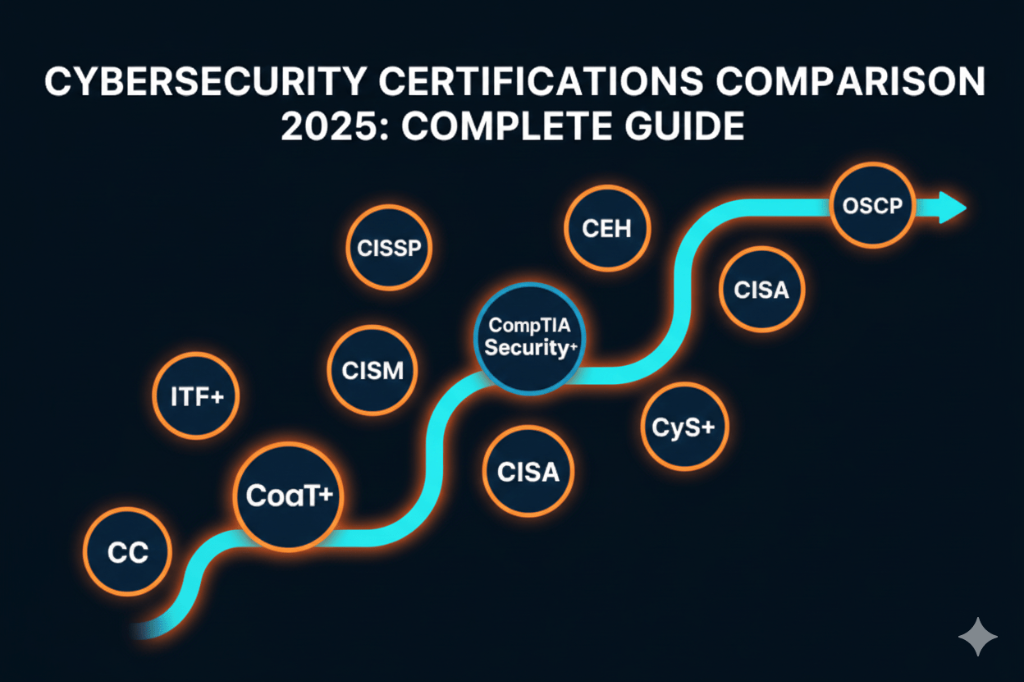
Now that we’ve examined the major certifications individually, let’s talk about how to combine them into a coherent career strategy. The key is to think in terms of progression, not collection.
You’re not trying to accumulate as many certifications as possible—you’re building a strategic path toward your specific career goals.
Let me walk you through four common career paths and the certification sequences that support them.
Path 1: SOC Analyst to Security Engineer
This path starts with CompTIA Security+ as your foundation. This typically takes three to six months of study if you’re starting from an IT background.
Once you’re working as a junior SOC analyst, you’ll spend the next year or two gaining hands-on experience with security tools and incident response. Then you pursue CompTIA CySA+ to validate your growing expertise in threat detection and analysis.
After another two to three years of experience, you’re ready for CISSP, which opens doors to security engineering and architecture roles.
This entire journey typically takes three to five years and costs about $1,533 in certification fees.
Path 2: Penetration Tester to Red Team Lead
This path also starts with Security+ for foundational knowledge. Some people choose to pursue CEH as an intermediate step, though this is optional—I’ve seen successful penetration testers skip it entirely.
The critical certification for this path is OSCP, which you should pursue once you have solid Linux skills and basic programming ability. After earning OSCP and gaining several years of penetration testing experience, you might pursue advanced OSCP certifications or specialized credentials.
This path typically takes four to six years and costs between $2,141 and $3,340, depending on whether you include CEH.
Path 3: IT Professional to CISO
This path begins with Security+ to establish security fundamentals. After gaining several years of security experience in various roles, you pursue CISSP to demonstrate broad security knowledge and management capability.
Finally, you add CISM to specifically validate your security management expertise.
This journey typically takes five to eight years and costs about $1,716 in certification fees.
Path 4: Cloud Engineer to Cloud Security Architect
This path starts with Security+ for security fundamentals. As you gain experience with cloud platforms, you pursue CISSP to establish broad security expertise.
Finally, you specialize with CCSP to demonstrate deep cloud security knowledge.
This path typically takes five to seven years and costs about $1,740.
The Key Insight
The key insight here is that these paths build on each other logically. You don’t jump straight to advanced certifications—you build a foundation, gain experience, and progressively pursue more advanced credentials as your career develops.
Understanding Return on Investment
Let me share a real example that illustrates the financial impact of strategic certification choices.
I know a security professional who started in IT support earning $65,000 annually. After earning Security+ in his first year, he transitioned to a junior SOC analyst role at $85,000.
Three years later, with CySA+ certification, he was earning $110,000 as a SOC analyst. By year six, with CISSP certification, he moved into a security engineer role at $145,000.
His total investment in certifications was $1,533. His salary increased by $80,000 annually. That’s a return on investment of over 5,200 percent.
Even accounting for the time spent studying and the opportunity cost of that time, the ROI is exceptional.
The Critical Factor
But here’s what’s important to understand: this ROI depends entirely on choosing the right certifications at the right time. If this same person had pursued CISA instead of CySA+, or if he’d collected random certifications without a clear career path, the results would have been dramatically different.
The certifications that provide the best ROI share common characteristics. They align with your career goals and the roles you’re pursuing. They’re recognized and valued by employers in your target industry.
They build on your existing experience rather than requiring you to start from scratch. They open doors to higher-paying roles, not just add credentials to your resume.
Common Mistakes That Cost Time and Money
In my years of mentoring cybersecurity professionals, I’ve seen people make the same mistakes repeatedly. Let me help you avoid them.
Mistake 1: Wrong Order
The first major mistake is getting certifications out of order. I’ve met people who tried to jump straight to CISSP without the required experience, only to have their application rejected.
Others pursued advanced certifications before building the foundational knowledge they needed, making the study process unnecessarily difficult and often resulting in failed exam attempts.
The right approach is to follow a logical progression: Security+ or equivalent, then intermediate certifications like CySA+ or CEH, and finally advanced certifications like CISSP or OSCP.
Mistake 2: Popularity Over Goals
The second mistake is choosing certifications based on popularity rather than career goals. CEH is popular, but if you want to be a penetration tester, OSCP is far more valuable.
CISSP is widely recognized, but if you’re certain you want to focus on IT audit, CISA might be the better choice.
Always start with your career goals and work backward to identify which certifications support those goals.
Mistake 3: Credentials Without Skills
The third mistake is collecting certifications without developing hands-on skills. I’ve interviewed candidates with impressive certification lists who couldn’t perform basic security tasks when given practical scenarios.
Certifications open doors, but skills keep them open. Make sure you’re combining certification study with practical labs, capture-the-flag competitions, and real-world projects.
Mistake 4: Ignoring Renewals
The fourth mistake is ignoring renewal requirements. Many certifications require continuing education credits to maintain.
I’ve seen people let valuable certifications expire because they didn’t track these requirements. Set up a system to track your renewal dates and CPE requirements from day one.
Mistake 5: Overpaying for Training
The fifth mistake is overpaying for training you don’t need. Some people spend $5,000 on boot camps for entry-level certifications like Security+ when they could have passed with $50 worth of books and practice exams.
Boot camps can be valuable for difficult certifications like OSCP, but for most certifications, self-study with quality materials is sufficient.
Your Next Steps
Cybersecurity certifications are essential tools for career advancement in 2025, but only when chosen strategically and combined with genuine skill development.
If you’re an absolute beginner, start with either the free (ISC)² CC or the $392 Security+. Both provide solid foundations, though Security+ has broader market recognition.
If you’re pursuing penetration testing, make OSCP your target certification and build the necessary skills to pass it.
If you’re on a management track, pursue CISSP first, then consider adding CISM for specialized management expertise.
For cloud security careers, CCSP is increasingly essential. If you’re in IT audit, CISA is your primary target.
The Bottom Line
The bottom line is this: don’t chase certifications blindly. Choose based on your specific career path, invest time in developing hands-on skills alongside your certification study, and combine certifications with real-world experience that demonstrates your capabilities.
Ready to advance your cybersecurity career with the right certifications and hands-on experience? Contact Cyberlord for career guidance, mentorship opportunities, and the chance to work with certified professionals on real-world security projects that will complement your certification journey.
Frequently Asked Questions
Which cybersecurity certification should I get first?
For most people entering the cybersecurity field, CompTIA Security+ is the best first certification. At $392, it’s affordable enough that the financial risk is minimal, and it requires no formal prerequisites, making it accessible to career changers and those new to IT.
The certification covers foundational security concepts that apply regardless of your eventual specialization, and it meets DoD 8570/8140 requirements, which opens doors to government and defense contractor positions.
If budget is a significant concern, consider starting with the free (ISC)² Certified in Cybersecurity (CC). While it has slightly less market recognition than Security+, it provides a solid foundation at zero cost and serves as a pathway to the highly respected CISSP certification later in your career.
The only scenarios where you might skip Security+ are if you already have five or more years of security experience and can go straight to CISSP, or if you’re specifically targeting penetration testing and want to focus your energy entirely on preparing for OSCP. For everyone else, Security+ is the logical starting point.
Is OSCP harder than CISSP?
Yes, OSCP is significantly harder in terms of technical difficulty and the practical skills required to pass. OSCP requires you to spend twenty-four hours in a hands-on lab environment, actually exploiting vulnerabilities in multiple systems, followed by another twenty-four hours writing a professional penetration testing report.
The pass rate hovers around thirty to forty percent, and many talented security professionals fail on their first attempt.
CISSP, by contrast, is a three-hour adaptive multiple-choice exam with a pass rate around seventy percent. However, CISSP requires five years of professional experience and covers eight broad security domains, testing your knowledge of security management and architecture rather than hands-on exploitation skills.
They’re difficult in fundamentally different ways. OSCP tests whether you can actually perform penetration testing under pressure. CISSP tests whether you understand security from a strategic, management perspective.
Both are challenging, but OSCP is generally considered more technically demanding, while CISSP requires broader experience and knowledge across the security field.
Can I get a cybersecurity job without certifications?
Yes, but it’s significantly more difficult, especially for entry-level positions. While certifications aren’t legally required for most cybersecurity jobs, they serve as proof of knowledge and help you pass through HR screening processes that many companies use to filter candidates.
If you don’t have certifications, you’ll need to compensate with other proof of your capabilities. This might include a strong portfolio on GitHub showcasing security projects you’ve built, documented participation in capture-the-flag competitions or bug bounty programs, relevant work experience that demonstrates security skills, a degree in cybersecurity or a related technical field, or exceptional networking that gets you referrals past the initial screening process.
For government and defense contractor positions, certain certifications like Security+ are actually mandatory due to DoD directives, so there’s no way around them for those roles.
For private sector positions, certifications are less about legal requirements and more about demonstrating competence and getting past initial screening hurdles. The further you advance in your career, the less critical certifications become relative to your track record and demonstrated expertise, but they remain valuable throughout your career for opening new doors and validating your knowledge in new specializations.
Remote work, contractor access, and hybrid teams changed endpoint security faster than many organizations expected. Security teams used to focus on locking down every laptop and office workstation. Today, the bigger challenge is controlling access from many devices, locations, and users without slowing down business operations.
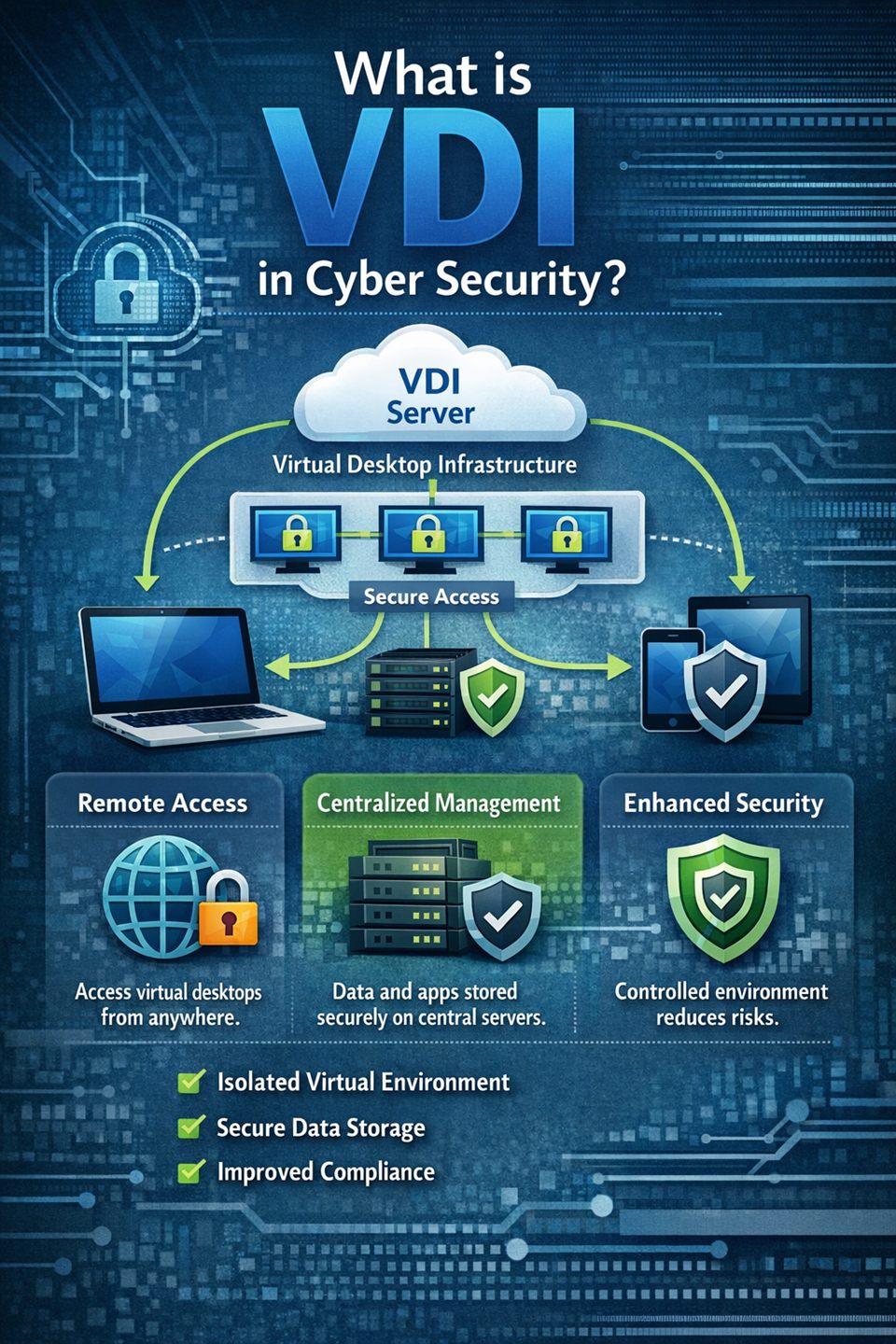
That is why a lot of leaders are now asking the same question: what is vdi in cyber security and is it worth implementing? The short answer is that Virtual Desktop Infrastructure can reduce some high-impact risks, but only if it is designed as a full security system instead of a quick infrastructure project.
This guide explains VDI in clear terms, shows where it improves security, breaks down the most common failure points, and gives you a practical hardening checklist you can use for planning and audits.
What VDI Means in Cyber Security
Virtual Desktop Infrastructure (VDI) is a model where user desktops are hosted in centralized data center or cloud infrastructure instead of running fully on local endpoint devices. Users connect to virtual desktops through a broker or gateway, and most business workloads stay in controlled environments.
If you are researching what is vdi in cyber security, think of it as a trust-boundary shift. Data and applications move closer to security controls, while endpoints become controlled access points rather than primary data stores.
In traditional desktop setups, sensitive files and credentials often spread across many laptops. In VDI environments, teams can keep critical assets centralized, which makes policy enforcement and visibility more consistent.
Core security advantages include:
Reduced local data exposure on endpoints
Faster patch deployment through managed base images
Easier offboarding and session revocation
Stronger centralized logging for investigations
Better policy consistency across distributed users
These benefits are meaningful, but VDI does not solve weak identity, weak architecture, or weak operations. It changes risk concentration and gives teams better control surfaces.
Why Security Teams Use VDI in Real Environments
Organizations adopt VDI for operational reasons, but cyber security teams often become the strongest internal advocates once the model is implemented correctly.
First, VDI reduces data sprawl. When sensitive files remain inside controlled environments, lost laptops and unmanaged personal devices have less direct access to high-value data. This matters for regulated teams that must demonstrate technical controls during audits.
Second, VDI can improve baseline hygiene. Instead of managing thousands of unique desktop states, teams can standardize image templates and reduce configuration drift. That helps reduce exposure windows after high-severity vulnerability disclosures.
Third, VDI supports cleaner incident response workflows. Telemetry from gateways, identity systems, brokers, and centralized hosts can make it easier to reconstruct attacker activity. Security analysts can trace suspicious sessions and privilege changes with fewer blind spots.
Fourth, VDI helps with third-party access. Contractors, temporary workers, and external support teams can be isolated in controlled environments instead of connecting directly from unknown endpoint conditions. This is even stronger when paired with a strict employee offboarding security checklist.
For many businesses, this combination of control, visibility, and operational consistency is the real reason VDI remains a strong security architecture option.
Top Security Risks in VDI Deployments
The most common VDI failures are not caused by virtualization technology itself. They are usually caused by design shortcuts and weak governance.
1. Identity and session control gaps
Most impactful incidents begin with stolen credentials, token abuse, or weak MFA policies. If privileged and non-privileged access are not separated, attackers can move quickly after account compromise. If you need early warning signals, review these top signs a company may be compromised.
2. Weak golden image governance
A vulnerable base image scales risk. If insecure defaults, unnecessary services, or outdated software exist in a golden image, every new virtual desktop can inherit those weaknesses.
3. Flat network architecture
Without strict segmentation, attackers can pivot from user sessions to management infrastructure, directory services, or sensitive internal systems.
4. Incomplete telemetry
Teams often monitor endpoint events but miss broker, gateway, and IAM logs. That creates blind spots that increase dwell time and delay containment.
5. Data transfer and clipboard misuse
If file redirection, clipboard controls, or local drive mapping policies are not tuned by risk level, sensitive information can leave controlled environments.
These risks are manageable, but only when ownership is clear across security, identity, infrastructure, and operations teams.
Practical VDI Hardening Checklist
Use this as a starting baseline, then adapt it by risk tier and compliance requirements.
Identity and access
Enforce phishing-resistant MFA for all remote and privileged access
Limit clipboard and file transfer based on data classification
Restrict local device redirection unless business-justified
Encrypt traffic and storage paths
Apply DLP controls for uploads, downloads, and external sharing
Define retention and deletion policies for profiles and artifacts
Monitoring and response
Centralize logs from brokers, gateways, IAM, and workloads
Build alerts for impossible travel, brute force, and privilege changes
Track unusual session duration and off-hours access patterns
Test incident response runbooks for VDI account compromise
Run tabletop exercises with IT and security operations teams
A checklist is only useful when tied to measurable outcomes, so track policy coverage, patch SLA, and mean time to detect and contain session abuse.
VDI vs DaaS vs Traditional Endpoints
Many teams evaluating VDI also compare Desktop as a Service (DaaS) and conventional endpoint models.
VDI often provides deeper control and customization, which is useful for organizations with strong internal engineering and strict compliance demands. It can deliver high policy precision, but it also requires mature operations and architecture discipline. For compliance planning, this SOC 2 vs ISO 27001 guide helps frame control expectations.
DaaS can speed deployment and reduce operational overhead. However, teams still need strong shared-responsibility governance. Identity, access policy, data handling, and detection workflows remain your responsibility even when platform operations are managed by a provider.
Traditional endpoint models are familiar and flexible but often struggle with control consistency in highly distributed workforces. Data sprawl, delayed patching, and uneven endpoint posture are common concerns.
In practice, many organizations adopt a hybrid strategy:
Use VDI or DaaS for high-risk user groups and sensitive workflows
Keep managed physical endpoints for lower-risk roles
Centralize identity and telemetry standards across all access models
This approach can balance user experience, security controls, and operating cost.
90-Day VDI Security Rollout Plan
If you are moving from evaluation to implementation, this timeline helps teams execute with fewer surprises.
Days 1 to 30: Architecture and policy foundation
Define user groups by risk and access profile
Set MFA, conditional access, and session timeout standards
Create hardened image baseline and approval workflow
Define mandatory logging sources and SIEM mapping
Days 31 to 60: Controlled pilot
Launch a pilot with one internal team and one contractor group
Measure login stability, support friction, and policy exceptions
Refine incident response playbooks based on pilot findings
Days 61 to 90: Scale with governance
Expand rollout to additional business units
Automate image maintenance and policy validation checks
Track KPIs such as MFA coverage, patch compliance, and suspicious sessions
Prepare audit-ready evidence for control implementation
This phased rollout reduces deployment risk while giving leadership a clear path to measurable control maturity.
Conclusion: Treat VDI as a Security Program, Not a Feature
VDI can significantly improve control, visibility, and resilience when it is designed around identity, segmentation, hardening, and monitoring from the start. If your team came here asking what is vdi in cyber security, the key takeaway is simple: VDI is a strong security architecture option, but only when operated with disciplined governance.
Start with a risk-based baseline, pilot with measurable goals, and scale through repeatable controls. If you want expert support, Cyberlord can help you assess your current endpoint model, design a secure VDI architecture, and build an implementation plan your team can maintain.
VDI in cyber security is a desktop model where workloads run in centralized infrastructure, so organizations reduce endpoint data exposure and apply stronger access controls.
Is VDI always more secure than physical desktops?
VDI can be more secure when identity controls, segmentation, hardened images, and monitoring are implemented correctly, but weak design can still create serious security gaps.
The silent glow of a phone screen in the dark, the furtive glances, the unexplained hours—these moments can sow seeds of doubt that grow into an o How to Tell Ifverwhelming need for answers. When trust erodes, many find themselves desperately searching for a way to get spouse text messages, hoping the contents will either confirm their fears or finally offer peace of mind. After a decade in digital forensics and cybersecurity, I have witnessed the profound personal and legal consequences of this search when done incorrectly. This guide is not a simple list of tools.
Updated February 2026
It is a professional roadmap through the complex ethical dilemmas, strict legal boundaries, and technological realities of accessing someone else’s private communications. I will provide you with clear information about the methods that exist, the severe risks they carry, and the responsible alternatives that can protect you from greater harm.
Track Spouse Text Messages-direction”>
Table of Contents
The Critical Legal Framework: A Boundary You Cannot Cross
Before exploring any method to get spouse text messages, you must understand the immutable legal wall you are facing. In the United States, the Electronic Communications Privacy Act (ECPA) is a federal law that strictly prohibits the unauthorized interception, access, or disclosure of electronic communications.
Here is what this means in practical terms:
It Is Generally Illegal: Installing surveillance software on a device you do not own or have explicit permission to monitor is a violation of federal and often state laws. This applies even to a spouse’s phone. Your marital status does not grant you ownership of their digital privacy.
Evidence Becomes Tainted: Any evidence you gather through illegal means is almost certainly inadmissible in a court of law. In divorce or custody proceedings, using such evidence can backfire dramatically, painting you as the violator and potentially harming your case.
You Assume Personal Liability: Beyond unusable evidence, you open yourself up to criminal prosecution for computer fraud or civil lawsuits for invasion of privacy.
The law is clear: accessing another adult’s private communications without consent is not a marital right; it is a potential crime.
An Analysis of Monitoring So How to Find Outftware and Services
The market is saturated with applications and services that promise the access you seek. They primarily fall into two categories: consumer-grade spyware and professional forensic services. Their advertised capabilities are powerful, but their legal application is almost exclusively for parental control of minors or monitoring company-owned devices with employee consent.
The table below compares the three services linked in y How to See Yourour prompt based on their advertised features and intended use:
Feature / Service
Sphnix Tracking App (via Professional Marketplace)
Scannero
Moniterro
Stated Primary Purpose
Professional cybersecurity & digital forensics services.
Phone monitoring and location tracking.
Device monitoring and control.
Advertised Messaging Access
Provided by experts in a legal context (e.g., with a court order or device owner consent).
Monitors SMS, calls, and social apps.
Tracks SMS, calls, and chat applications.
Key Additional Features
Vulnerability assessments, data recovery, legal consultation.
A service for licensed professionals, not for covert spying. Misuse on a spouse is illegal.
Marketed for parental control. Use on a spouse without consent violates privacy laws.
Designed for monitoring children or employees with consent. Secret spousal use is unlawful.
Sphnix: Professional Cybersecurity Marketplace
This link directs to a marketplace for vetted cybersecurity experts, not a direct “spy app.” This is a crucial distinction. Professionals here offer services like investigating a data breach you are involved in, recovering a hacked account, or conducting a forensic analysis where legal authority exists. They are not a legal workaround for personal spying. If an attorney advises you that digital evidence is needed for your case, these are the types of professionals they might engage to conduct the work legally and ethically.
Scannero is advertised as a tool for monitoring phone activity and real-time location. Features like tracking text messages and call logs, combined with GPS geofencing alerts, make it a powerful parental control application. Its marketing suggests uses like keeping tabs on a child’s whereabouts or monitoring their communication for safety. However, the very power that makes it effective for parents makes its covert use against a spouse a profound invasion of privacy and a clear legal risk.
Moniterro presents itself as a full-featured monitoring suite. Beyond message tracking, it offers tools for remote device control, such as blocking applications or capturing screenshots. For an employer managing company-owned phones or a parent restricting a child’s access to inappropriate content, these are management features. When turned against a life partner without their knowledge, these controls cross into the territory of digital domination and harassment, compounding the legal jeopardy.
The desire to get spouse text messages is often about seeking control in a situation that feels out of control. However, the act of spying itself carries a devastating relational cost that many do not fully consider.
The Destruction of Trust Foundation: Even if you discover nothing, you have fundamentally altered the relationship. You have become a secret keeper and a violator of intimacy. Rebuilding from that point is incredibly difficult.
The Burden of the Secret: The weight of your actions—the constant checking, the fear of discovery, the guilt—creates its own form of isolation and stress.
It Avoids the Real Issue: Surveillance treats the symptom (doubt) but not the disease (a broken relationship). It provides data, not understanding, and does nothing to repair communication, resentment, or disconnection.
A Responsible Path Forward: Ethical Alternatives to Spying
If your doubts are powerful enough to make you consider illegal surveillance, they are serious enough to warrant legitimate, constructive action. Here is a professional, step-by-step approach:
Self-Assessment: Honestly evaluate the basis of your suspicion. Is it rooted in concrete, observable changes in behavior, or is it fueled by anxiety or past experiences? Journaling your observations can separate patterns from fears.
Prioritize Direct Communication: While difficult, a calm, non-accusatory conversation is the healthiest first step. Use “I feel” statements: “I’ve been feeling disconnected and worried when I see you texting privately so often. Can we talk about it?”
Seek Professional Guidance: A licensed marriage and family therapist is trained to help couples navigate trust issues and communication breakdowns. This is the most effective tool for healing the relationship itself.
Consult a Family Law Attorney: If you believe financial deception or other misconduct is occurring and divorce is a possibility, speak to an attorney immediately. They can advise you on legal methods for discovery (the formal process of exchanging information in a lawsuit) that will protect your rights and ensure any evidence is usable.
Conclusion: Choose Integrity Over Intrusion
The painful question of how to get spouse text messages ultimately forces a choice: Will you seek answers through secret intrusion, or through honest and courageous confrontation with the reality of your relationship? The technological path, while tempting, leads through a legal and ethical minefield that can leave you more damaged than the initial doubt.
True resolution comes from facing the issue directly—through conversation, counseling, or proper legal channels. These paths preserve your integrity, protect you from legal consequences, and address the core problem rather than creating new, more complicated ones. They are difficult but dignified.
For situations involving complex digital matters where professional analysis is required, always ensure it is conducted within the bounds of the law to protect your future.
https://spywizards.com
Frequently Asked Questions
Can I legally install monitoring software if I own the phone or pay the bill? No, this is a common misconception. Ownership of the physical device or service plan does not override an individual’s reasonable expectation of privacy for their personal communications. The legal violation is the unauthorized interception of data, not the ownership of the hardware. Courts consistently uphold this privacy right.
What are the chances my spouse will find the hidden monitoring app? The risk is significant. While apps advertise “stealth mode,” several factors can lead to discovery: unexpected battery drain, increased data usage, the device running warmer, occasional glitches, or the app being listed in the device’s application manager. A routine operating system update can also disable or expose such applications.
If I suspect infidelity, what should I do before considering any spy software? First, secure your own emotional and legal footing. Confide in a trusted friend or therapist for support. Start discreetly gathering observable information (dates, times, behaviors) without illegal intrusion. Most importantly, schedule a consultation with a family law attorney. They can provide the best guidance on protecting your interests and conducting any investigation legally, ensuring your actions don’t jeopardize your position in potential future proceedings.
Use cybersecurity guidance only on accounts, devices, and networks you own or are clearly authorized to review. If you are dealing with account recovery, suspicious logins, device privacy concerns, or business security checks, document what happened, preserve alerts or recovery emails, and avoid sharing passwords, one-time codes, private keys, or financial details. Spy Wizards focuses on lawful support, ethical security review, privacy protection, and practical recovery steps that reduce risk without crossing consent boundaries.
If you’re searching for ways to track spouse text messages, you’re likely grappling with a storm of doubt, hurt, and a desperate need for clarity. reliable phone tracking methods That late-night phone glow, the hushed conversations that end abruptly when you walk in, the strange password changes—these digital breadcrumbs can lead to a consuming need for answers. With a decade of experience in digital forensics and cybersecurity, I’ve guided countless individuals through this painful crossroads.
Updated February 2026
This guide will provide the unvarnished truth: a clear breakdown of the technology that exists, the severe reliable phone tracking methods legal walls you will hit, and the responsible paths forward that protect you from making a devastating mistake.
Understanding the Legal Minefield: Your First and Most Critical Step
Before you even consider software or tactics, you must understand the legal reality. In nearly all jurisdictions, including under U.S. federal law, secretly monitoring another adult’s private communications without their consent is illegal.
The Electronic Communications Privacy Act (ECPA) is a federal law that makes it a crime to intentionally intercept electronic communications without authorization. Furthermore, state laws often have their own stringent statutes against computer fraud and unauthorized access. Crucially, your marital status does not grant you an exception. Your spouse has a reasonable expectation of privacy for their personal text messages and emails.
The consequences are severe:
Criminal Charges: Violations can be classified as felonies, punishable by fines and imprisonment.
Civil Liability: Your spouse could sue you for invasion of privacy.
Self-Sabotage in Court: Any evidence gathered illegally is typically inadmissible in divorce or custody proceedings. Worse, the act of spying can paint you negatively in the eyes of a judge, harming your case.
How Spy Apps Work and What They Claim to Do
The market is filled with applications marketed for “parental control” or “employee monitoring” that are often misused for spousal surveillance. To understand the landscape, here is a comparison of general approaches, including the types of apps referenced in your search.
Method / App Type
How It Typically Works
Key Capabilities (As Advertised)
Primary Legal & Ethical Use Case
Consumer Spyware (e.g., mSpy, Parentaler)
Requires physical access to install hidden software on the target device.
Monitor SMS, call logs, social media (WhatsApp, Facebook, etc.), GPS location, web history.
Parental control of minors on devices the parent owns.
Professional Monitoring Software
Installed on company-owned devices with transparent employee consent.
Productivity analytics, website/app usage tracking, sometimes optional screenshot capture.
Employee monitoring with clear policies and legal agreements.
Professional Digital Forensics
Conducted by licensed experts, often with a court order or device owner consent.
Legal data extraction, analysis of devices for evidence, expert court testimony.
Legal investigations for divorce (via attorney) or law enforcement.
mSpy: A Comprehensive Monitoring Suite
mSpy is a prominent example of powerful consumer monitoring software. It is designed to provide a remote dashboard showing a target device’s SMS, iMessage, social media chats, GPS location, and more. While its features are technologically sophisticated, using it to track spouse text messages on a device you do not own or have explicit permission to monitor would be a clear violation of the law and your partner’s privacy.
Parentaler is explicitly marketed for parental control, helping guardians oversee their children’s digital activity for safety. Its features, like message monitoring and location tracking, are framed within a context of protective care and open family communication. Diverting such a tool for the secret surveillance of a spouse fundamentally violates its intended ethical purpose and the law.
If you have legitimate, serious concerns that merit investigation, there are legal channels that protect your rights without exposing you to liability.
Consult a Family Law Attorney First
This is the single most important step. A lawyer can advise you on your state’s specific laws and the concept of “discovery” in divorce proceedings. They can petition the court to legally obtain relevant records, which is the only way for such evidence to be admissible later.
Engage a Licensed Private Investigator
Attorneys often work with licensed private investigators (PIs) who operate within legal boundaries. A PI can conduct physical surveillance, gather publicly available information, and use legal methods to uncover facts without breaking electronic privacy laws.
Sphnix: Professional Cybersecurity Services
For complex digital concerns, a professional cybersecurity marketplace can connect you with vetted experts. These are not “hackers for hire” for illegal spying, but professionals who can perform tasks like securing your own devices from compromise, analyzing digital evidence obtained through legal means, or providing expert consultation on a technical matter related to your case.
Choosing to secretly track spouse text messages has ripple effects far beyond a courtroom.
The Irreparable Breach of Trust: Even if you discover nothing, you have fundamentally broken the covenant of trust. If the relationship has any chance of repair, this act makes reconciliation infinitely harder.
The Emotional Burden: Living with the secret of surveillance—the constant checking, the fear of discovery—creates its own layer of stress and guilt.
It Addresses Symptoms, Not the Disease: Surveillance might answer “what,” but it never answers “why.” It does nothing to resolve underlying issues of communication, intimacy, or mutual respect.
A Responsible Path Forward: What to Do Instead
If your suspicions are strong enough to consider spying, they are serious enough to warrant constructive, legal action.
Self-Reflection: Honestly assess the evidence. Are you seeing concrete patterns of deception, or is this fueled by anxiety or past trauma?
Seek Professional Support for Yourself: A therapist can provide crucial support to manage anxiety, process feelings, and gain clarity on your next steps.
Prioritize Direct Communication: If safe to do so, consider a calm, non-accusatory conversation using “I feel” statements: “I’ve been feeling disconnected and worried. Can we talk about what’s happening?”
Consult a Family Law Attorney: This is the safest way to understand your rights and options. If you decide to end the marriage, they will guide the entire process legally and ethically.
Secure Your Own Digital Space: Change passwords to your personal accounts, enable two-factor authentication, and ensure your own privacy is protected.
Conclusion: Choose a Path That Protects Your Future
The urge to track spouse text messages is a signal of profound distress in a relationship. While technology offers a tempting shortcut to answers, that path is fraught with legal peril and often leads to greater emotional devastation. It treats a symptom while poisoning any chance of healing the underlying wound.
True resolution and protection come from facing the situation with courage and integrity—through personal support, honest communication, or formal legal counsel. These paths are undeniably difficult, but they preserve your dignity, keep you on the right side of the law, and allow you to build a future based on honesty, not secrets.
When dealing with complex digital or legal situations that require expert navigation, seeking professional guidance is always the most prudent choice.
https://spywizards.com
Frequently Asked Questions
Can I install tracking software on a phone I own and pay for? In most cases, no. Legal precedent generally upholds an individual’s reasonable expectation of privacy for the personal data on a device, regardless of who pays the service bill. The illegal act is the unauthorized interception of communications, not the ownership of the hardware.
What are the signs that spyware might be on my own phone? Be alert to unexpected behaviors: rapid battery drain, the phone feeling warm when not in use, unexplained spikes in data usage, strange background noises during calls, or the device lighting up or making sounds when not touched. If suspicious, consult a cybersecurity professional or consider a factory reset after backing up your data.
My spouse is spying on me. What should I do? First, secure your devices. Change all passwords, enable multi-factor authentication, and check for unfamiliar apps or profiles in your settings. Document any evidence. Then, speak to a family law attorney immediately. They can advise you on obtaining a protective order if you feel threatened and on your legal remedies for invasion of privacy.
Searchers want a fast answer on cheating-text-message signs, but pages lose clicks when they read like surveillance bait. A better page acknowledges the emotional intent, avoids illegal shortcuts, and gives practical next steps.
Updated March 2026
Table of Contents
Possible signs without overreaching
Sudden secrecy around devices or notifications.
Frequent deletion of threads.
Behavior shifts that matter more than any single message pattern.
Legal risks to avoid
Do not install spyware, guess passwords, or pay for a covert dashboard. Suspicion does not remove consent or privacy boundaries.
What to do instead
Use direct conversation, counseling, or legal advice where the stakes justify it. If safety is involved, document lawful facts and involve the right professionals.
Use cybersecurity guidance only on accounts, devices, and networks you own or are clearly authorized to review. If you are dealing with account recovery, suspicious logins, device privacy concerns, or business security checks, document what happened, preserve alerts or recovery emails, and avoid sharing passwords, one-time codes, private keys, or financial details. Spy Wizards focuses on lawful support, ethical security review, privacy protection, and practical recovery steps that reduce risk without crossing consent boundaries.
The cryptic text that disappears before you can read it. The phone that’s always face-down. That cold, creeping suspicion that your partner Cheating Text Messagesis sharing their most intimate thoughts with someone else—through their phone. If you’re searching for information about text message cheaters, you’re likely in emotional turmoil, caught between doubt and the desperate need for clarity. The digital age has transformed infidelity, making secret connections easier to hide and harder to discover. With a decade of experience in relationship dynamics and digital ethics, I’ve seen how this scenario unfolds time and again.
Updated February 2026
This article will guide you through the painful reality of digital cheating: from recognizing the behavioral red flags and understanding the severe legal risks of spying to finding a path forward that protects your heart and your future. We’ll look at the technology that exists, but more importantly, we’ll focus on how to navigate this crisis with wisdom instead of wreckage.
How to Track a-direction”>
Table of Contents
Recognizing the Signs: How Text Message Cheaters Operate
Infidelity today often lives in the palm of your hand. While no single behavior is definitive proof, a pattern of the following digital red flags can indicate that someone has crossed a line from private communication to emotional or physical betrayal.
The most telling signs are often behavioral shifts around the device itself. A partner who was once relaxed about their phone may suddenly beco How Do Cheaters Communicate?me intensely secretive. This includes setting new passwords or using biometric locks (like fingerprints or face ID) you don’t know, taking their phone with them everywhere—even to the bathroom—and having a strong, defensive reaction if you happen to glance at their screen. The phone becomes an extension of their secret life.
The content and patterns of messaging also change. You might notice excessive texting with one particular contact, e How to Track Spouse’sspecially at odd hours like late at night or early in the morning. Conversations are quickly minimized or apps are switched when you walk into the room. There may be a rise in the use of “secure” messaging apps like Signal, Telegram, or Snapchat, which offer features like end-to-end encryption and disappearing messages, making conversations virtually untraceable. Perhaps most damning is the habitual deletion of entire message threads, leaving a suspiciously clean chat history.
Furthermore, pay attention to emotional displacement. If your partner is sharing their daily struggles, joys, and intimate thoughts with someone else via text instead of you, it signifies a transfer of emotional intimacy. This “emotional affair” conducted through texts can be just as damaging as a physical one. In some cases, cheaters even develop a coded language—using specific emojis, nicknames, or seemingly innocent phrases—to conceal the true nature of their conversations.
The Stark Legal Reality: Why Spy Apps Are a Dangerous Trap
When suspicion takes hold, the temptation to find a technological “solution” is powerful. A quick search yields countless applications that promise to reveal the truth by letting you monitor another person’s phone. However, this path is fraught with serious legal peril that can backfire catastrophically.
In the United States, the Electronic Communications Privacy Act (ECPA) is a critical federal law. It generally makes it illegal to intentionally intercept someone’s private electronic communications without their consent . This includes text messages, emails, and social media chats. Crucially, your relationship as a spouse does not grant you a legal exception. Installing monitoring software (often called “spyware” or “stalkerware”) on another adult’s phone without their knowledge is very likely a violation of this law and similar state statutes.
The consequences are severe and counterproductive:
Criminal and Civil Liability: You could face criminal charges for computer fraud or a civil lawsuit from your spouse for invasion of privacy.
Inadmissible Evidence: Any evidence you gather illegally is almost certainly inadmissible in a court of law. If you are considering divorce, using such evidence can seriously damage your case and your credibility before a judge.
Escalation of Conflict: Discovering your surveillance can destroy any remaining trust and turn a difficult situation into a viciously contentious legal battle, harming any chance of civil co-parenting or resolution.
It is a dangerous misconception that paying for a phone plan or owning the device gives you the legal right to monitor private communications on it. The law protects an individual’s reasonable expectation of privacy.
Understanding Monitoring Technology: Its Design and Its Dangers
To make an informed choice, it’s important to understand what these applications are and how they are marketed. The software mentioned in your search exists, but it is primarily designed and legally intended for two purposes: parental control of minor children and employer monitoring of company-owned devices with clear employee consent.
The table below compares the types of apps often encountered in this context, based on their general advertised features and intended use.
Application
Primary Advertised Purpose
General Feature Overview (For Legal Use Cases)
Critical Legal & Ethical Consideration for Spousal Use
mSpy
Parental Control
Tracks SMS, call logs, social media, GPS location, and web history. Provides a remote dashboard for monitoring.
Using it to spy on a spouse without consent is a clear violation of privacy law and constitutes illegal surveillance.
Parentaler
Parental Control
Monitors texts, calls, social media apps, and location. Marketed for family safety and child protection.
Diverting a child safety tool to spy on an adult partner is unethical and unlawful.
Sphnix Tracking App (via Marketplace)
Professional Cybersecurity Services
Access to vetted experts for digital forensics, not a consumer “spy app.”
This is a service for legal investigations (e.g., with a court order). It is not a tool for covert spousal spying.
Beyond the legal risks, there is a significant cybersecurity danger. Many apps that promise secret monitoring are themselves malicious or poorly secured. Kaspersky’s threat reports consistently show that spyware and trojans are a major category of mobile malware, often designed to steal personal data. Downloading and installing such software can compromise your own device’s security, exposing your personal information to third parties.
mSpy: A Closer Look
mSpy is one of the most well-known names in consumer monitoring software. Its features are extensive, offering remote access to a device’s messages, location, and app activity. However, its legal terms of service are clear: it is to be used only on devices you own or for monitoring minors in your care. Using it otherwise violates their policy and, more importantly, the law.
Parentaler is presented as an easy-to-use tool for parents to keep their children safe online. Its branding centers on protection and oversight for dependents. Applying this framework to an equal marital relationship is a fundamental misuse that breaches ethical and legal boundaries.
This link points to a marketplace for professional cybersecurity experts, not a spy app. These are vetted professionals who operate within legal frameworks—for instance, working under the direction of an attorney to conduct a forensic examination of a device that is legally part of a divorce discovery process. They are a resource for legal investigations, not for secret spying.
Even if you could bypass the legal risks, secret surveillance extracts a devastating toll on you and any future your relationship might have.
It Compromises Your Integrity: The act of spying means you are living with a major secret and engaging in deception. This can erode your self-respect and complicate your healing.
It Rarely Brings Peace: If you find nothing, you’re left with the guilt of a profound violation. If you find evidence, the pain is often compounded by the shameful manner in which you discovered it.
It Destroys the Foundation for Reconciliation: Should you confront your partner, the conversation will inevitably be about your breach of privacy as much as their infidelity. This makes genuine repair, should you desire it, nearly impossible, as trust is shattered from both sides.
A Responsible Path Forward: What to Do Instead
If your suspicions are strong enough to consider illegal monitoring, they are serious enough to warrant responsible, legal action. Here is a step-by-step approach that protects your well-being and your legal standing.
Observe and Document (Legally): Note concrete changes in behavior, schedule, and device habits without touching their devices. Keep a private, factual journal of dates, times, and specific observations.
Prioritize Your Digital Security: Assume your own devices could be compromised if your spouse is also suspicious. Change passwords for your email, social media, and financial accounts. Enable two-factor authentication everywhere possible.
Seek Professional Support for Yourself: Consult a therapist or counselor. They are invaluable for managing the anxiety, gaining clarity, and building the emotional strength needed for the path ahead. You don’t have to navigate this pain alone.
Consult a Family Law Attorney: This is the most critical and protective step. Schedule a confidential consultation. An attorney will advise you on your state’s specific laws regarding evidence and divorce. They can explain the legal process of “discovery,” through which relevant digital evidence can be subpoenaed lawfully and be admissible in court. This is the only safe way to uncover the truth.
Consider a Licensed Private Investigator: If advised by your attorney, a licensed PI can conduct legal surveillance and gather admissible evidence through lawful means, such as observing public activities or obtaining public records.
Conclusion: Choose Wisdom Over Wiretapping, Healing Over Harm
The agony of suspecting text message cheaters can feel all-consuming. In that pain, the promise of a quick technological fix is incredibly seductive. However, as we’ve seen, that path is a minefield of personal legal danger, cybersecurity risks, and emotional devastation. It treats the symptom of suspicion by poisoning any chance of healing the underlying disease of a broken relationship.
True empowerment and protection come from facing the situation with clarity and strength, grounded in the law. Invest your resources in professional guidance—from a counselor to heal your heart, and from an attorney to shield your future. These are the only paths that lead to a resolution where you can emerge with your dignity, integrity, and legal rights intact.
For situations that involve complex digital evidence and require expert navigation, always proceed through proper, legal channels with professional assistance.
https://spywizards.com
Frequently Asked Questions
Can I use text messages as evidence of cheating in divorce court? Yes, but only if they are obtained legally. Messages your spouse voluntarily showed you, or information from a device with no password protection in a shared home might be admissible. However, any evidence obtained by installing spyware, hacking an account, or accessing a password-protected phone without permission will almost certainly be thrown out and could result in legal penalties against you. Always consult with your attorney first.
What are the signs that spyware might be installed on my own phone? Be alert to unusual device behavior: rapid battery drain, the phone feeling warm when not in use, unexpected spikes in mobile data usage, strange background noises during calls, or the device lighting up or making sounds when not in use. If you are suspicious, consult a cybersecurity professional. A factory reset (after backing up your data) can remove most threats.
I’ve already seen proof in their messages. What’s my next step? Resist the urge to confront them immediately in anger. First, securely document the evidence (e.g., take photos with another device). Then, silently consult with a family law attorney. They will provide strategic advice on how to proceed to protect your financial, parental, and legal interests before any confrontation takes place. Acting on legal advice ensures you are in the strongest possible position.
That sudden, intense focus on their phone. The quick thumb swipe to close an app as you walk in. The unexplained, private smile at a text message Cheating Text Messagesthat wasn’t from you. If you’re asking “how do cheaters communicate,” you’re likely noticing subtle changes that have planted a seed of doubt. In today’s connected world, infidelity often unfolds silently through screens before it ever becomes physical. With a decade of experience in relationship dynamics and digital forensics, I’ve seen how modern technology provides both the means for secret connections and the clues that reveal them.
Updated February 2026
This article will unpack the common digital patterns of unfaithful partners, explain the serious legal boundaries you must respect, and outline the responsible steps you can take to find clarity without crossing ethical or legal lines.
How to Track a-direction”>
Table of Contents
The Digital Tell-Tale Signs: Modern Communication Patterns
Infidelity today frequently lives in the pockets and palms of those involved. While no single behavior is definitive proof, recognizing a cluster of these digital red flags can provide important context about changes in your partner’s behavior.
A primary indicator is a sudden shift toward extreme phone secrecy. This goes beyond normal privacy to guarded behavior that feels intentional. Your partner may start keeping their phone face down, taking it with them everywhere (even to the bathroom), or reacting with unusual defensiveness or anxiety if you glance at their screen. Setting new passwords, PINs, or biometric locks where none existed before is another strong signal of newly created boundaries.
Beyond physical guarding, specific communication patterns often change. You might notice excessive texting with one particular contact, especially during odd hours like late at night or early in the morning. Conversations are quickly minimized or apps are switched when you enter the room. There may be a marked increase in the use of encrypted or “disappearing message” apps like Signal, Telegram, or Snapchat. While these apps have legitimate uses, their adoption for routine communication can indicate a desire for conversations that leave no trace.
Perhaps one of the most telling behaviors is the habitual deletion of messages. A consistently empty chat history or the constant clearing of specific text threads suggests a conscious effort to hide the content and nature of conversations. Emotionally, you may notice a partner sharing personal details, daily struggles, or intimate support with someone else via text—a transfer of emotional intimacy that can be as damaging as a physical affair.
The Critical Legal Warning: Why Spying Is Not the Answer
Before the pain of suspicion leads you to consider drastic measures, you must understand a critical reality: installing spyware on another adult’s phone without their consent is generally illegal.
In the United States, the Electronic Communications Privacy Act (ECPA) is a key federal law that protects the privacy of electronic communications. This law makes it illegal to intentionally intercept or access someone’s private emails, text messages, and other digital communications without authorization. Your status as a spouse does not grant you a legal exception to this rule.
The consequences of illegal surveillance are severe and counterproductive:
Criminal and Civil Liability: You could face criminal charges and be sued by your spouse for invasion of privacy.
Inadmissible Evidence: Any evidence gathered illegally is almost certainly inadmissible in court. If you are considering divorce, using such evidence can seriously harm your case.
Escalation of Conflict: Discovery of your spying can destroy any remaining trust, turning a difficult situation into a vicious legal battle.
It is a dangerous misconception that paying for a phone plan or owning a device gives you the legal right to monitor private communications on it. The law protects an individual’s reasonable expectation of privacy.
A Look at Monitoring Technology: Capabilities and Risks
Software that can monitor device activity does exist, but it is primarily designed and legally intended for parental control of minor children or employer monitoring of company-owned devices with clear employee consent. Using these tools for spousal surveillance occupies a legal gray area at best and is often explicitly illegal.
The table below provides a general overview of the types of My Husband Is Cheating services often encountered, based on the affiliate links provided.
Using it to track a spouse without consent is a privacy violation and likely illegal.
Moniterro
Device Monitoring & Control
Tracks app usage, texts, calls; may include screen time controls.
Designed for parental oversight. Covert use against a partner is unethical and unlawful.
Sphnix Tracking App (via Professional Marketplace)
Professional Cybersecurity Services
Access to vetted experts for digital forensics, not a consumer spy app.
A service for legal investigations, not for secret spying. Misuse can lead to legal liability.
Scannero: Focus on Location Tracking
Scannero is marketed as a tool for monitoring phone location. Features like real-time GPS tracking and geofencing can provide parents with peace of mind about a child’s whereabouts. However, deploying this technology to secretly track the movements of an adult partner without their knowledge constitutes a serious breach of trust and privacy law.
Moniterro presents itself as a full-featured monitoring suite, potentially including insights into text messages, app usage, and call logs. For an employer managing company devices or a parent guiding a teen’s digital habits, such oversight has a clear purpose. When turned against a life partner without consent, it becomes an instrument of control and surveillance with significant legal ramifications.
This link leads to a marketplace for professional cybersecurity experts. This is a crucial distinction: these are vetted professionals who operate within legal frameworks. They might be engaged by an attorney to conduct a forensic examination of a device as part of a legal discovery process. They are not a legal workaround for personal, secret spying.
Beyond the legal risks, secret surveillance inflicts deep wounds on your relationship and your own well-being.
It Compromises Your Integrity: The act of spying means you are living with a major secret, engaging in the same deception you suspect of your partner.
It Rarely Brings Peace: If you find nothing, you’re left with guilt over the violation. If you find evidence, the pain is often compounded by the shameful manner of discovery.
It Destroys the Foundation for Repair: Should you confront your partner, the conversation will inevitably focus on your breach of privacy as much as their infidelity, making genuine reconciliation nearly impossible.
Responsible Steps Forward: Legal and Constructive Actions
If your suspicions are strong enough to consider illegal monitoring, they are serious enough to warrant responsible, legal action. Focus on these constructive steps:
Observe and Document (Legally): Note concrete changes in behavior, schedule, and device habits without touching their devices. Keep a private, factual journal of dates, times, and specific observations.
Prioritize Direct Communication: If safe to do so, initiate a calm, non-accusatory conversation. Use “I feel” statements to express your concerns about the distance or changes you’ve noticed.
Seek Professional Support: A therapist or counselor can provide invaluable support to manage anxiety, gain clarity, and strengthen your emotional resilience during this challenging time.
Consult a Family Law Attorney: This is the most critical step for protection. An attorney will advise you on your state’s specific laws and the legal process of “discovery,” which can lawfully obtain relevant digital evidence that is admissible in court.
Conclusion: Choose Wisdom Over Wiretapping, Clarity Over Crime
Understanding how do cheaters communicate is about recognizing patterns of secrecy that erode trust. While the digital age offers tempting tools to uncover those secrets, using them against a spouse is a perilous path that can lead to legal trouble and greater emotional devastation.
True empowerment comes from facing the situation with clarity, strength, and respect for the law. Invest your energy in professional guidance—f The Troubling World ofrom a counselor to heal your heart, and from an attorney to protect your future. These are the paths that lead to a resolution where you can emerge with your dignity and rights intact.
If you are facing a situation involving complex digital evidence and require expert, legal navigation, it is essential to seek assistance through proper channels.
https://spywizards.com
Frequently Asked Questions
What are the most common signs of emotional cheating through text? Key signs include your partner sharing deep personal problems or daily intimacies with someone else, excessive and secretive texting with a specific person (especially at odd hours), using coded language or nicknames, and a noticeable transfer of emotional energy away from you and toward this other contact. The hallmark is a combination of emotional intimacy and secrecy.
Can I get in trouble for looking through my spouse’s phone if I know the password? It depends on the context of consent. If your spouse has knowingly and voluntarily given you the password with the understanding that you may use the phone, you likely have consent. However, if you guessed the password, found it written down without their knowledge, or they gave it to you for a single specific purpose (like looking up a contact), then accessing their private messages would likely be considered unauthorized and potentially illegal.
If I suspect my spouse is cheating, should I hire a private investigator instead of using spyware? A licensed private investigator (PI) is generally a far better legal alternative. PIs operate within the law and know how to gather admissible evidence through legal means, such as public records searches and lawful surveillance. Evidence collected by a PI is much more likely to be usable in court, whereas evidence from illegal spyware is not. Always consult with an attorney before taking any investigative step.
The sudden secrecy with his phone. The late-night notifications he dismisses too quickly. That gut feeling that something isn’t right, leading you to search for free apps to see if your boyfriend is cheating. This search is often born from a place of pain and confusion, not malice. After a decade of experience in digital ethics and relationship dynamics, I’ve seen how this quest for certainty can lead people down risky paths.
Updated February 2026
This article will provide the honest truth: a clear-eyed look at what “free” monitoring apps can and cannot do, the serious legal and personal risks they carry, and the more effective, healthy ways to address the doubts poisoning your relationship. My goal is to equip you with knowledge, not just tools, so you can protect your heart and your future.
Table of Contents
The Hard Truth About “Free” Monitoring Apps
Let’s be direct: if you are searching for genuinely effective, sophisticated software to monitor another adult’s smartphone activity for free, you will be disappointed. The landscape of free apps to see if your boyfriend is cheating is fraught with significant pitfalls:
They Are Often Scams or Malware: Many websites offering “free spy apps” are designed to steal your personal information, install viruses on your own device, or trick you into subscribing to a paid service after a deceptive “free trial.”
Severely Limited Functionality: Legitimate developers of monitoring technology invest heavily in research and development. Truly free versions are typically useless, offering only a glimpse of basic features before requiring payment. They may show you that monitoring is possible but block access to the actual messages, locations, or data you seek.
They Require the Same Access as Paid Apps: Critically, even a free app requires the same thing a paid one does: physical access to his phone for installation (for Android) or his iCloud credentials (for iOS). If you have this level of access, the conversation about trust is already in a difficult place.
Legal and Ethical Violations: Installing any monitoring software—free or paid—on another adult’s personal device without their explicit consent is illegal in most places. It violates wiretapping and computer fraud laws and constitutes a profound breach of trust that often does more damage to a relationship than the original suspicion.
How Legitimate Monitoring Technology Works (And Why It’s Not Free)
To understand why free apps fail, it helps to know how real monitoring software operates. These are complex applications that run silently on a target device, recording data and sending it to a secure online dashboard for you to view.
Key capabilities of professional-grade software include:
Text Message Monitoring: Viewing SMS and iMessage content, including deleted messages.
Social Media Tracking: Accessing chats from WhatsApp, Snapchat, Instagram, Facebook Messenger, and more.
Location Services: Real-time GPS tracking and location history.
Call Logs and Contact Lists: Seeing who he calls and how often.
Advanced Features: Some apps offer keystroke logging (recording every typed word), ambient listening, or screenshot capture.
Developing, maintaining, and securing this technology requires a full team of engineers and customer support staff. This is why legitimate companies charge subscription fees. They are businesses, not charities.
An Analysis of Popular Monitoring Applications
The apps you’ve asked about are among the most advertised in this space. It is vital to state that these are marketed and legally intended for parental control of minors or employer monitoring of company-owned devices with employee consent. Using them to spy on a partner is a serious misuse.
Here is a breakdown based on their standard business models and advertised features:
Application
Primary Stated Purpose
General Pricing Model & Free Offer
Key Advertised Features
mSpy
Parental Control
Subscription-based. Often a limited 24-hour demo is offered after sign-up, not a permanent free app.
Tracks SMS, social media, calls, GPS. Offers a comprehensive dashboard.
Parentaler
Parental Control
Subscription-based. May offer a very short trial period (e.g., 1-3 days) to test functionality.
Monitors calls, texts, social apps, and location. Marketed as user-friendly.
Sphnix Tracking App (via Professional Marketplace)
Professional Cybersecurity Services
Fee-for-service from vetted experts. No consumer “free app” exists.
Provides expert digital forensics for legal cases, not covert spying.
mSpy: The Industry Heavyweight
mSpy is one of the most recognizable names. Its website may offer a demo to showcase its interface, but this is not a functional, free monitoring tool. To access any real data, a subscription is required. Its features are extensive, but its use on a partner without consent is illegal and unethical.
Parentaler is explicitly designed to help parents keep children safe online. Its branding centers on protection and oversight for dependents. Like mSpy, it operates on a paid subscription model after any introductory trial. Using it to surveil a boyfriend fundamentally misuses a tool meant for child safety.
This link directs to a marketplace for vetted cybersecurity professionals. This is not a source for a free spy app. These are experts who can be hired for legal purposes, such as conducting a digital forensic investigation under the direction of an attorney. This represents a legal, but not free, pathway for expert-assisted discovery.
The Real Cost: Emotional, Relational, and Legal Consequences
Choosing to spy, even with a “free” app, comes with a price far greater than money.
The Destruction of Trust: If you install spyware, you have become a secret-keeper and a deceiver. Even if you discover nothing, the relationship’s foundation is cracked. If you discover infidelity, the confrontation will be about your violation as much as his.
The Burden of Secrecy: Living with the knowledge of your surveillance creates constant anxiety, guilt, and isolation.
Legal Repercussions: As covered, unauthorized installation is illegal. You could face legal action, and any evidence you find would be inadmissible in any formal proceedings.
Personal Security Risks: Downloading software from dubious “free” sites is one of the easiest ways to infect your own computer or phone with malware, putting your own data, photos, and finances at risk.
A Healthier, More Effective Path Forward
If your doubts are strong enough to make you consider spying, they are serious enough to warrant direct, honest action. Skip the technological middleman that causes more harm.
Observe Behavior, Not Just Data: Look for real-world patterns. Is he emotionally distant? Has your intimacy changed? Are there unexplained absences? Document these observations in a private journal.
Initiate a Calm, Direct Conversation: Choose a quiet time and use “I feel” statements. Say, “I feel disconnected and worried because I’ve noticed you’re very private with your phone lately. Can we talk about what’s going on with us?” This focuses on the relationship issue, not just phone secrecy.
Seek Support for Yourself: Talk to a trusted friend or, even better, a therapist. They can help you sort through your feelings, identify patterns, and build the confidence to address the issue head-on.
Understand That Spying Avoids the Real Issue: Surveillance might answer “what is he doing?” but it will never answer “why is this happening in our relationship?” or “what do I need to be happy?” Those are the questions that truly matter.
Conclusion: Choose Courage Over Covert Apps
The search for free apps to see if your boyfriend is cheating is ultimately a search for an easy answer to a deeply painful and complex human problem. Technology cannot provide that answer without creating new, potentially worse, problems of its own.
True clarity and peace come from facing the situation with courage and honesty, not from secretive acts that compromise your ethics and could break the law. Invest your energy in open communication and professional support for yourself. These are the only tools that can lead to genuine resolution, whether that means repairing the relationship or finding the strength to walk away with your dignity intact.
If you are facing a situation that involves complex digital evidence and requires expert navigation, it is essential to seek assistance through proper legal channels.
https://spywizards.com
Frequently Asked Questions
Are there any truly free apps that work to catch a cheater? No, not in any meaningful or reliable way. Any app claiming to offer sophisticated monitoring for free is either a scam, loaded with malware, or a “teaser” that requires you to pay to see any useful data. Effective monitoring technology requires significant resources to develop and maintain.
What should I do if I can’t shake my suspicions but don’t have proof? This is a sign to focus on the relationship itself, not on espionage. Consider couples counseling. A therapist can facilitate a conversation in a safe space and help you both express your needs and concerns. His reaction to the suggestion of counseling can often be very telling.
Can I just check his phone if he leaves it unlocked? Even if you find something, this path is risky. While it may not involve illegal software, it is still a breach of privacy. If you decide to do this, be prepared for the potential consequences, including a massive confrontation and the possible end of the relationship based on how you discovered the information. The more constructive path is to build enough trust that you can ask direct questions, or to recognize that the lack of trust itself is the core problem.
If you manage security for a business, you have likely heard this phrase in meetings: red team vs blue team vs purple team.
It sounds like jargon, but the idea is simple: one group tries to break in (ethically), one group tries to detect and stop them, and the best programs make both sides work together so defenses improve every week, not once a year.
This guide gives you a clear, practical explanation of what each team does, what to expect from an engagement, and which metrics prove that your security program is getting stronger.
Quick answer (for AI overviews and busy readers):
Red team: simulates real attackers to prove how far an intrusion can go.
Blue team: monitors, detects, and responds to threats in production.
Purple team: runs collaborative exercises so red-team tactics become blue-team detections and playbooks.
If your company has ever handled ransomware, credential theft, or account takeover, you have seen why blue-team maturity matters.
Purple team (collaboration)
Purple teaming is the collaboration layer between offense and defense. In many companies it is not a separate team; it is a way of running exercises.
The win condition is not “red succeeded” or “blue stopped it.” The win condition is:
detections improve
response steps are faster and clearer
the same technique becomes harder to repeat next time
2. What a red team engagement looks like in the real world
Common red team scenarios
Red team objectives are usually tied to business risk:
external attack paths into cloud accounts
phishing or credential attacks against identity providers
lateral movement in Active Directory environments
persistence and privilege escalation testing
Important: a red team engagement is not the same thing as illegal hacking. It requires written authorization and clear scope. If you are new to this, read is hiring a hacker legal and hire a hacker safely.
Red team deliverables you should demand
A strong red team report is not a list of CVEs. It should include:
a narrative of the attack chain (initial access -> escalation -> objective)
Sphnix Monitoring App: a device-visibility add-on (use legally)
Mobile endpoints and messaging apps are a blind spot in many environments.
If you need a monitoring tool for devices you own(or where you have explicit consent and proper notification), the Sphnix Monitoring App is positioned as a managed monitoring option.
Commonly cited features include:
message and call activity visibility
app activity across popular messengers
location history and device movement patterns
web activity and basic device usage insights
If your goal is to reduce blind spots on mobile endpoints, pair monitoring with clear policy, documented consent, and access controls.
7. Conclusion: build a program, not a one-time event
The main decision is not whether offense or defense is “better.” The decision is whether you will run exercises that create measurable improvement.
Use red team testing to understand real attack paths and business impact.
Use a strong blue team function to detect and respond in production.
Use purple teaming to turn findings into better controls on a schedule.
Next steps
If you want a scoped plan (and a team that can execute it), start here: contact us.
FAQs
1. Is a purple team a separate team?
Usually no. Purple teaming is a collaboration model where red and blue teams work together in tight feedback loops.
2. What is the difference between a red team and a penetration test?
Pen tests often focus on finding and validating vulnerabilities. Red teaming is objective-driven and measures detection and response as much as prevention.
3. How often should we run red team exercises?
Many organizations run them annually or 2-4 times per year. A good pattern is a major exercise plus shorter purple team sessions after key changes.
4. What should a red team report include?
An attack narrative, evidence, root causes, prioritized fixes, and clear next steps for engineering and security operations.
5. Can small businesses do this without hiring a full in-house team?
Yes. Many small businesses outsource red team testing, keep a lean blue team function, and do structured post-assessment reviews to drive improvements.